Kyoto feels old in the best possible way. Wooden houses, temples that have stood for centuries, lanterns glowing softly at night. With four days you can see the most iconic spots without rushing, and still have time for quieter corners. On day five, take a side trip out for strawberries, deer, and one of Japan’s most beautiful castles.
Day 1: Fushimi to Higashiyama
Fushimi Inari Taisha
Start with Kyoto’s most famous shrine. Thousands of red torii gates climb up the mountain, creating tunnels of color that seem endless. Each gate was donated by a business or family and their names are written on the back as a prayer for prosperity. It dates back to 711, making it one of Kyoto’s oldest shires.
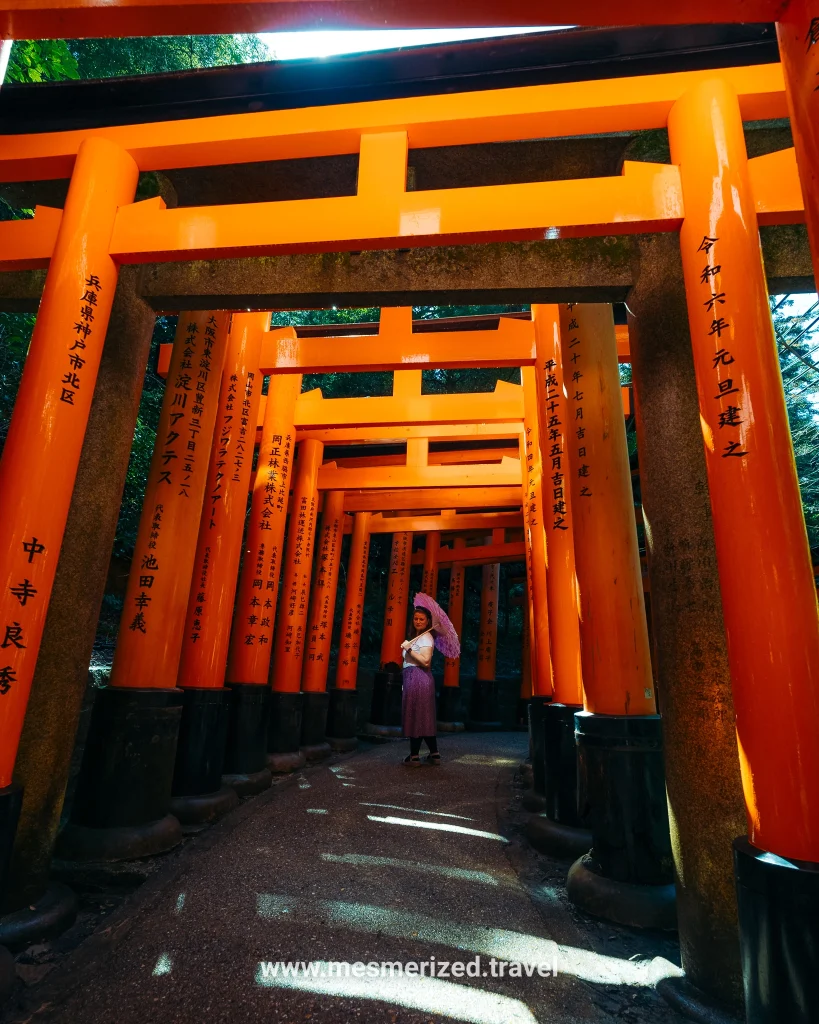
Everyone’s seen the pictures, but walking through them, especially early in the morning when it’s quiet, is something else. Even halfway you’ll pass smaller shrines, fox statues (messengers of the god Inari), and little tea stalls where pilgrims once rested. It is open everyday, all day, so we recommend visiting as early as possible. The crowds are no joke, you don’t want to be stuck walking in a long line.
To get to the top you will need about 2-3 hours. But even after a 30 min climb the crowds will be gone.
To-ji Temple
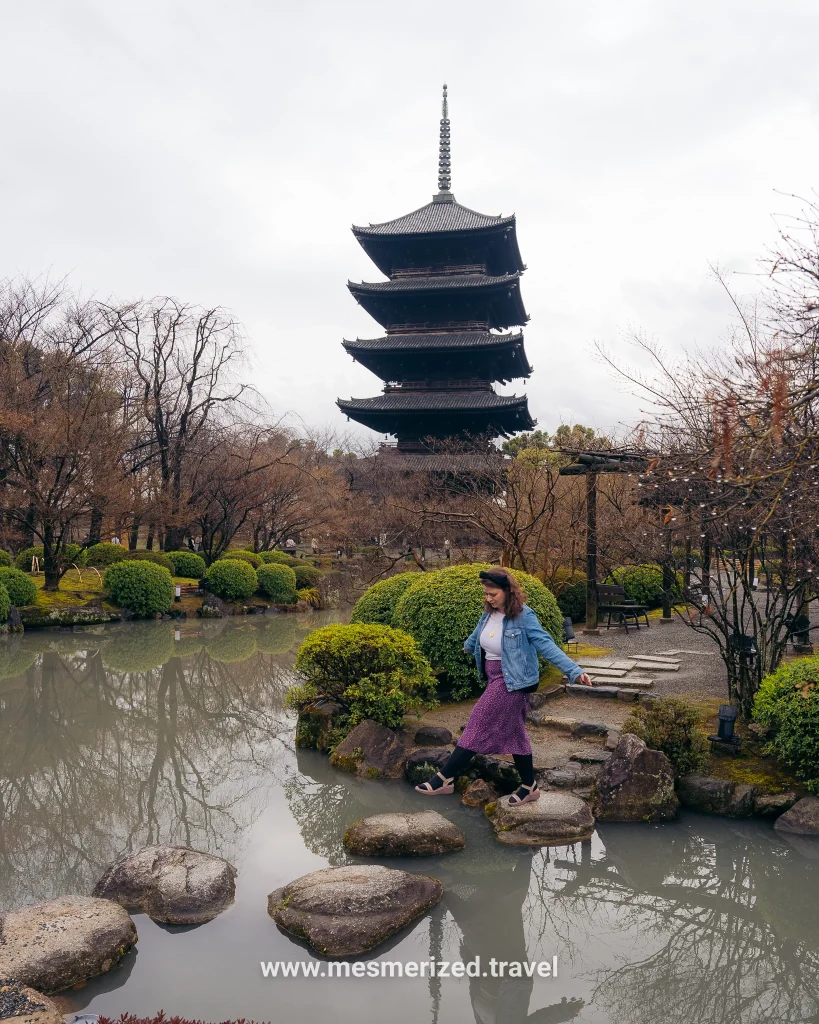
Head toward To-ji Temple. Its five-story pagoda is Japan’s tallest wooden one and feels massive when you stand below it. The temple was founded in 796. If you’re lucky to be here on the 21st in the month, the grounds turn into Kobo-san Market, one of Kyoto’s biggest flea markets, filled with antiques, old kimonos, pottery, and local snacks. It’s just lovely and one of the best times to see Kyoto’s mix of old and new.
Kiyomizu-dera
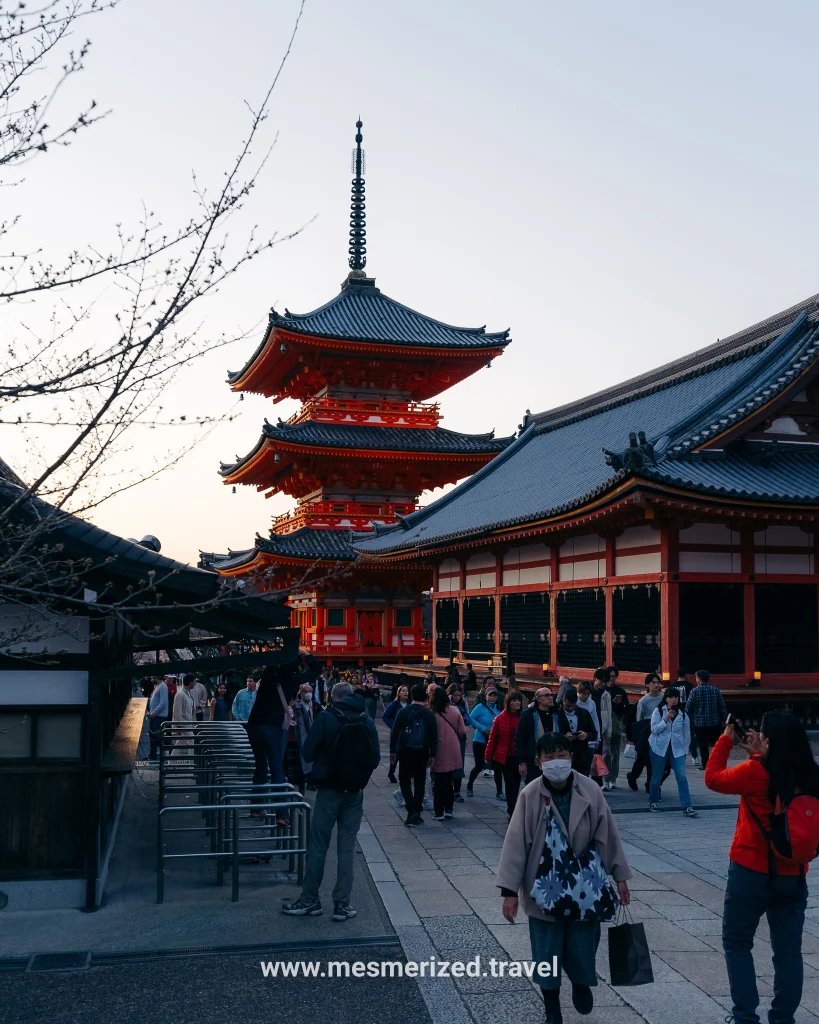
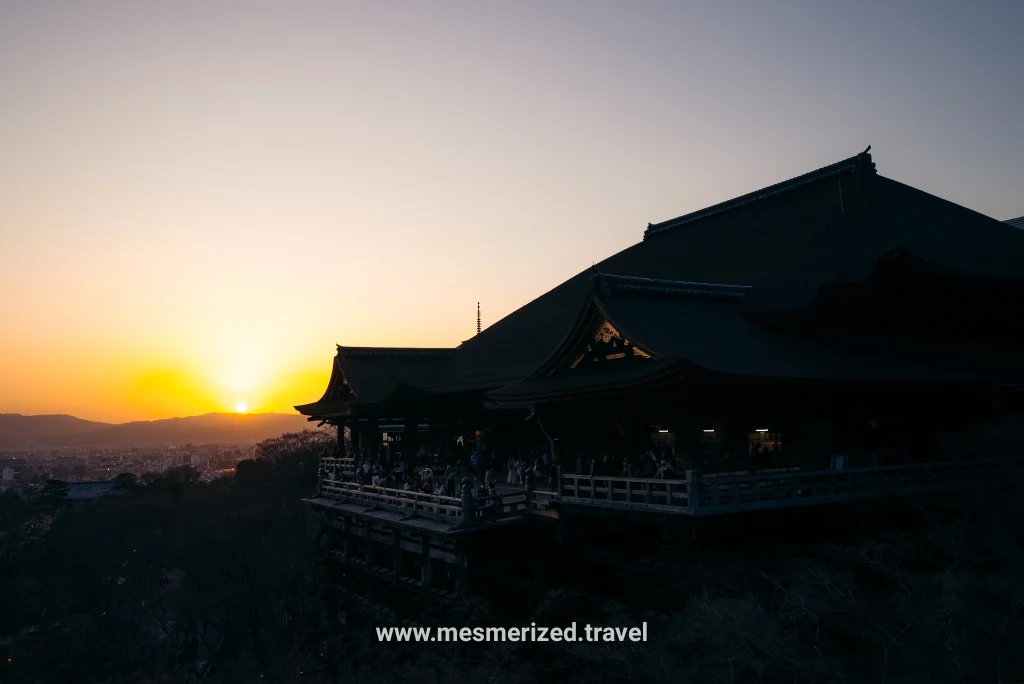
In the late afternoon, make your way to Kiyomizu-dera. Founded in 778, it’s most famous for its massive wooden stage, built entirely without nails, that stands out over a forested hillside. The name means “pure water,” and visitors still drink from the Otowa Waterfall at the base for health and luck. At sunset the whole place glows, and in cherry blossom or autumn season, it’s even more stunning. Yes, it’s crowded, but it’s one of those must-sees that gives you the true Kyoto feeling.
Ninenzaka & Sannenzaka
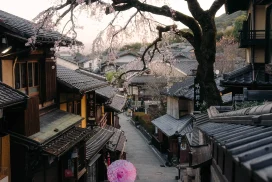
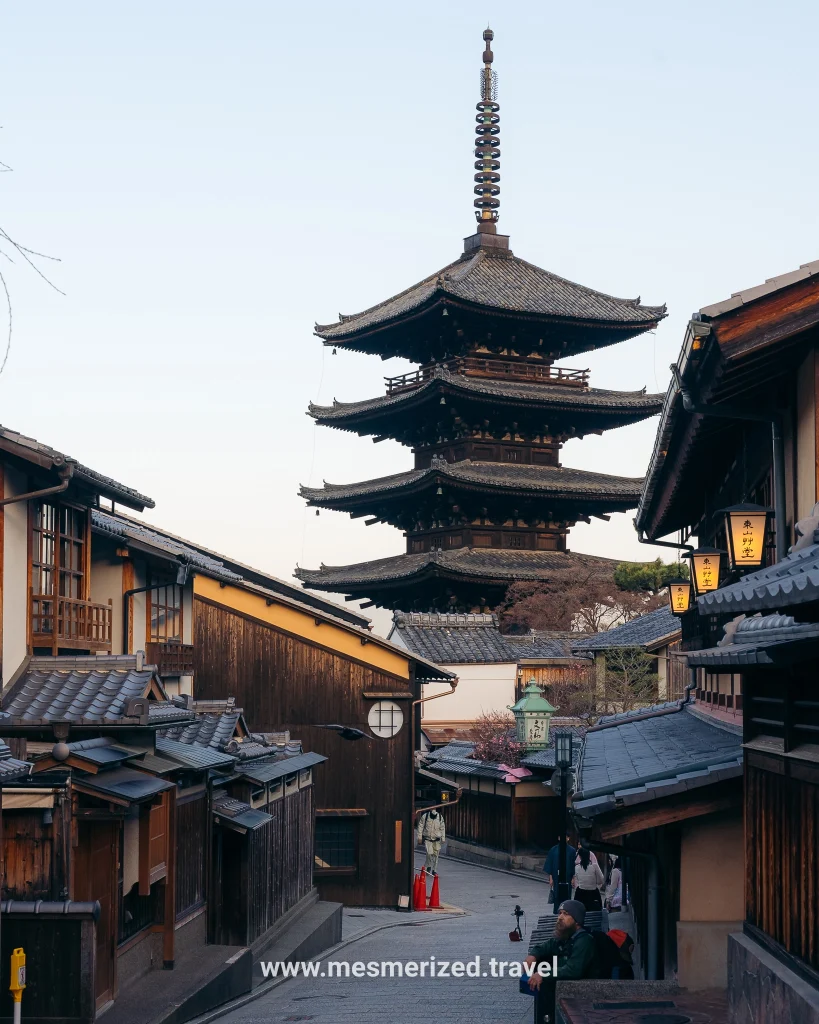
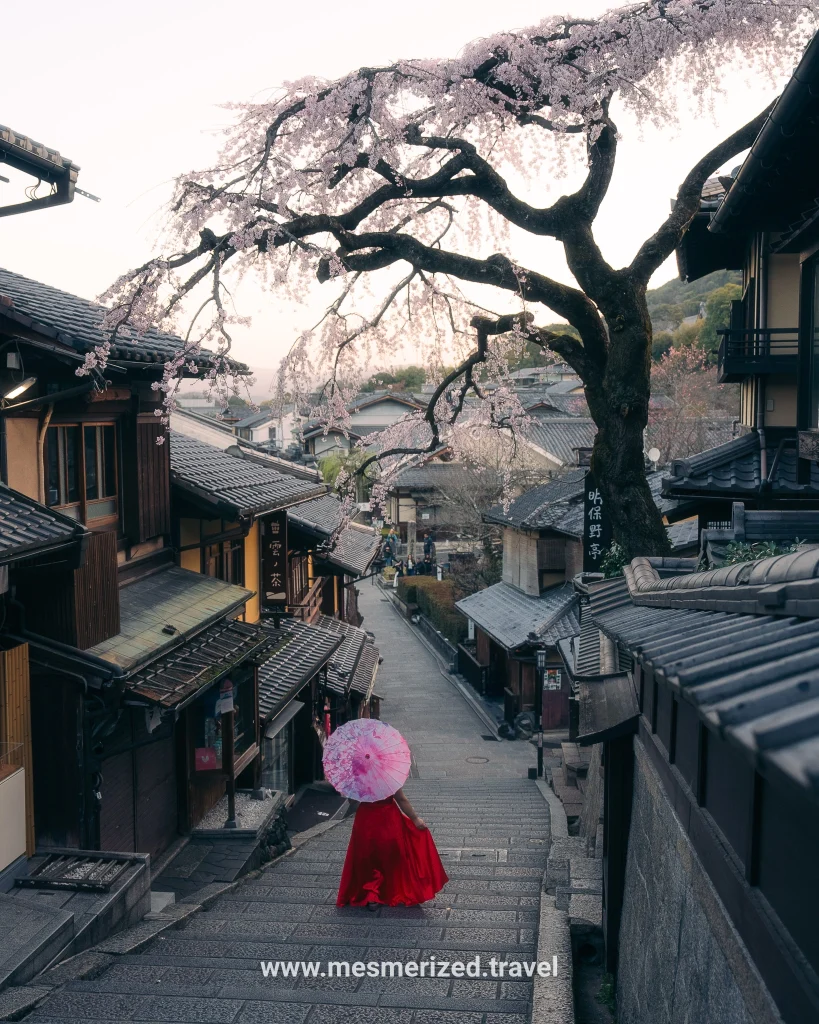
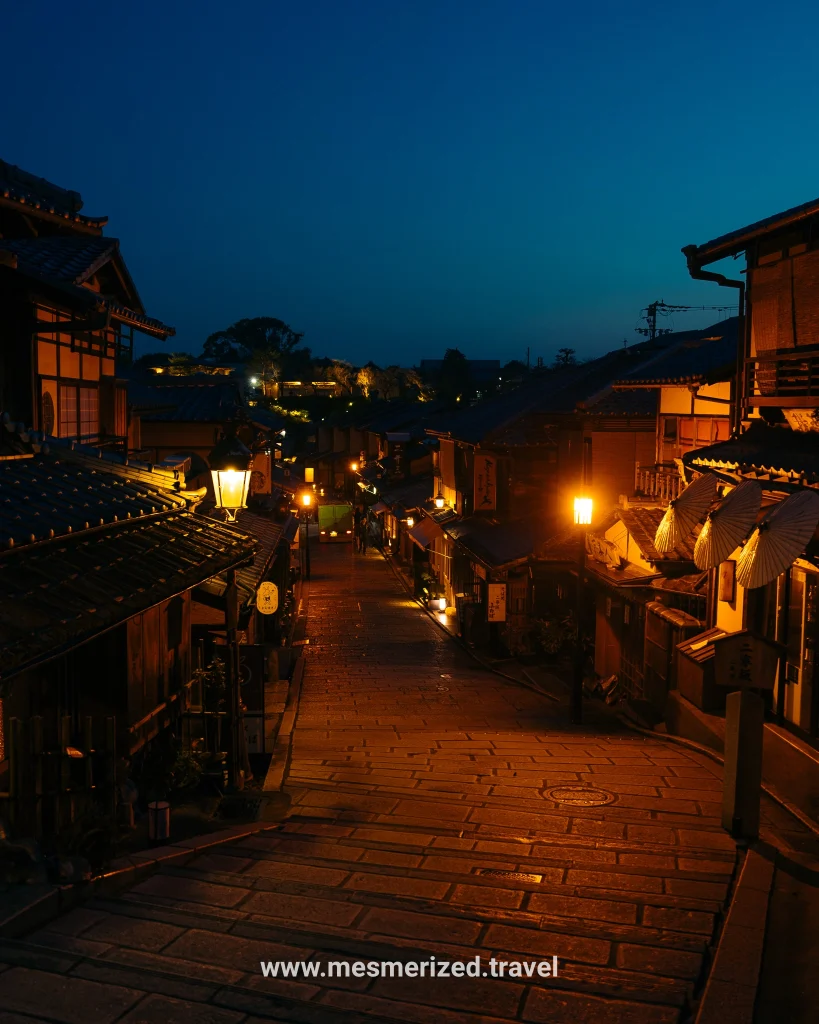
As you leave Kiyomizu-dera, wander down through these historic lanes. Stone-paved streets lined with tea shops and wooden houses, they’ve looked the same for centuries. The name Ninenzaka means “two-year hill,” and there’s a local legend that if you trip here, you’ll have bad luck for two years — so maybe watch your step.
Yasaka Shrine
This will bring you right to Yasaka Shrine, a landmark since the 7th century. It’s free to enter and open all hours, but at night it becomes something else — hundreds of lanterns glowing softly, each sponsored by a local business. Yasaka is also the center of Kyoto’s biggest festival, Gion Matsuri, which has been held here every July for over a thousand years.
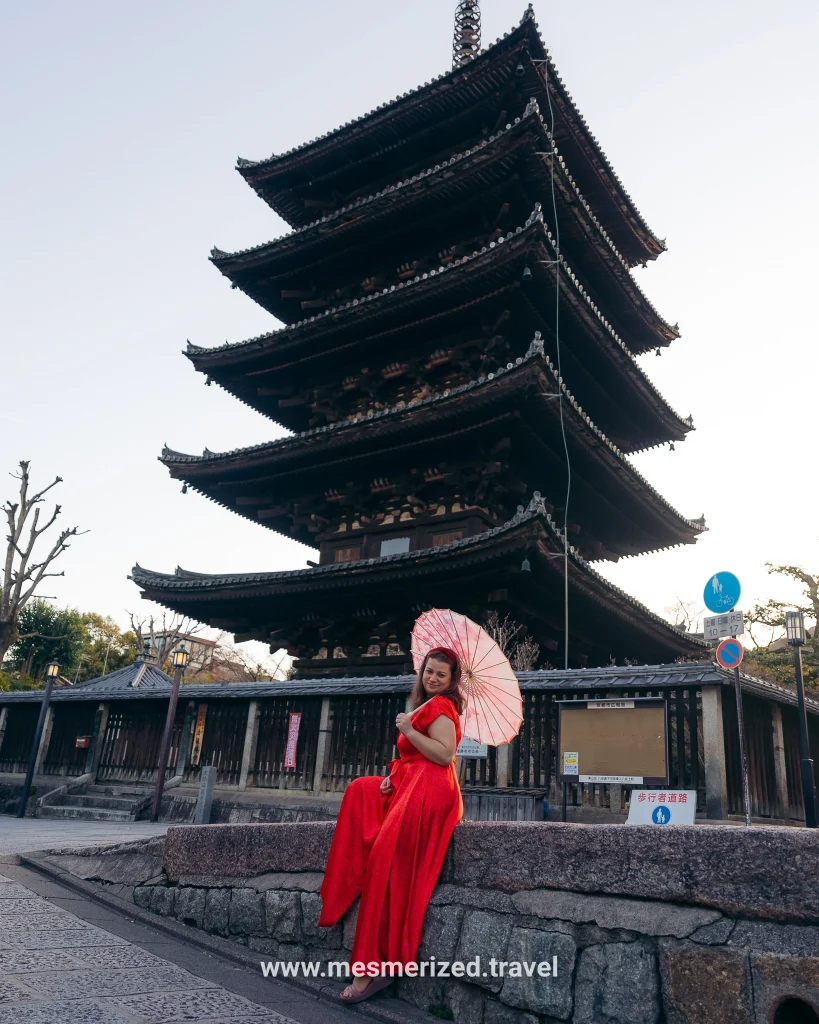
As you can see Kyoto is very photogenic, you can get great pictures at every corner. Just keep in mind these places get really crowded after 10 AM, so we would suggest to start at sunrise.
Where to Eat Nearby
- Maccha House – maccha in all its form: ice cream, coffee, tiramisu, parfait.
- Gyukatsu Kyoto Katsugyu – had the best gyukatsu here, tender beef that you can finish on tabletop grill
- Mister Gyoza – ramen and gyozas
- Ikkyu-An – traditional Japanese sweets
Day 2: Arashiyama and the West
Arashiyama Bamboo Grove
Go early and step into the famous bamboo grove before the tour buses arrive. The grove is smaller than most expect, but when the morning light filters through the tall stalks, it feels magical. Bamboo is considered a symbol of strength in Japan, and the grove has been protected for centuries as part of temple lands.
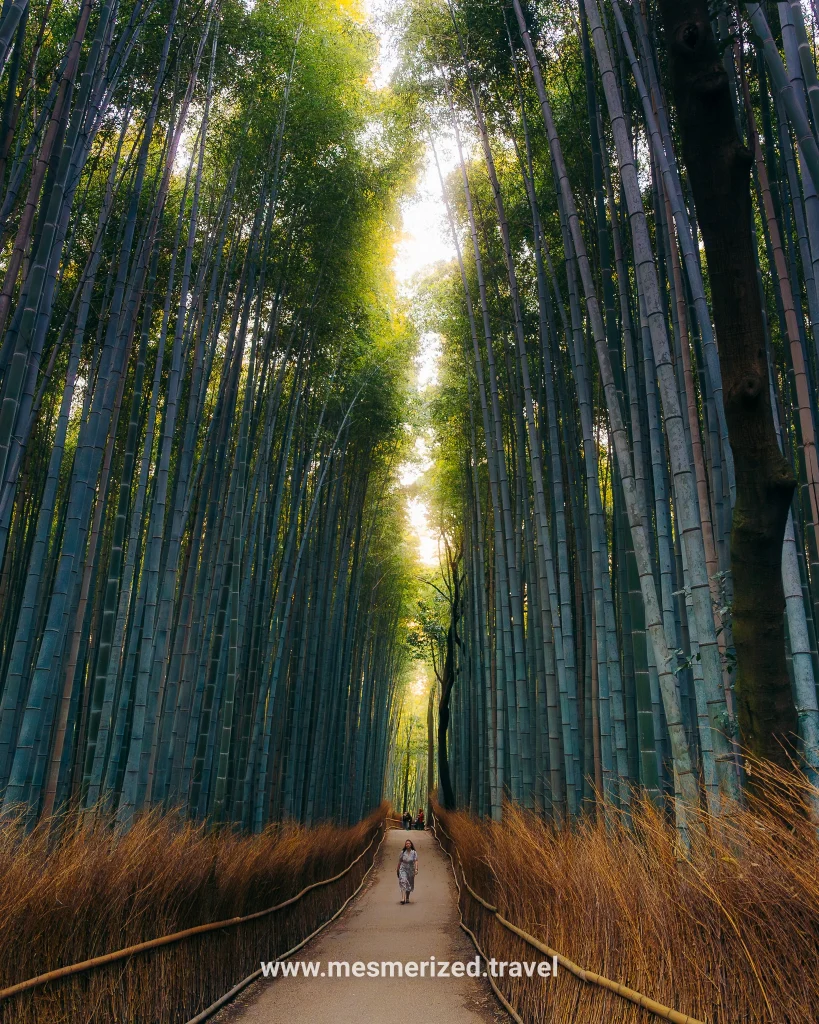
We recommend to get there for sunrise to avoid huge crowds.
Kimono Forest
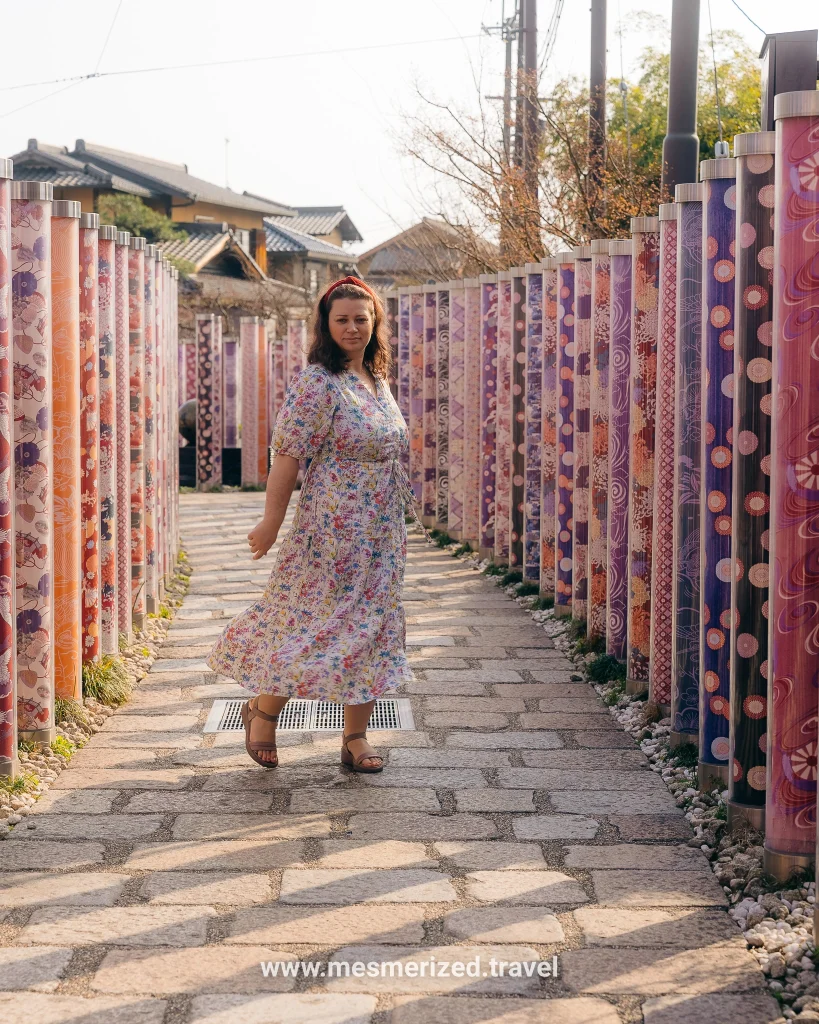
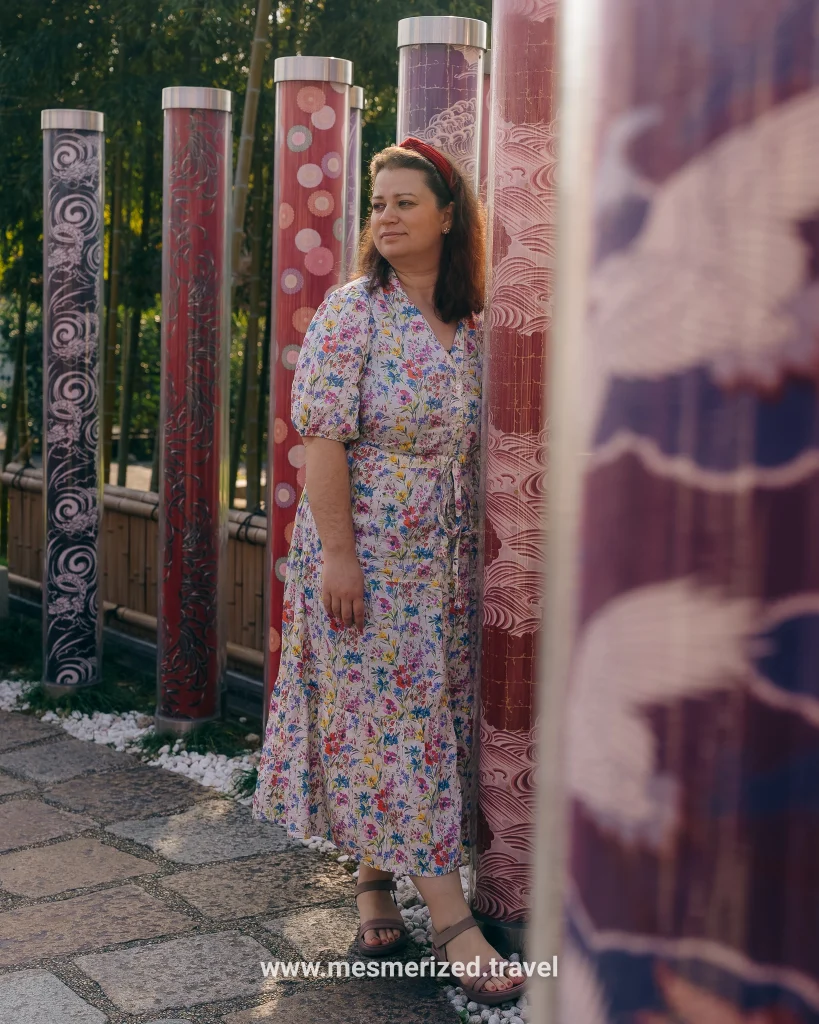
Just outside Arashiyama Station is something playful: the Kimono Forest. These are 600 acrylic pillars wrapped in colorful kimono fabrics, designed by artist Yasumichi Morita. At night they’re softly lit, creating a glowing path through patterns of flowers, cranes, and traditional motifs. It’s quick to visit, but surprisingly enchanting.
Otagi Nenbutsuji
For something quieter, head into the hills to Otagi Nenbutsuji. This small temple is filled with over a thousand stone rakan statues, carved by visitors in the 1980s. Each one is different: some smile, some laugh, a few hold guitars or cameras, they represent the disciples of Buddha. It’s a place worth visiting, and because it’s a bit out of the way, you’ll likely have it almost to yourself.


Adashino Nenbutsuji
Nearby is Adashino Nenbutsuji, a temple surrounded by thousands of stone memorial statues for those without families to care for their graves. The temple also has a smaller bamboo grove that feels more intimate than Arashiyama’s main one. And it gets much less crowded so you can visit this one anytime of the day or even instead of Arashiyama Bamboo Grove.
Day 3: North Kyoto
Kinkaku-ji, Golden Pavilion
Start with Kinkaku-ji, the Golden Pavilion. Originally built in 1397 as a shogun’s villa, it later became a Zen temple. The top two floors are covered in gold leaf, and when the sun hits it, the whole thing glitters above its mirror pond. It’s one of Kyoto’s most famous sights, that we unfortunately did not visit on our trip. But you should visit it as it looks magical on the pictures, and I’m sure even better in person.
Hirano Jinja
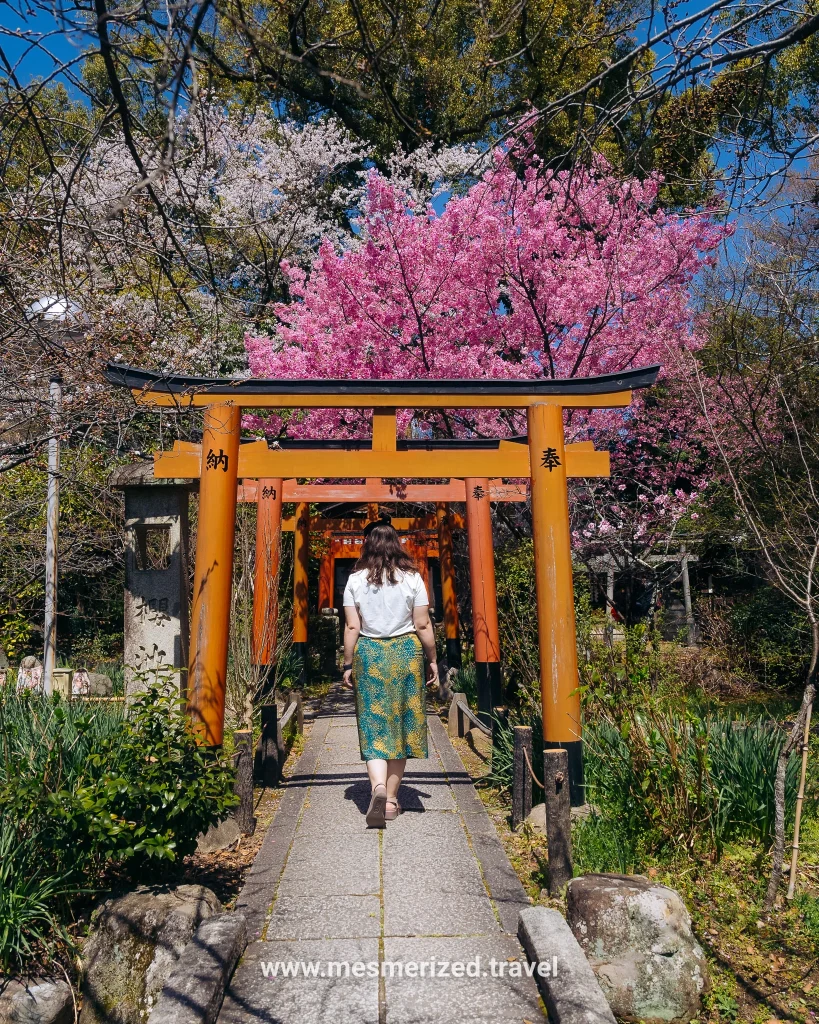
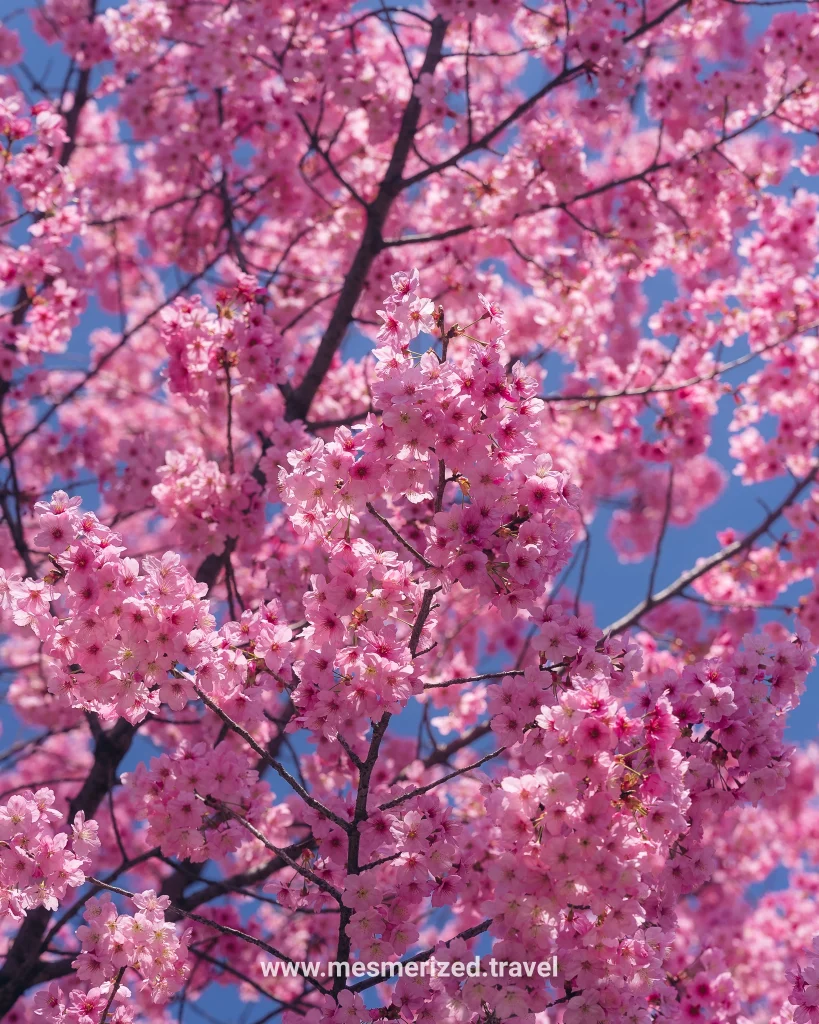
Just a few minutes’ walk from Kinkaku-ji is Hirano Jinja, a shrine famous for its cherry blossoms. It was founded in 794, the same year Kyoto became Japan’s capital, and ever since it’s been known as one of the city’s top hanami (flower viewing) spots. More than 400 cherry trees bloom here in spring, with varieties that keep the season going longer than most places. Even outside blossom season, it’s a quiet shrine, often missed by tourists rushing between the bigger sights.
Kyoto Botanical Garden
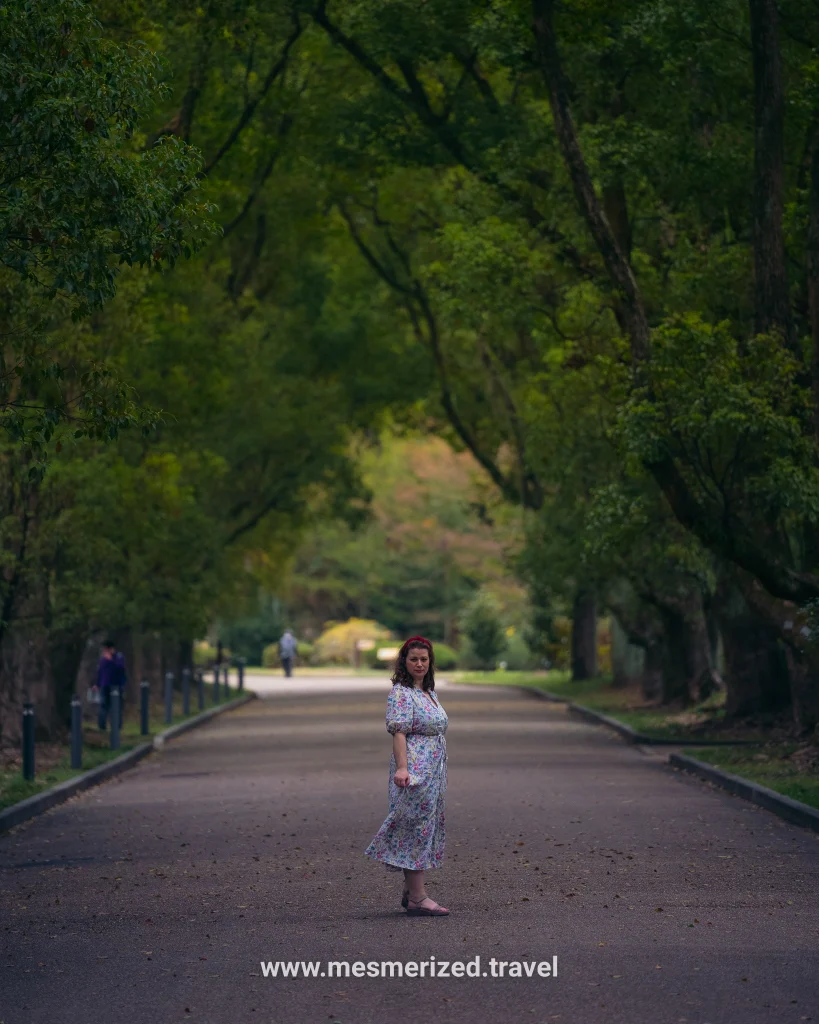
In the afternoon, head to Kyoto Botanical Garden. Founded in 1924, it’s Japan’s oldest public botanical garden. There are bonsai collections, seasonal flower beds, and a massive tropical greenhouse that makes a great rainy-day stop. It’s big but rarely crowded, a good place to slow down.
Enkōji Temple
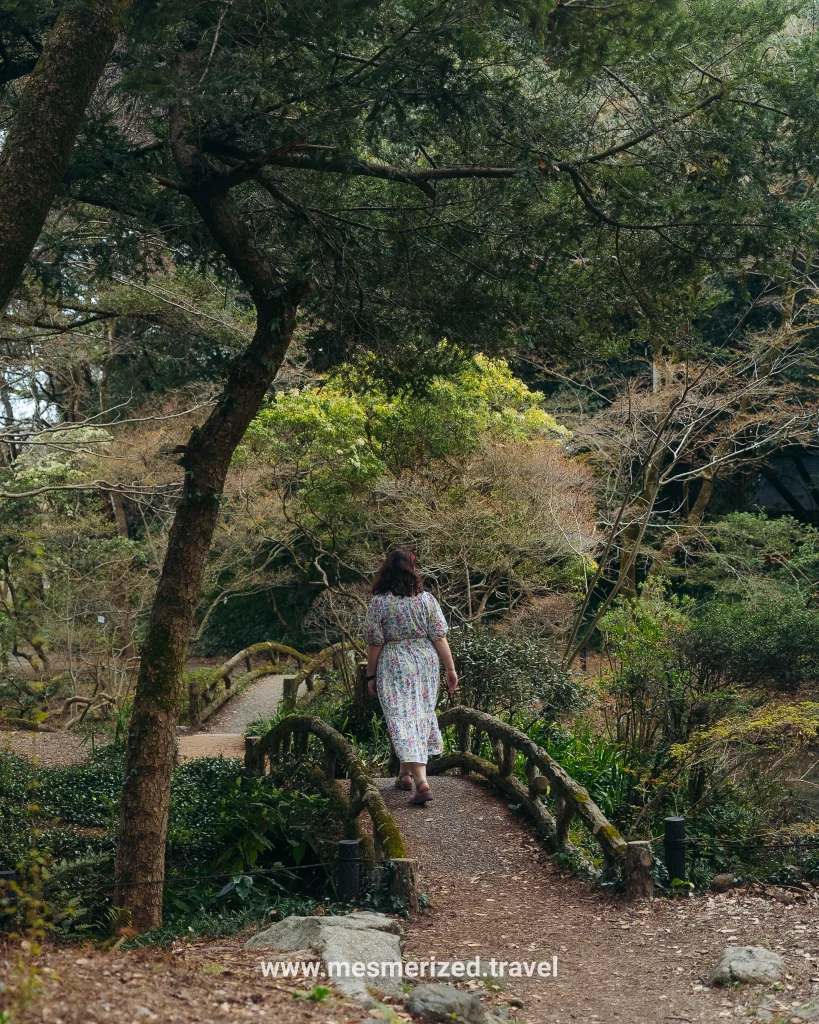
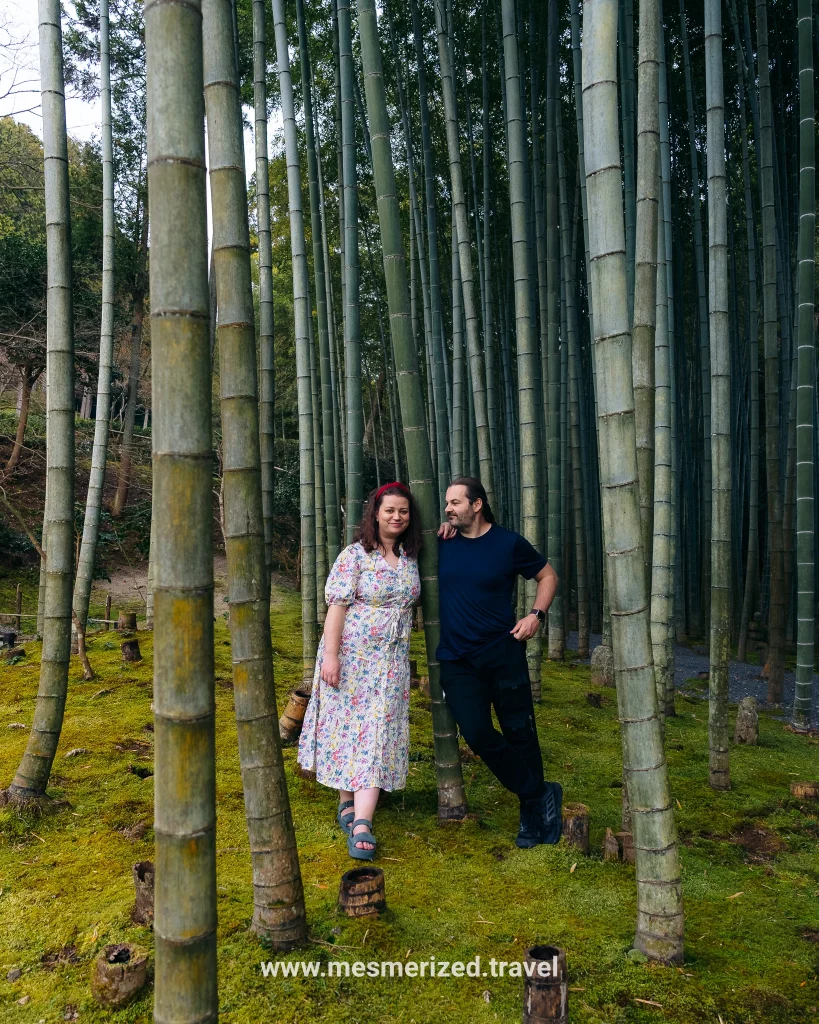
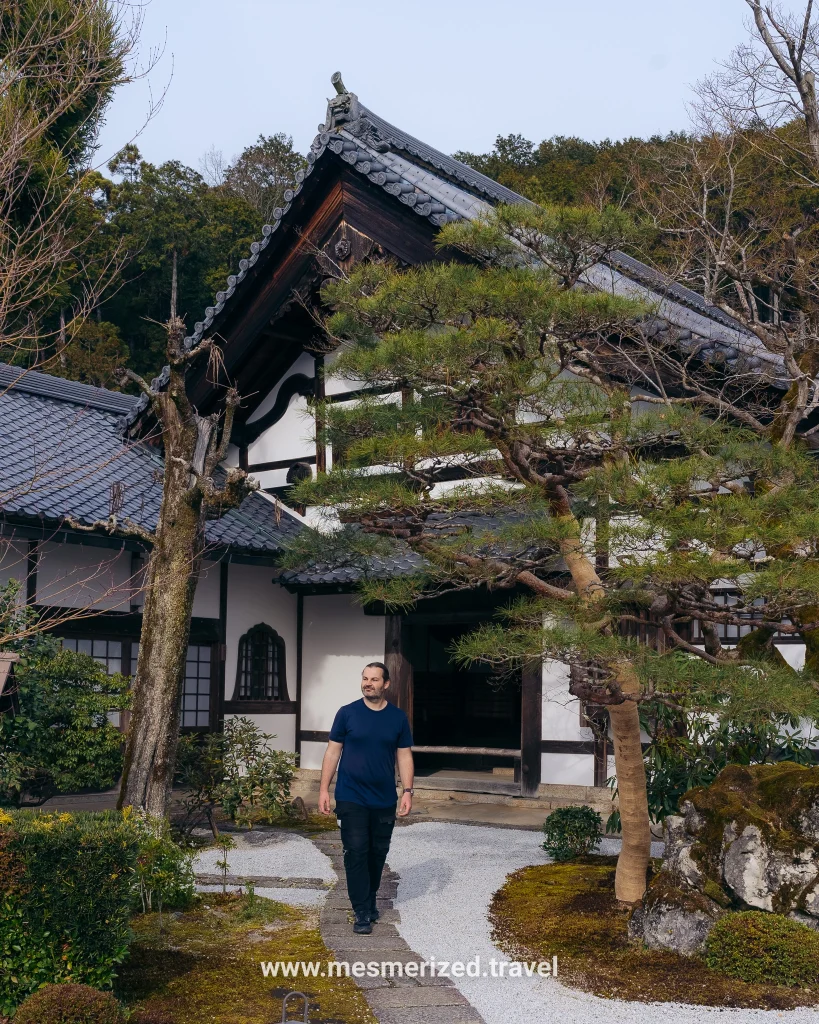
Close the day with Enkōji Temple. It’s not well-known, which is part of its charm, we just stumbled upon it by accident. The moss garden is beautiful in every season, and in autumn the maple leaves turn fiery red. There’s also a small bamboo grove tucked at the back, in case you got beaten by the crowds the day before. We stayed until closing, just enjoying the peace, there is something so special about this garden, it makes you calm and relaxed.
Where to Eat Nearby
- Pizzeria da Ciro – if you’re craving pizza, this is the place
- Iicho Ramen – simple menu, great ramen
Day 4: Central Kyoto and Hidden Corners
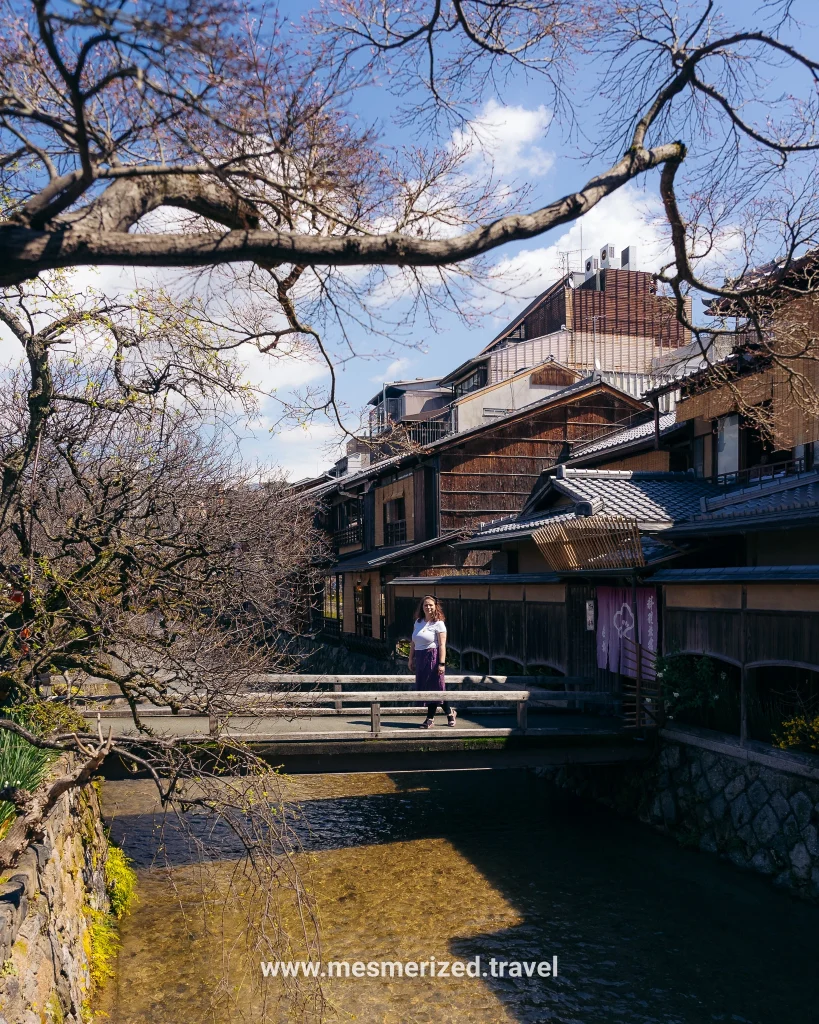
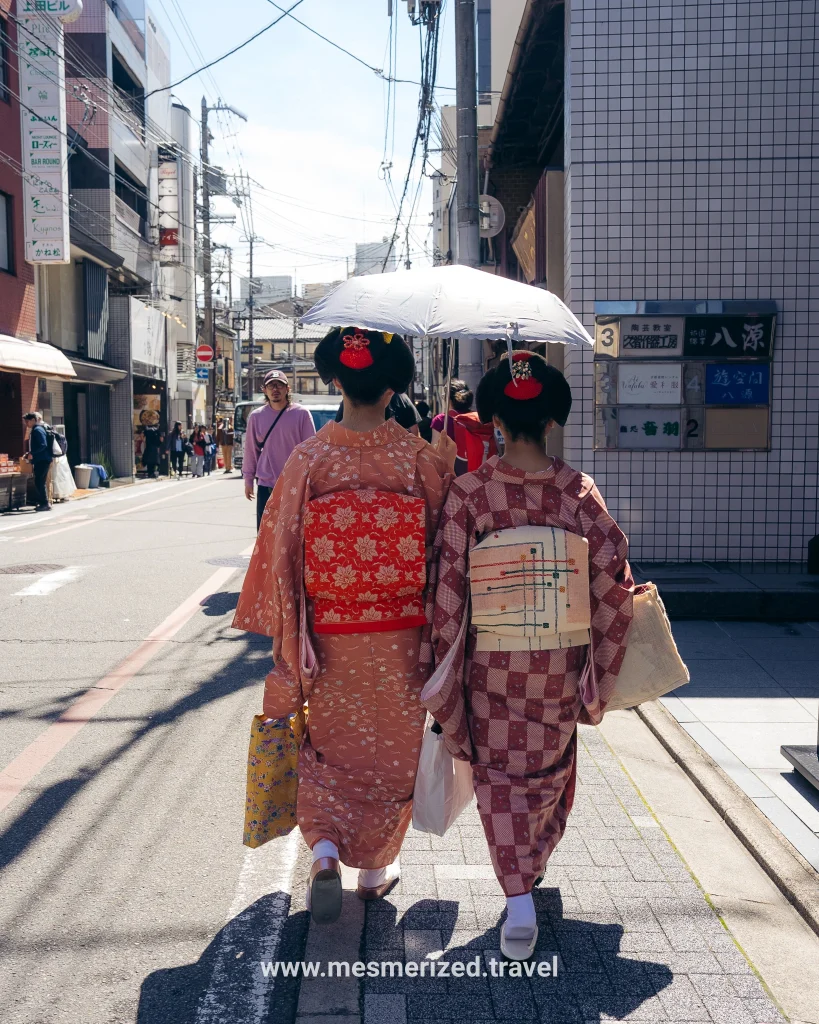
Gion Hanamikoji Street
Finish with a slow stroll down Hanamikoji Street in Gion, Kyoto’s famous geisha district. Wooden merchant houses line the street, many now restaurants and teahouses. Between 4 and 6 pm you might see geiko or maiko walking to their appointments, but be respectful – they’re working, not posing for photos. Even without a sighting, the street itself feels like a step back in time.
Tea Ceremony at Maikoya
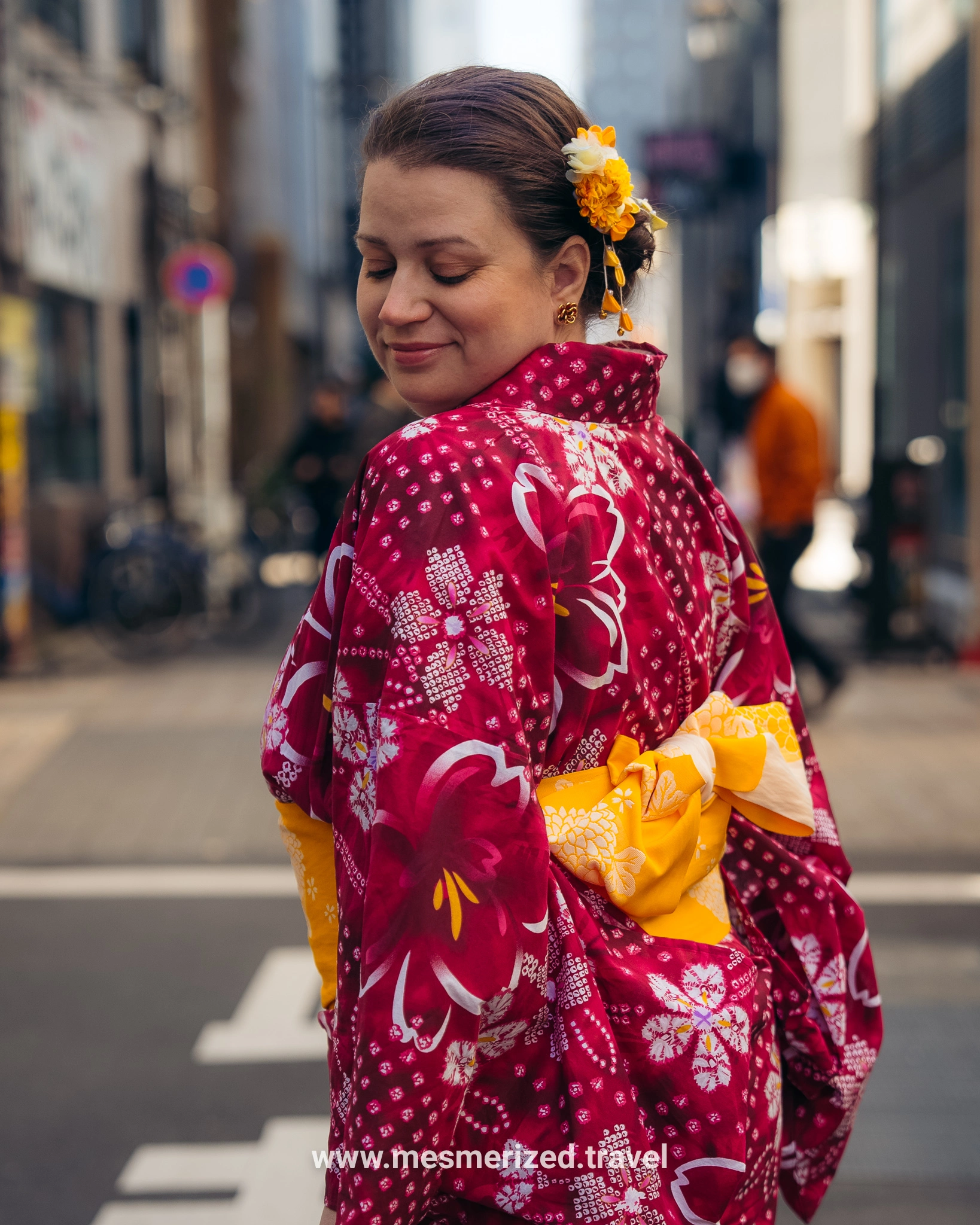
End your Kyoto stay with a traditional tea ceremony at Maikoya. Learn how to whisk matcha, enjoy a sweet, and sit quietly as everything slows down. You can rent a kimono for the full experience, but even without it, the ceremony itself feels special.
Kyoto: Tea Ceremony in a Traditional Tea House
Join a traditional tea ceremony in Kyoto, where you’ll sip finely prepared matcha with a seasonal sweet, learn the art of whisking your own tea, and enjoy the calm views of a Japanese garden.
Book NowKyoto Viewpoint
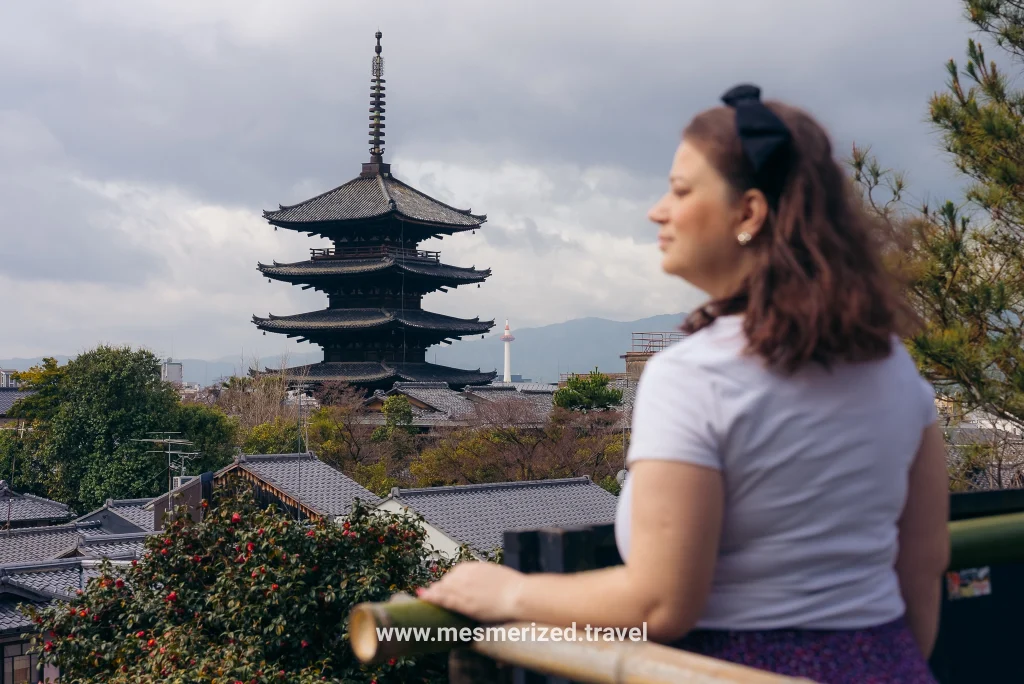
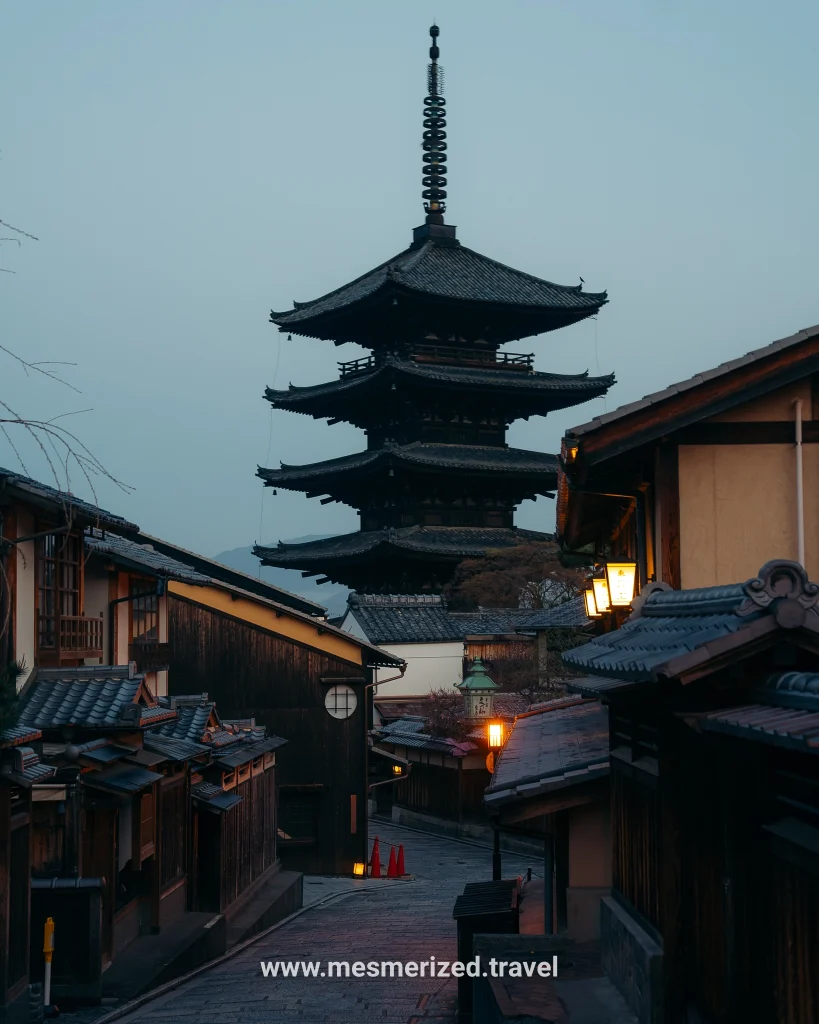
Take a small detour up to the Kyoto Viewpoint above Kodai-ji’s parking lot. From here, you’ll get one of the best framed views of Yasaka Pagoda and the old streets below — and almost no one else knows about it.
Sannenzaka
In the evening, wander back to Sannenzaka and just stroll around. By evening, lanterns start glowing and the whole area feels like a centuries ago.
Where to Eat Nearby
- Musoshin – great ramen place
- Kobe Beef Steak Mouriya Gion – the price is very high, but so is the quality, the chef cooks everything to perfection in front of you
- Gion Nikutei Shin – also high in the price, but so worth it
Day 5: Day Trip – Strawberries, Nara, Tsubosaka-dera, Katsuo-ji, Himeji Castle
Here are a few ideas for day trips you can take from Kyoto. Each one is special in its own way — from picking strawberries fresh off the plant, to feeding the bowing deer in Nara, to exploring unique temples and ending the day at Japan’s most beautiful castle. We recommend them all if you’ve got the time, but you can also just pick the ones that interest you the most and still have an amazing day.
The easiest way to do this is with a car, since it gives you the freedom to stop along the way and go at your own pace. We’ve written a full guide on renting a car in Japan if you’re considering it. If driving isn’t your thing, another good option is booking a day tours that covers these highlights — there are several running from both Kyoto and Osaka.
Strawberry Picking
Start the morning sweet with strawberry picking. Farms around Kyoto and Osaka offer all you can eat strawberries, usually you have 30 minutes to eat as many as you can. They’re fresher and juicier than anything you’ll find in a store, and I think there is something about that ‘’all you can eat’’ part that give you the rush and enjoyment.
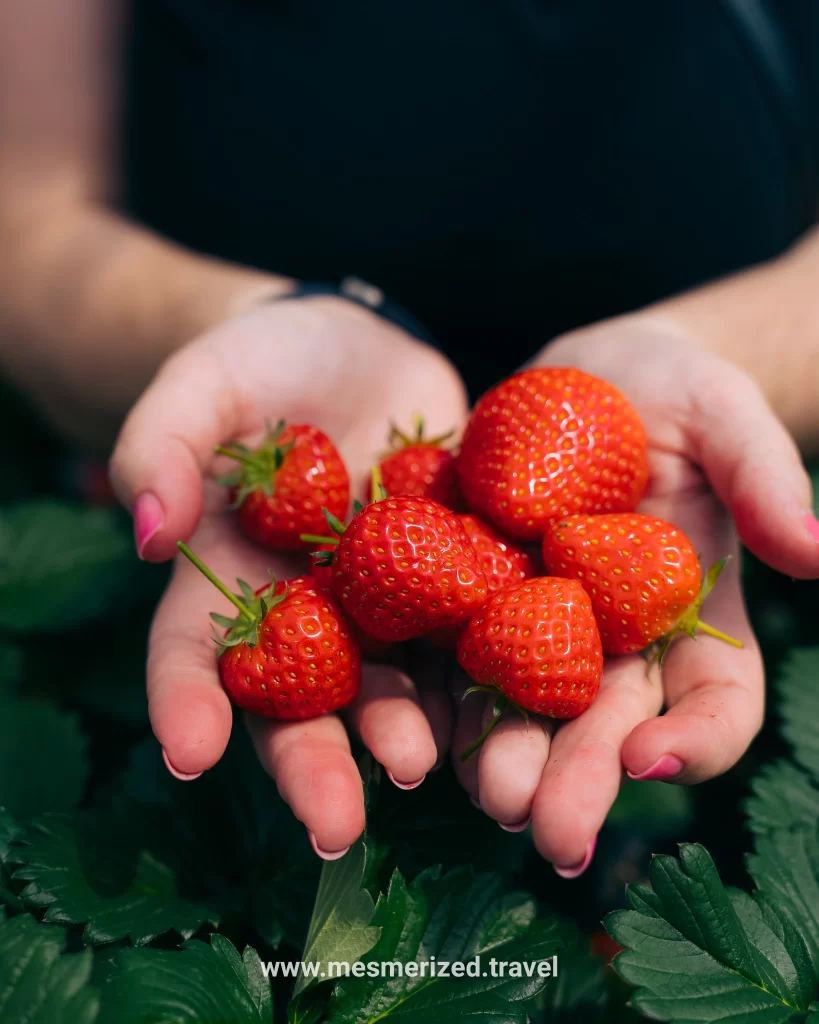
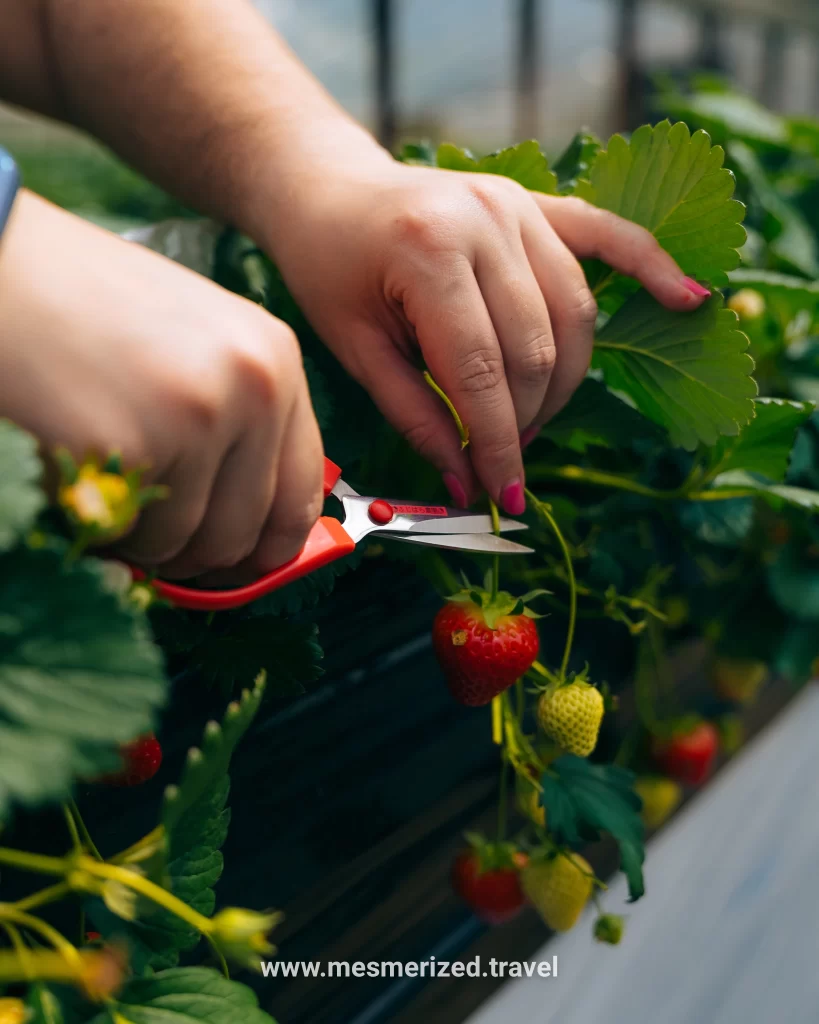
We’ve written a full guide here: All You Can Eat Strawberries in Japan — it has everything you need to know, from when to go, how much it costs, and where to find farms. So be sure to check it out, it was the best experience we’ve had in Japan, really unique.
Nara
From strawberries, head to Nara. The highlight here is Nara Park, where hundreds of deer wander freely around. They’ll bow to you in exchange for crackers, which is adorable and kinda funny, but watch out, they can get pushy if you hold the food too long. You can purchase crackers all around the park, we loved the deer so much we bought 3 packs.
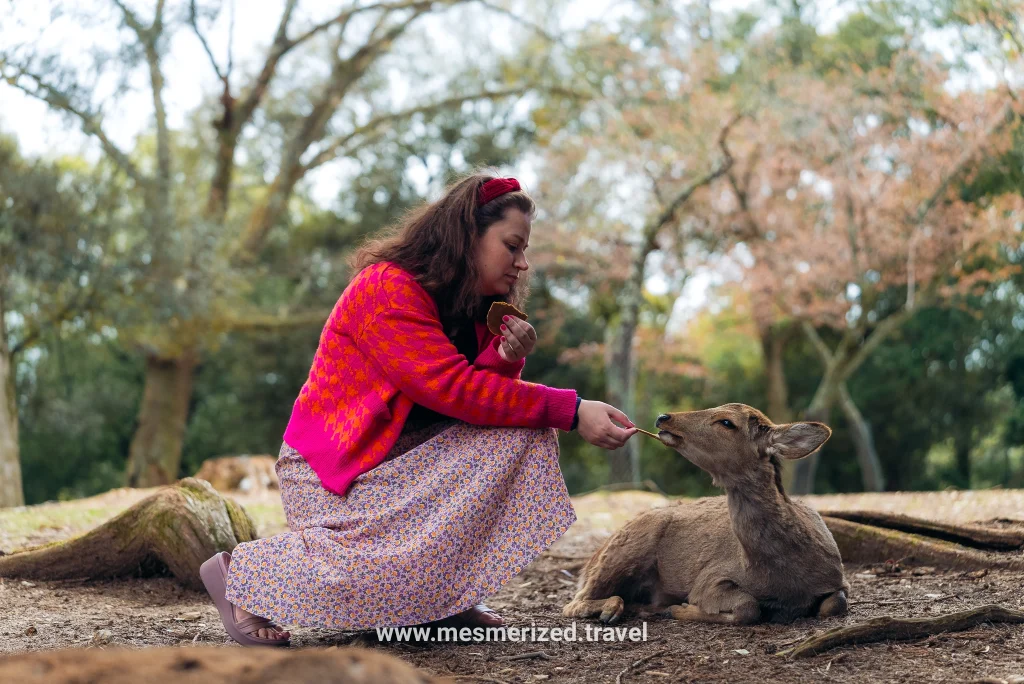
We only spent our time with the deer at Nara Park, but many visitors also stop at Todai-ji Temple, home to the Great Buddha, or Kasuga Taisha with its stone lantern paths. Either way, Nara is a cute place that makes it worth the stop, here is our Nara blog you can check out.
Tsubosaka-dera Temple
On your way from Nara, stop at Tsubosaka-dera, a temple that looks so grand and majestic. It’s famous for its massive stone Buddha statues placed among the hills, almost hidden until you get close. The temple has been connected with healing eyesight for centuries, and you’ll see offerings and prayers left for that reason. It’s quiet compared to Nara’s main spots, which makes it a peaceful pause before continuing on.
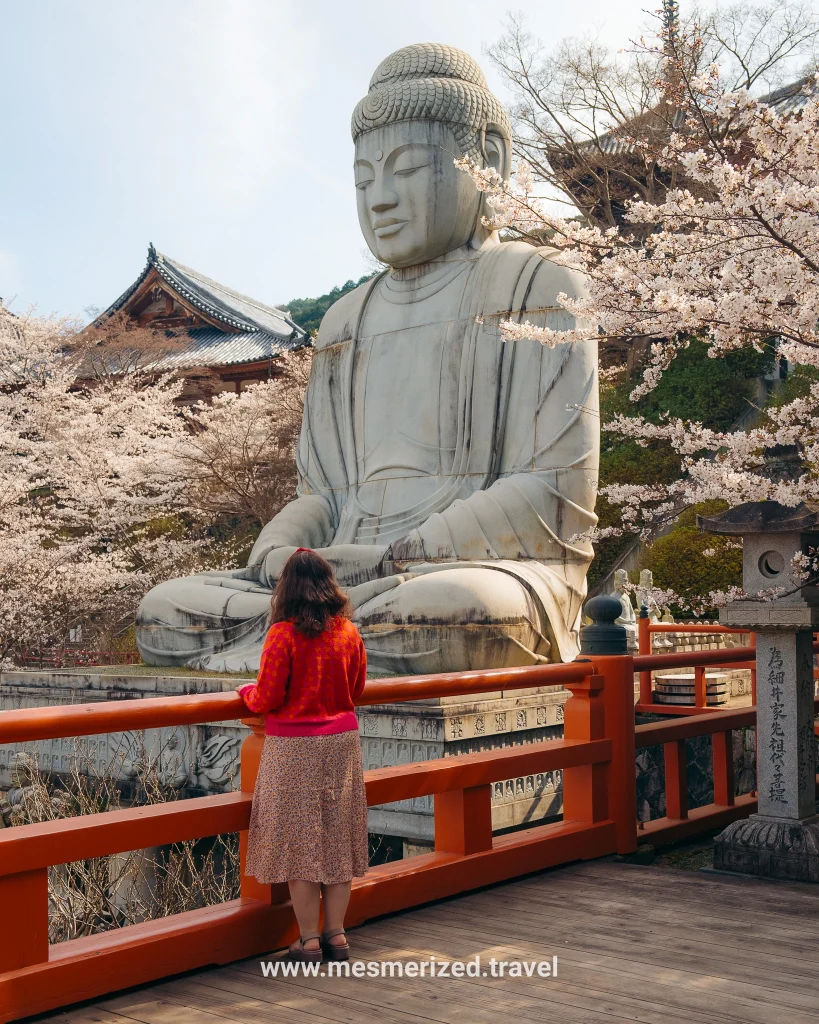
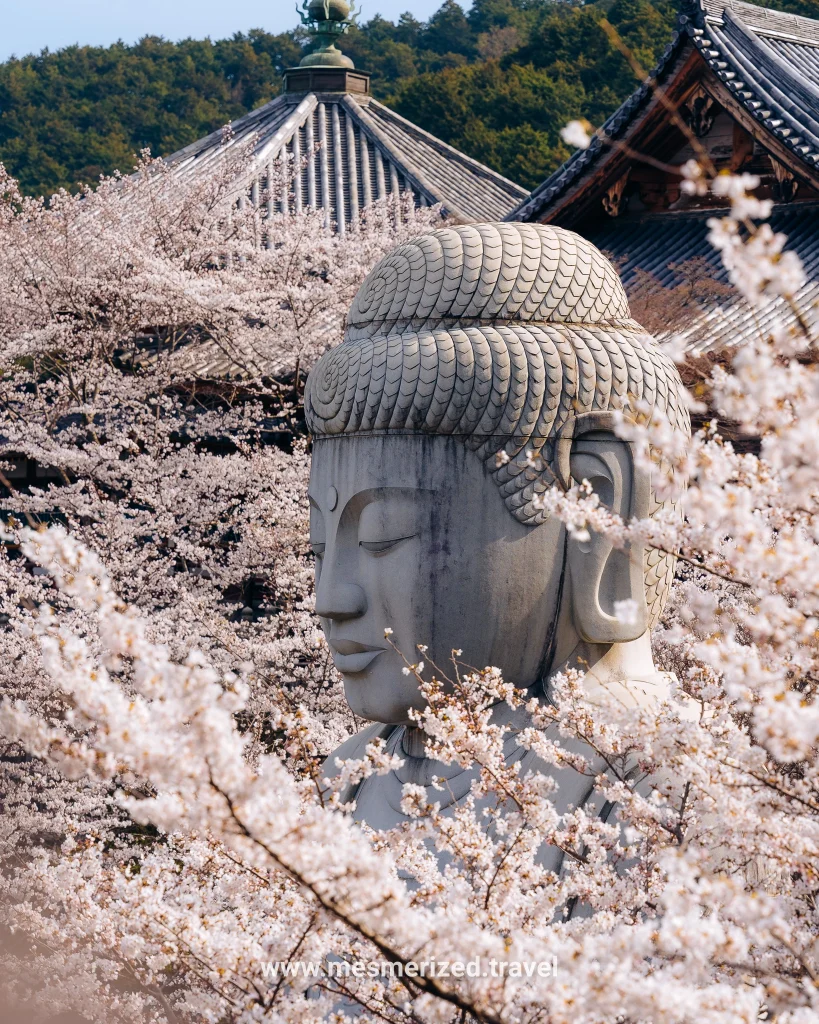
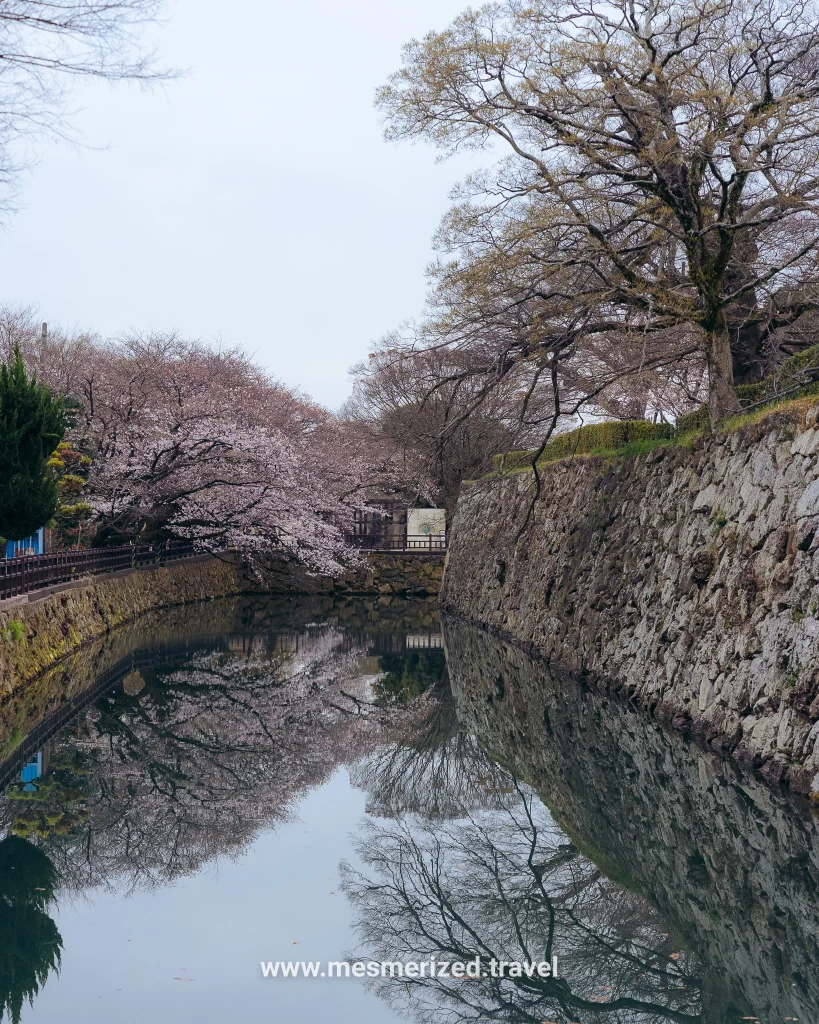
We were lucky to visit this place during cherry blossom. The place looks magical even without them, but with cherry blossom, pure heaven, looks so gorgeous. We spent a couple of hours here just admiring the views and cherry blossoms which were beautiful.
Katsuo-ji Temple
Next, detour into the wooded hills north of Osaka to Katsuo-ji, also called the Temple of Victory. People come here to buy daruma dolls for good luck in achieving goals — from exams to business to sports — and the grounds are filled with thousands of them in every size, left behind by visitors who saw their wishes come true. The setting is beautiful too, with ponds, bridges, and forest all around, and of course the daruma dolls left everywhere and anywhere.


Himeji Castle
End the day at Himeji Castle, often called Japan’s most beautiful castle. Built in 1609, it’s one of the few that survived wars and earthquakes intact. Its brilliant white walls and layered roofs earned it the name “White Heron Castle.” You can climb to the top for city views, and then wander around castle grounds.
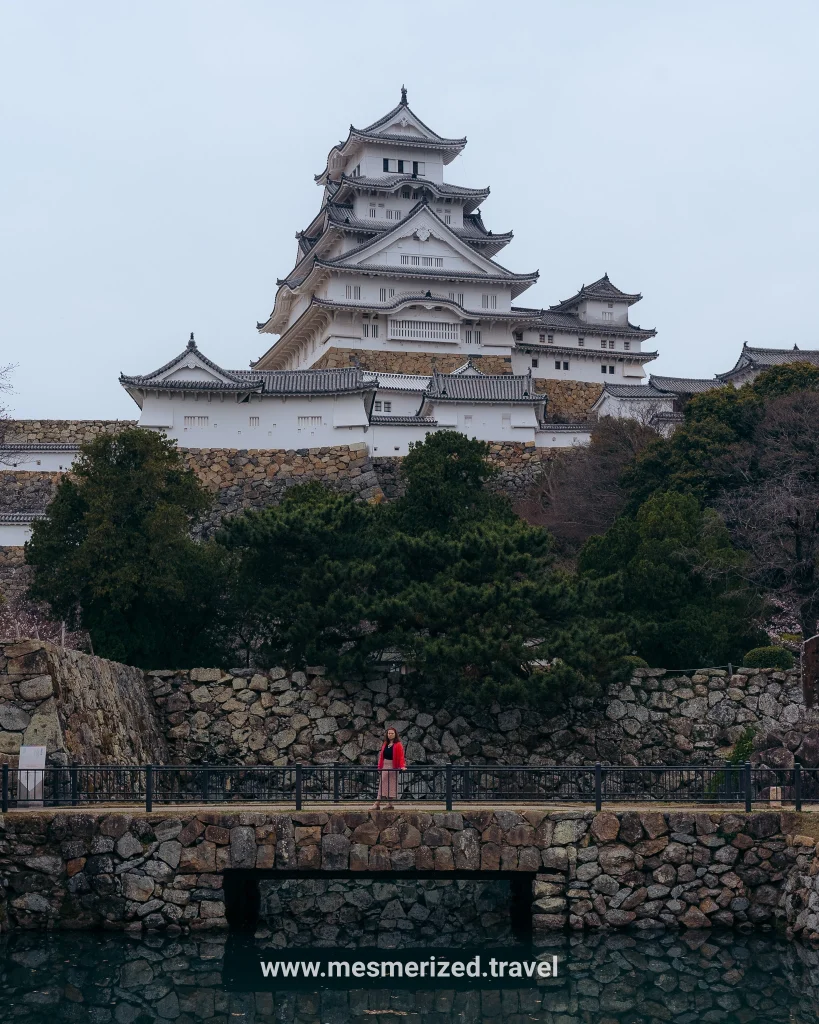
Return to Kyoto in the evening, tired but happy.
Best Time to Visit Kyoto
Kyoto changes completely with the seasons, which is part of its charm.
- Spring: Cherry blossoms make the whole city magical, especially at temples like Kiyomizu-dera. It’s the busiest time of year, so book hotels and trains well ahead. We visited in March and the cherry blossom was just starting, everything looked so beautiful.
- Summer: Hot and humid, but July brings Gion Matsuri, one of Japan’s biggest festivals, with parades of massive floats through the streets.
- Autumn: The best season for many. Maple trees turn bright red and orange, especially at Enkōji, Tofuku-ji, and Arashiyama. Next on our bucket list!
- Winter: Quiet and peaceful. Some temples look incredible with a dusting of snow, and you’ll avoid the crowds.
If you have the choice, spring and autumn are the most beautiful, but there’s really no bad time to come.
How to Get Around Kyoto
Kyoto is compact compared to Tokyo, but the transport system is a little more limited.
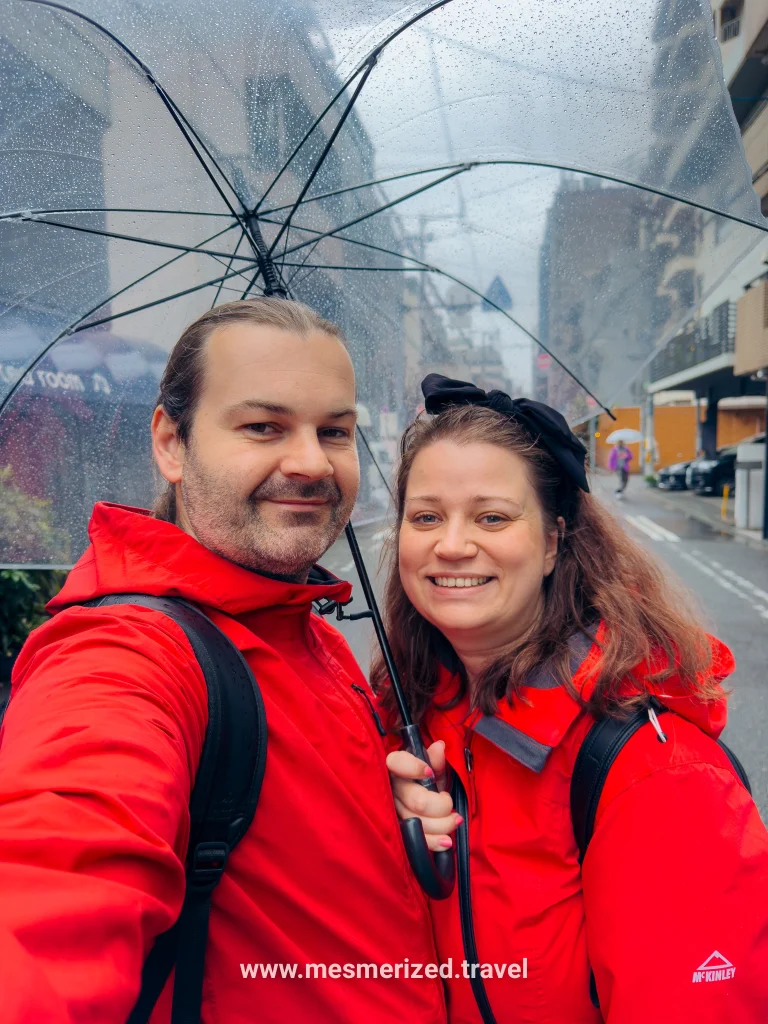
- Buses: Kyoto’s buses go almost everywhere tourists want to visit, especially in the north and east where trains don’t reach. We mostly used busses to visit places in centar of Kyoto and even the places out of city centar.
- Subways and Trains: Good for long cross-city trips, but not as extensive as buses. Still, they’re fast and easy when they connect.
- IC Cards: Use Suica or Pasmo card to tap on buses and trains — no need to get paper tickets.
- Taxis: More affordable than in Tokyo for short rides. A good option at night when buses run less frequently. We used it a couple of time, when catching sunrise around Ninenzaka.
- Walking: Some of the best parts of Kyoto, like Higashiyama and Gion, are best enjoyed on foot. Wear comfortable shoes!
Google Maps or Apple Maps are your best friend for getting around.

That’s it! I hope this guide will be helpful on your Kyoto exploration. This is not everything Kyoto has to offer, it’s a unique city that we really loved, and these are just the things we wanted to share with you. Until next time, be mesmerized ❤️