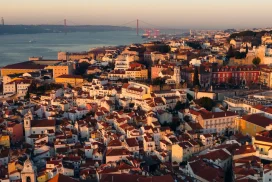
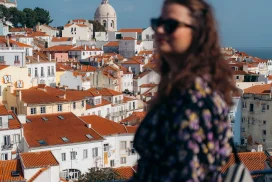
We’ve been to Lisbon a few times now, and it kind of just grew on us. It wasn’t like love at first sight, but more like… every time we came back, we liked it more, and then we just kept coming back to it.
The food is great, the weather is almost always nice, and everywhere you look, it just looks good. It’s a bit hilly, not gonna lie, but you get used to it. Or at least you tell yourself you do.
So here are some of the spots we think are worth your time in Lisbon.
Praça do Comércio
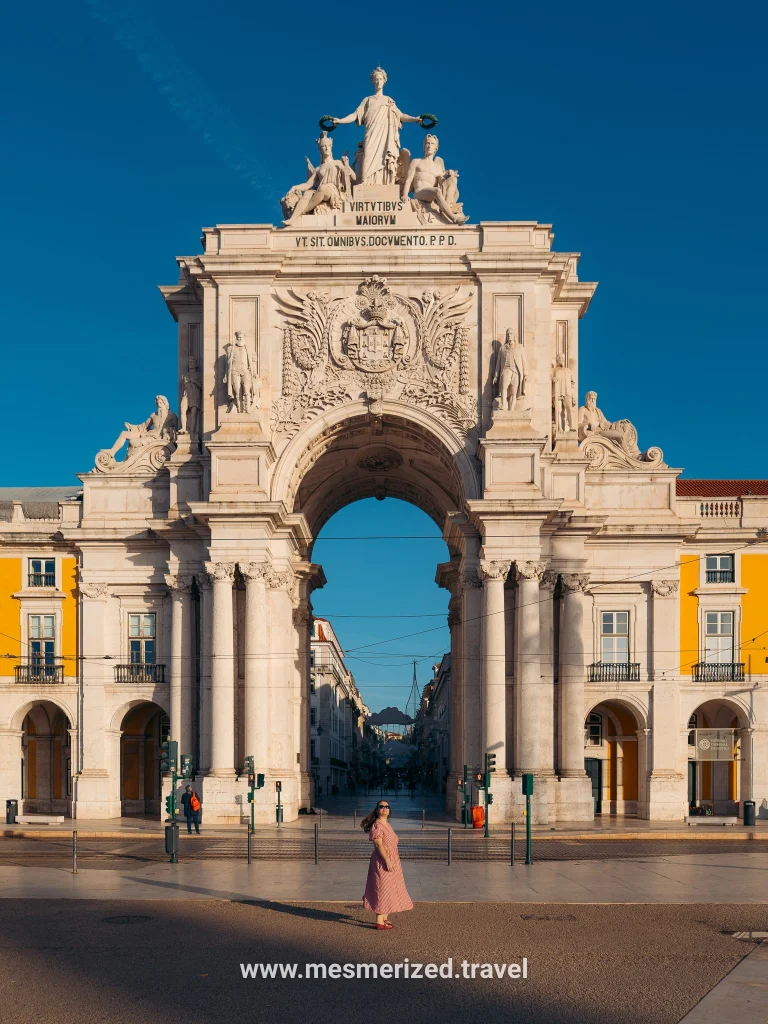
This is Lisbon’s main square, right by the river, and you’ll probably end up here at some point without even trying because the roads naturally lead you here.
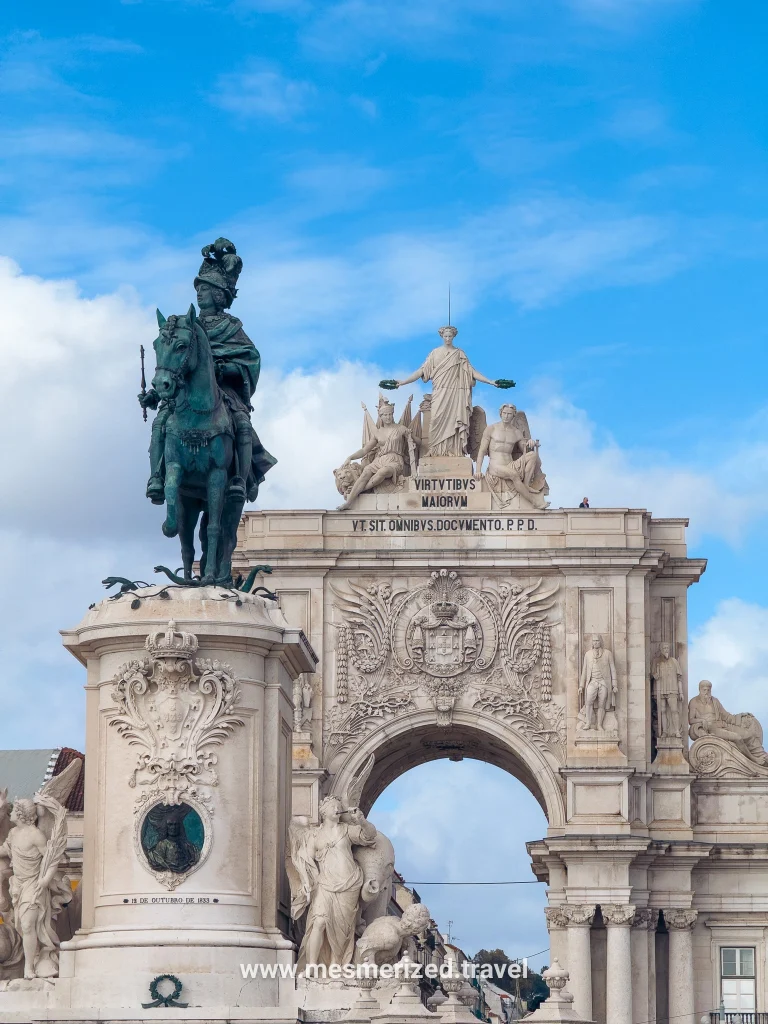
It looks impressive, big open space, yellow buildings, the arch, everything very symmetrical. It used to be the main entrance to the city back in the day, when ships were arriving here, which is kind of cool when you think about it. The bronze statue in the center depicts King José I on horseback, symbolizing Lisbon’s rebirth.
But yeah… it’s also very crowded. Full of tourists, street sellers, people trying to sell you… ehm… random stuff.
Definitely worth seeing, taking a few photos, but we didn’t stay here too long. There are nicer, quieter places nearby.

Cais das Colunas
Right next to the square, there are these two columns by the water.
It’s a simple spot, but actually really nice. People just sit there, look at the river. At sunset, locals gather on the steps with drinks and music, making it one of the most peaceful golden-hour spots in the city.

Glória Funicular
This is one of those very “Lisbon” things.
A small tram going up a steep hill, covered in graffiti, a bit chaotic, but kind of fun. We managed to ride it before it closed, but as of 2025, it’s temporarily out of service after an accident. It was one of the oldest still-operating funiculars in Europe and a symbol of Lisbon’s steep charm.
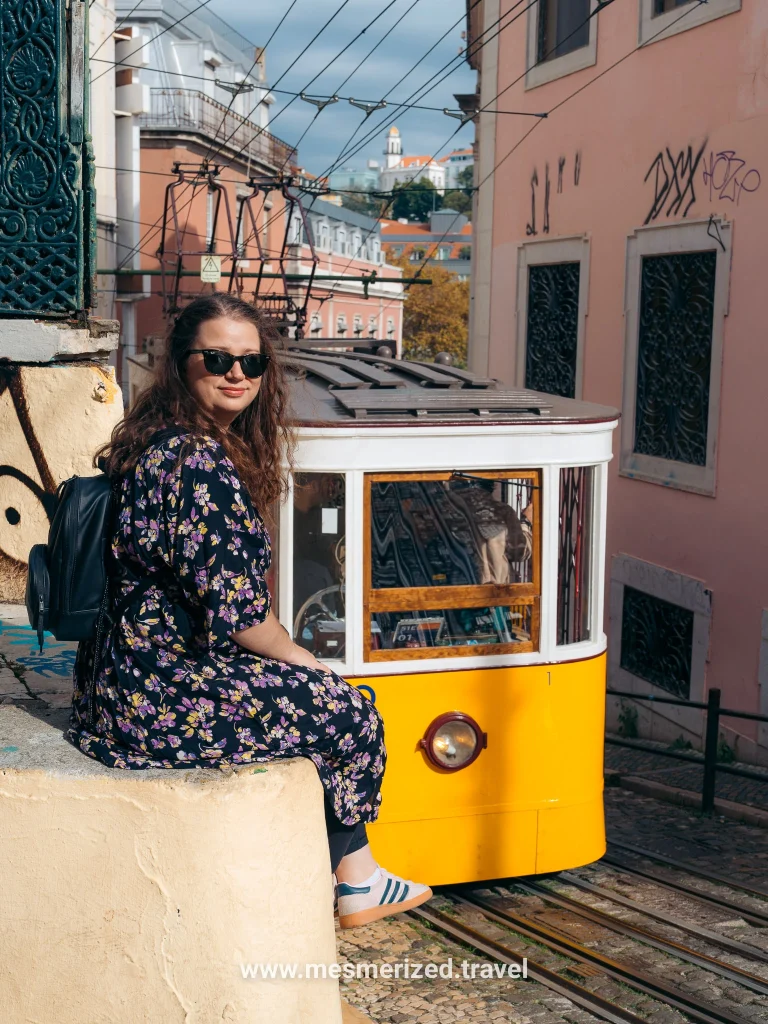
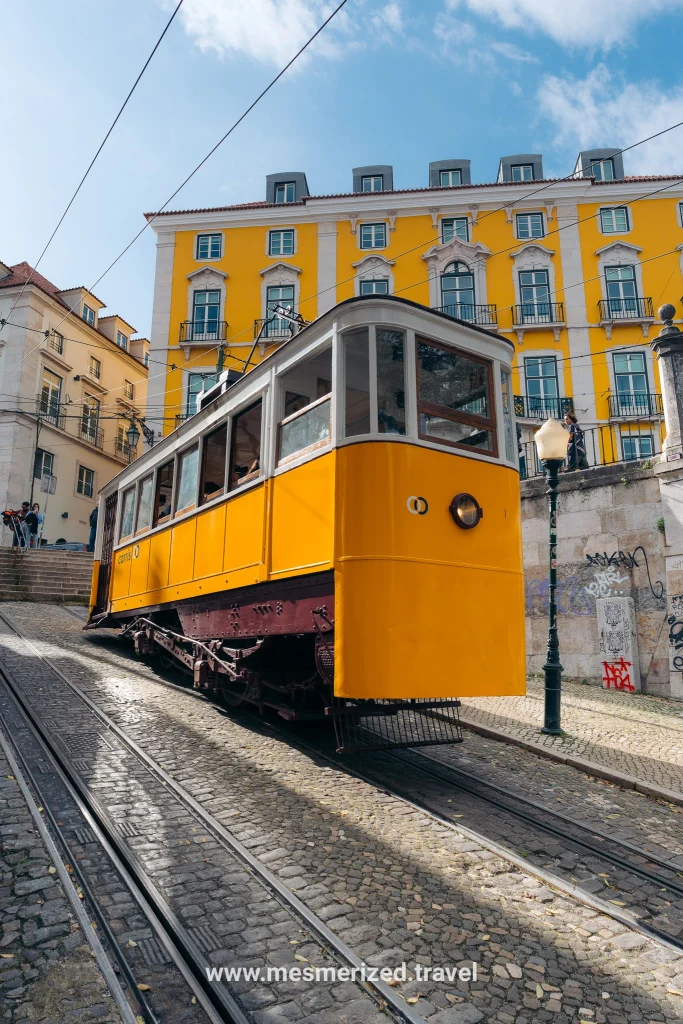
They’re planning to reopen it, but for now, you’ll have to walk.
Which honestly… is fine, firm ass incoming. And, you’re going up anyway for the view.
Miradouros (Viewpoints)
Miradouros (Viewpoints)
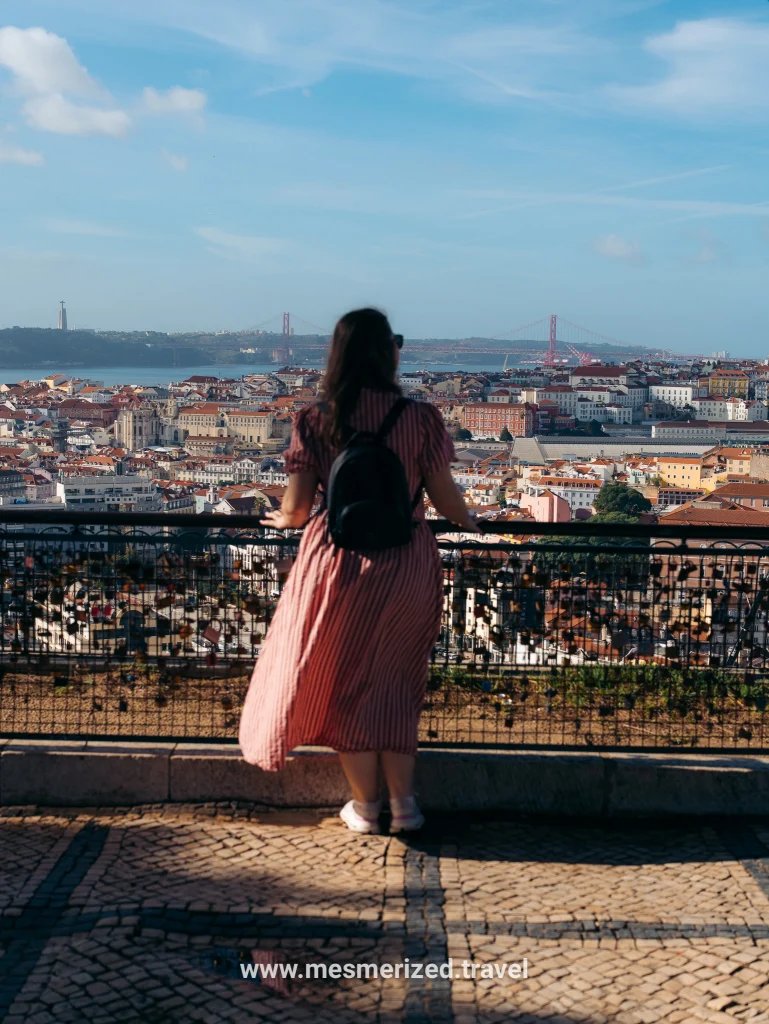
“Miradouro” means viewpoint in Portuguese, and Lisbon has dozens. This is probably our favourite thing about Lisbon.
There are viewpoints everywhere. Like, you walk for 10 minutes, suddenly there’s another one. And each one somehow looks different.
Red rooftops, river, bridges, random streets, it just works from every angle.
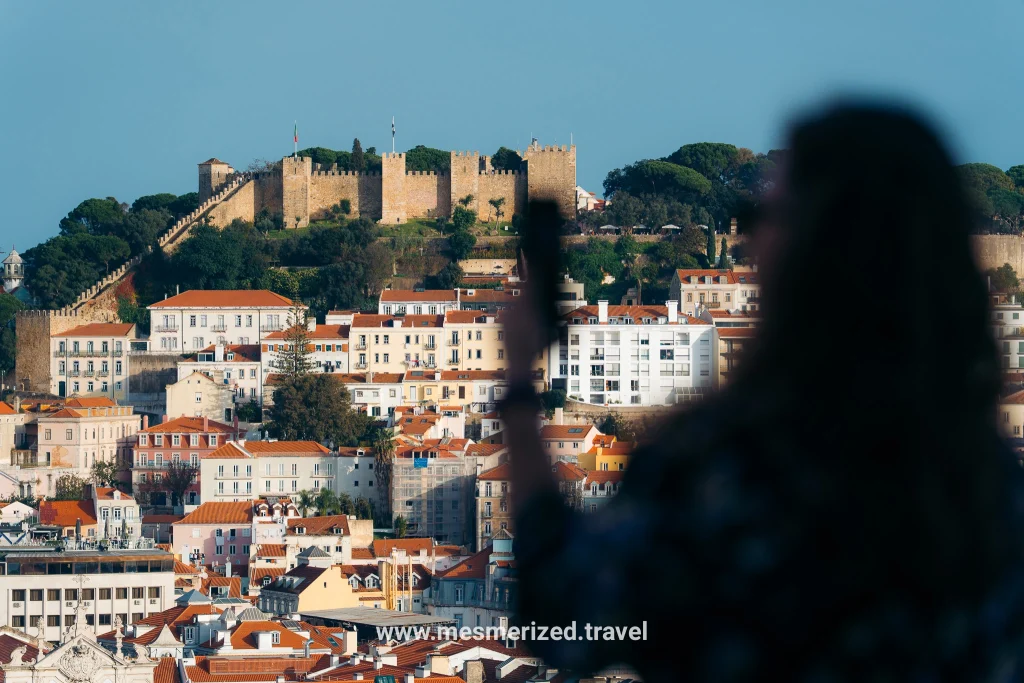
Miradouro de São Pedro de Alcântara
This landscaped terrace might be the best panorama in town. At sunset, it’s magical—especially with a drink from the nearby kiosk. Here is the location.
R. da Bica de Duarte Belo
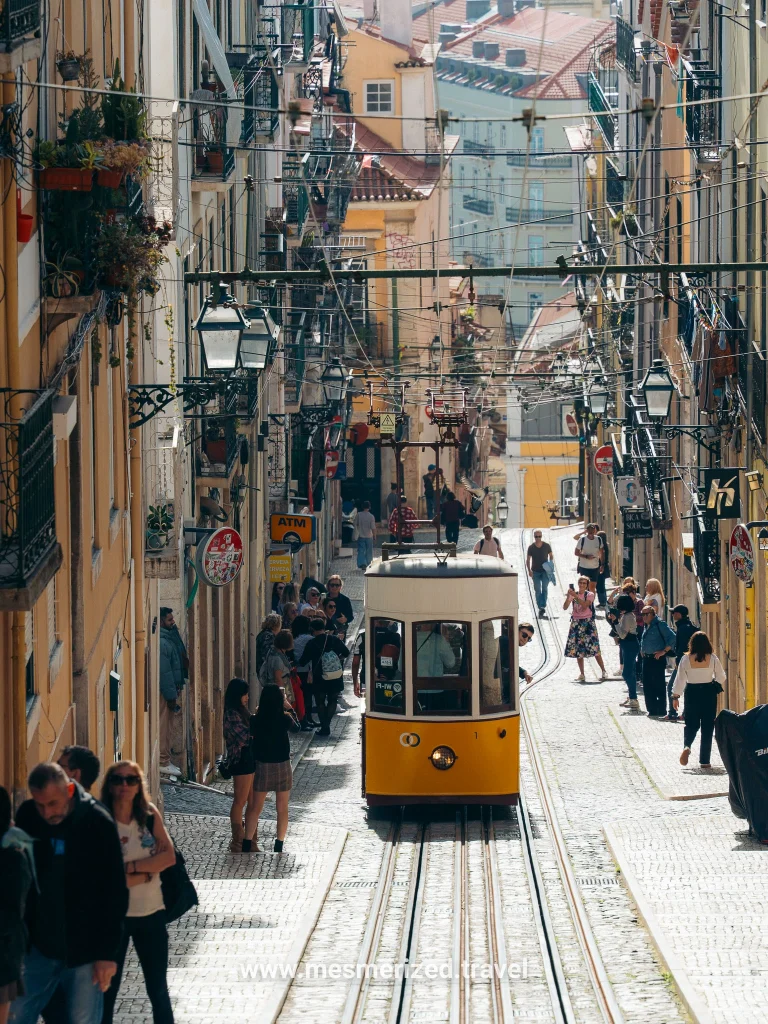
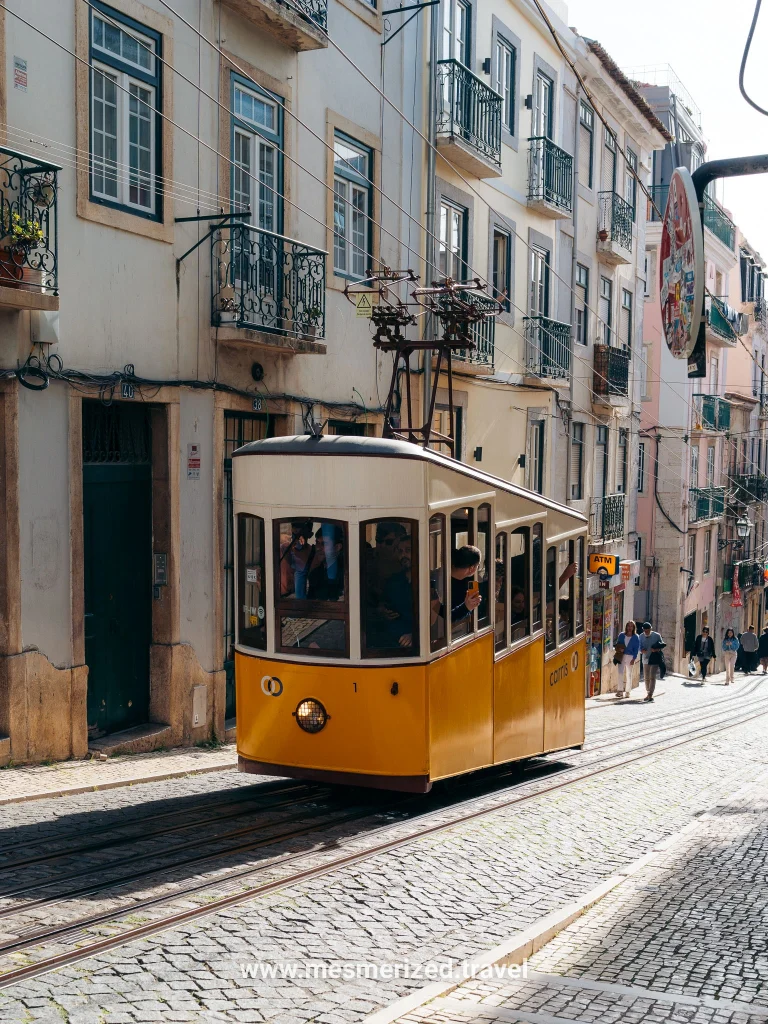
You’ve seen this one on postcards, the yellow tram climbing between pastel houses with the river shining behind. One of Lisbon’s most photographed streets. You can find the location here.
Miradouro de Santa Luzia
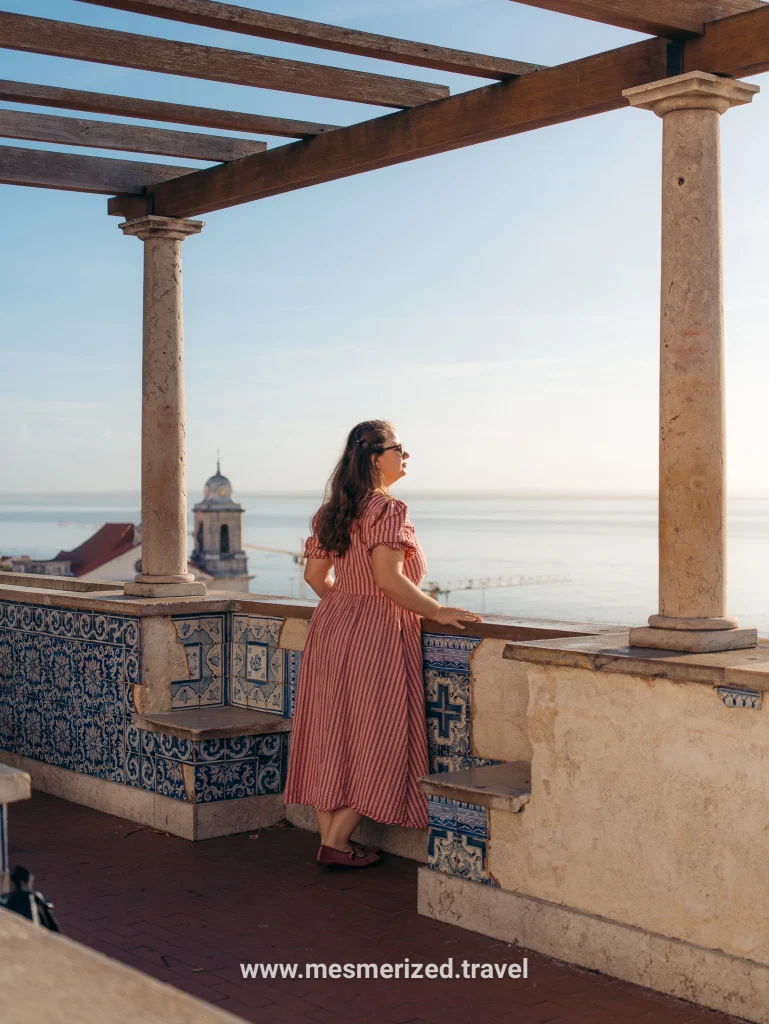
A peaceful terrace with blue-and-white azulejos and a view over Alfama. There’s almost always a guitarist here, giving it a romantic feel. Find the spot here.
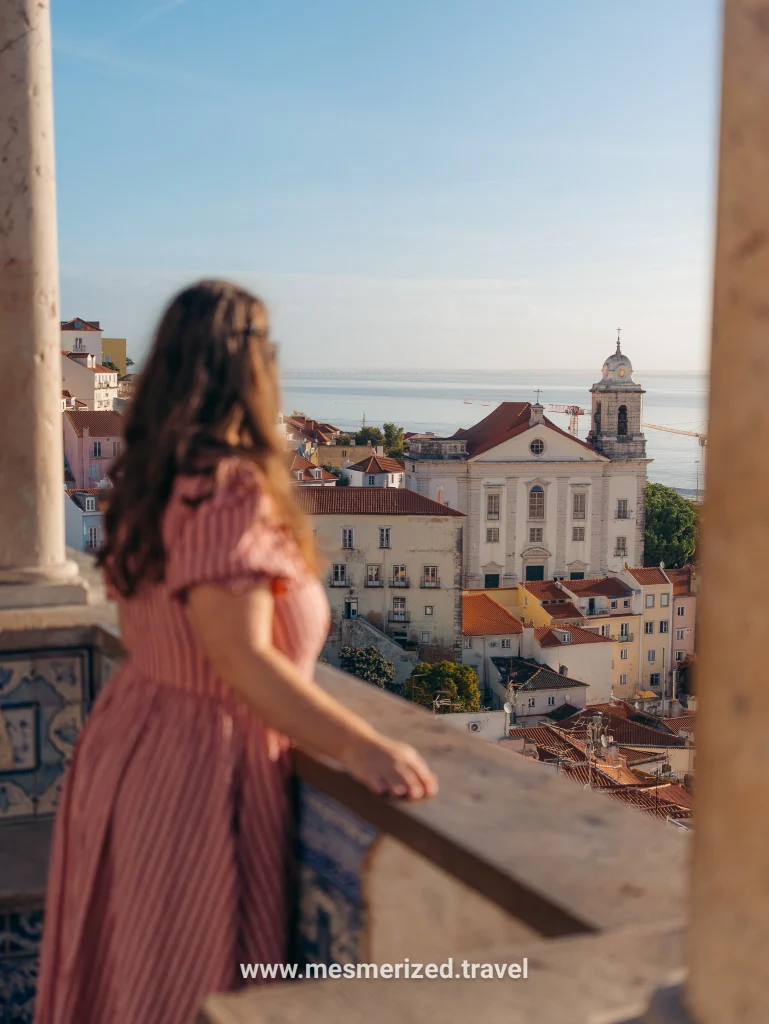
Miradouro das Portas do Sol
Right next to Santa Luzia, this is one of Lisbon’s most iconic viewpoints. The view of whitewashed houses tumbling toward the Tagus River is breathtaking. Find the location here.

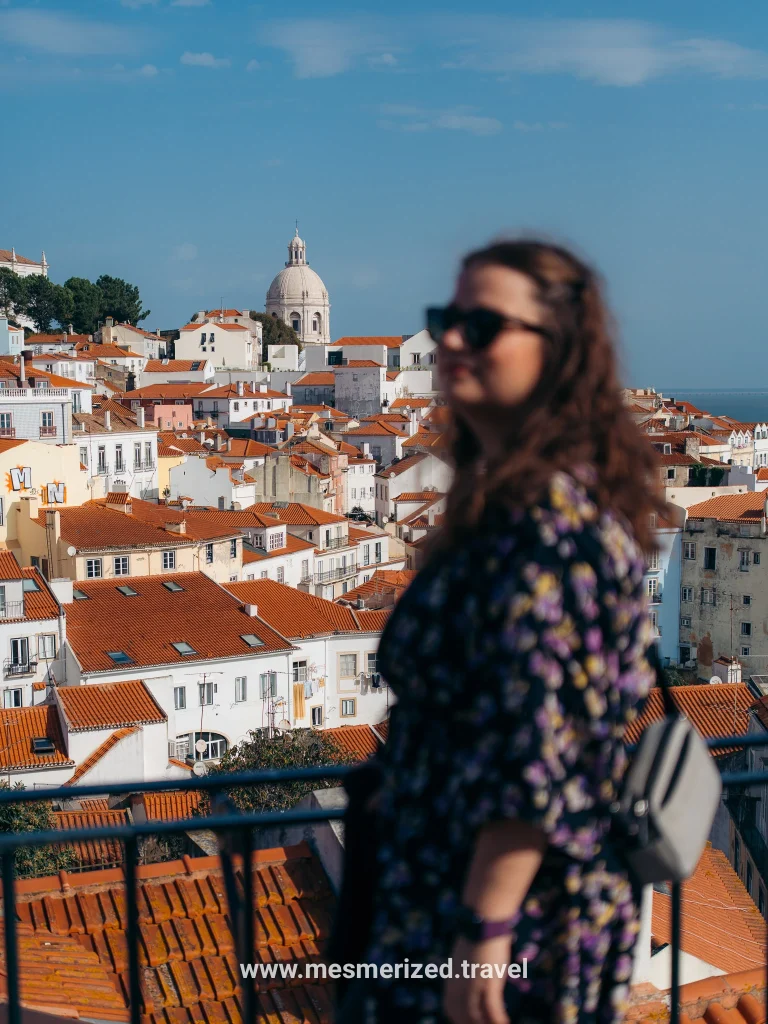
Miradouro da Graça
A local favorite. There’s a small café under the trees, perfect for cooling off while soaking in panoramic city views. You can find it here.
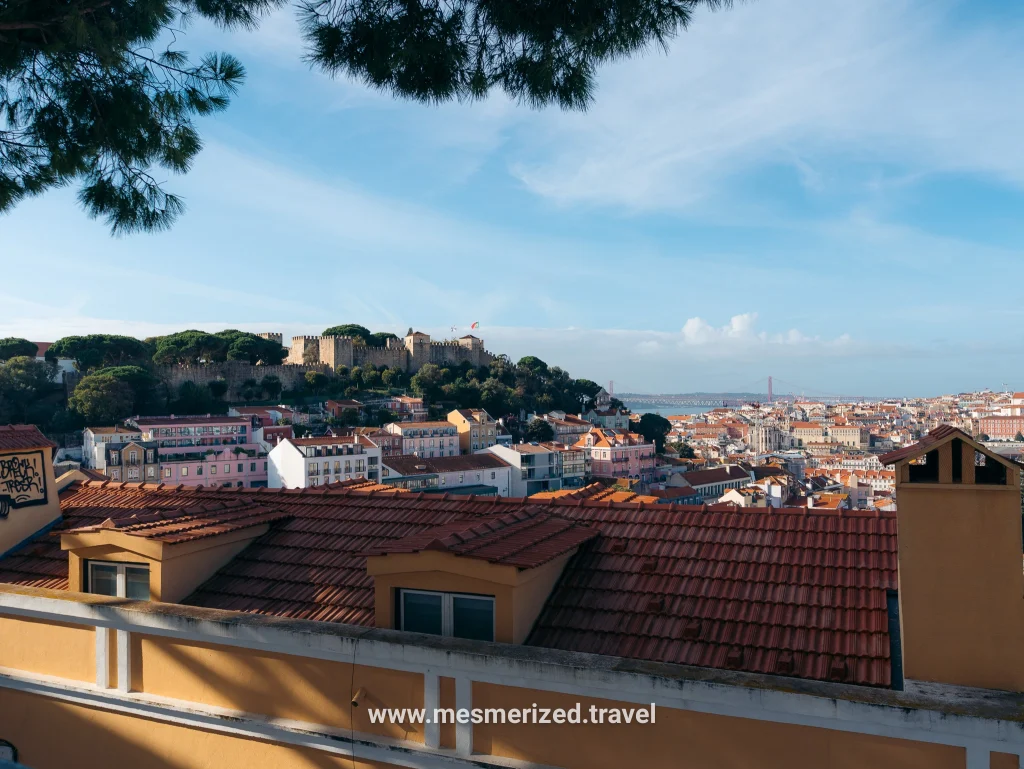
Miradouro da Senhora do Monte
This is the best spot in the city on the highest part of the city. Lisbon at the palm of your hand. If you are climbing it, good luck. It’s a good workout for sure.
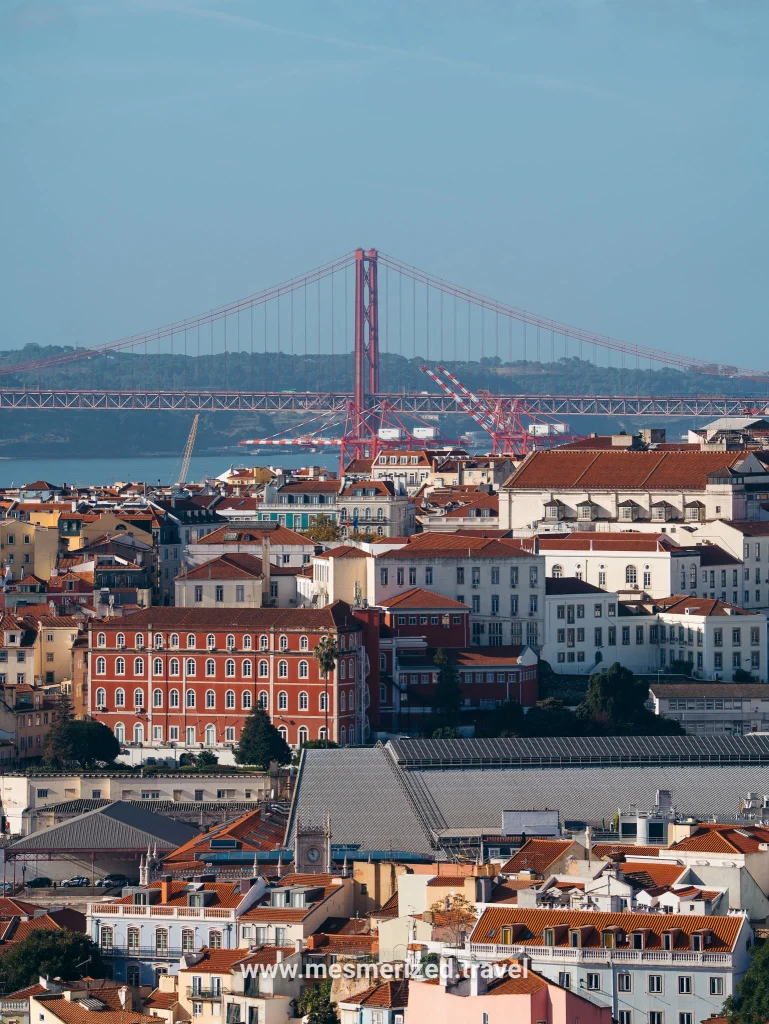
Pink Street
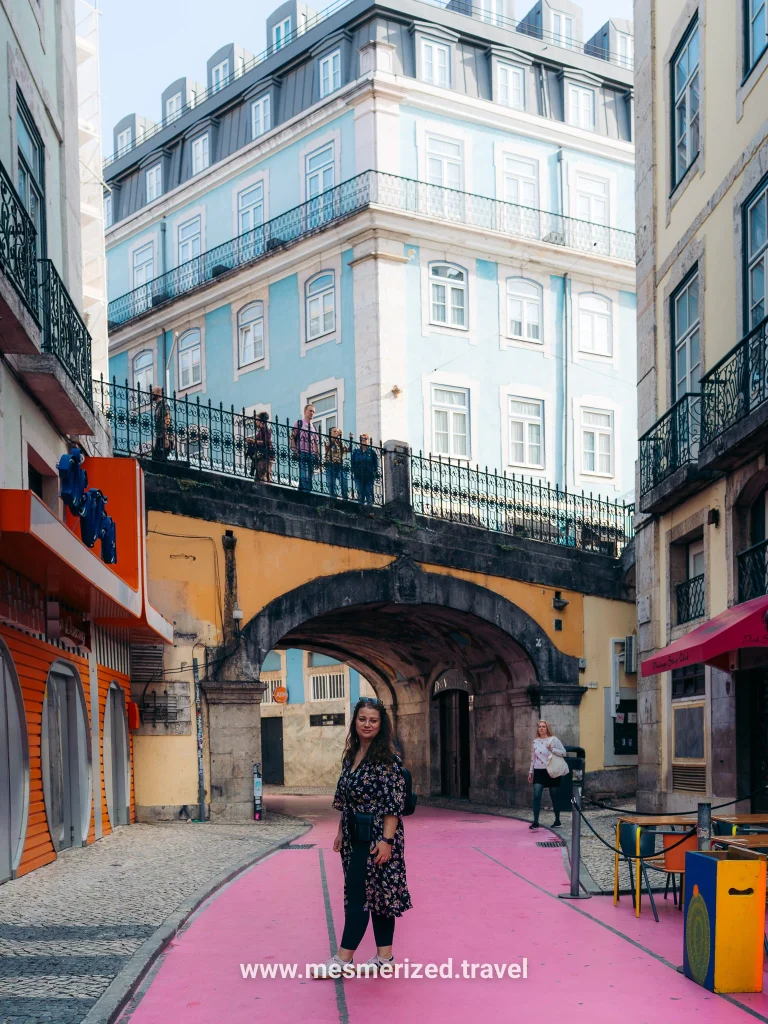
Pink Street
We weren’t sure what to expect here as we are not really party people.
It used to be a red light district, now it’s this bright pink street with bars and clubs.
We first saw it in winter and it was… fine. Not bad, just a bit empty, kinda sad if I’m being honest.
Then we came back in warmer months, and it was completely different. Loud, busy, people everywhere.
If you like nightlife, you’ll probably enjoy it. If not, just enjoy the view.
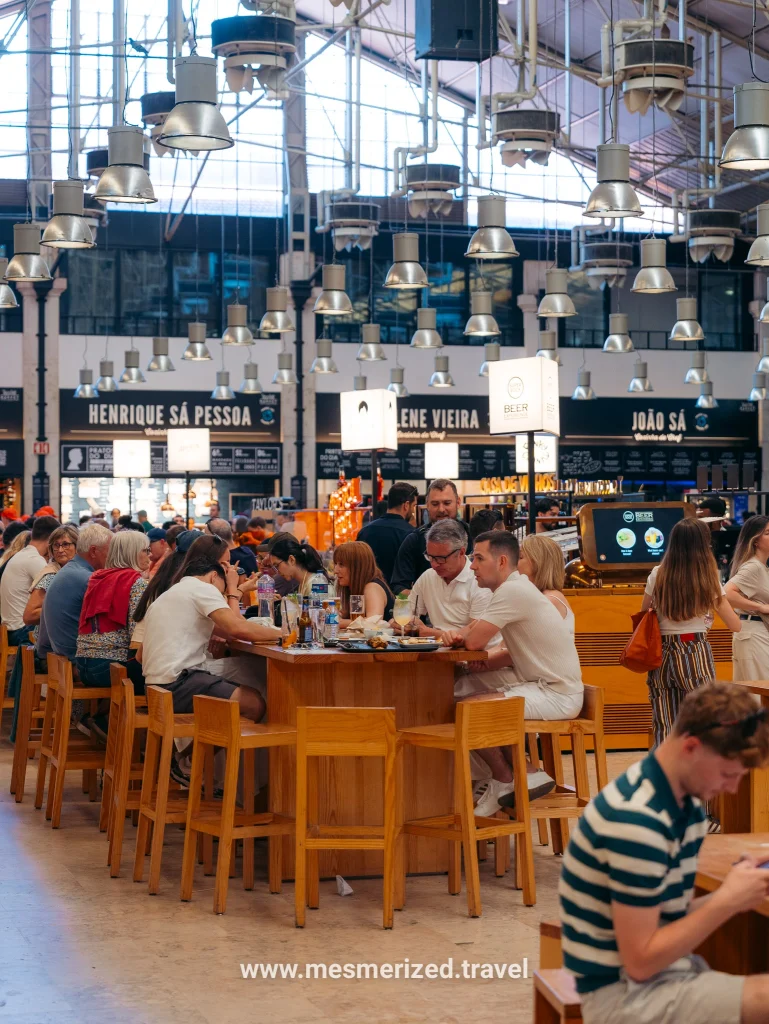
Time Out Market
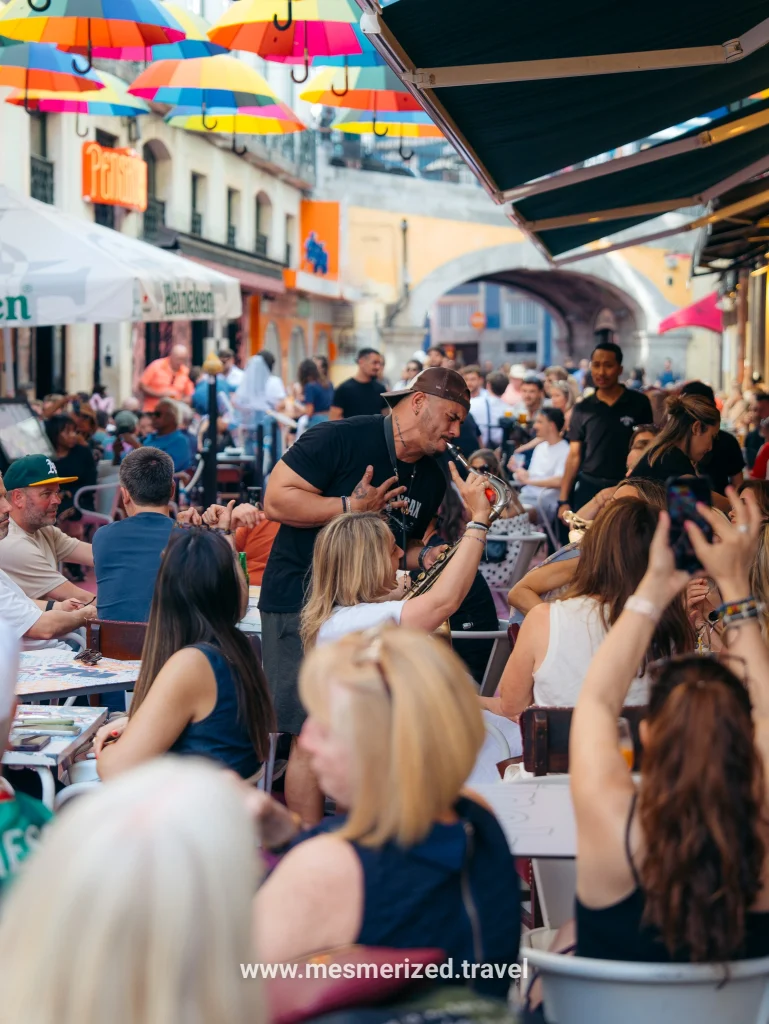
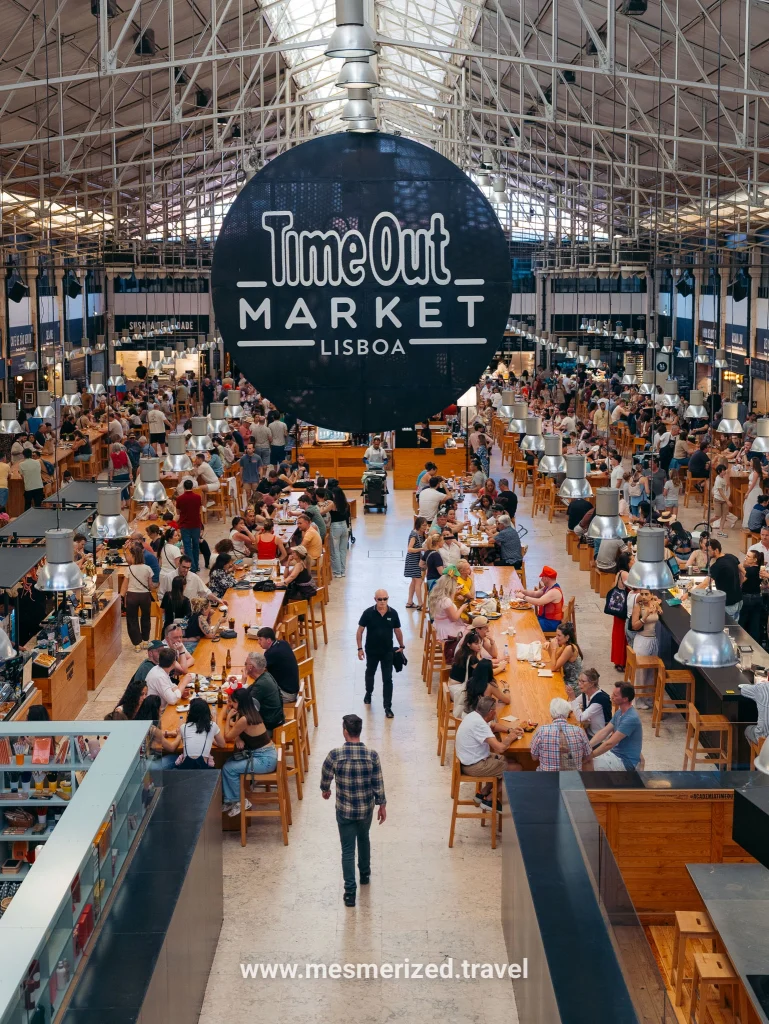
Inside a restored 19th-century market hall, this place is a foodie heaven. Time Out invited some of Portugal’s best chefs to open stalls here, and the result is a collection of the city’s top eats under one roof.
This place is basically a food hall, but done really well and it looks really nice. It can get crowded, but the food is actually good, not just “tourist good”. Try local specialties like bacalhau (codfish), piri-piri chicken, and of course, a pastel de nata for dessert, try to eat only one!
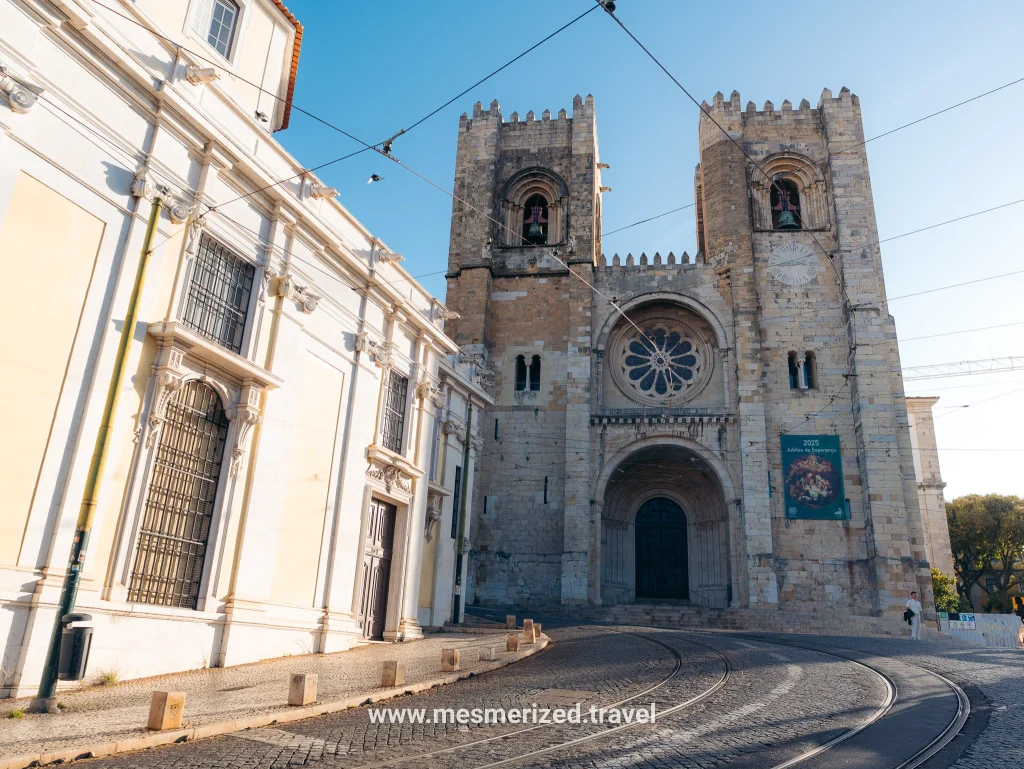
Lisbon Cathedral (Sé de Lisboa)
Built in 1147 after Lisbon was taken from the Moors, this cathedral is the city’s oldest church. It’s a mix of Romanesque, Gothic, and Baroque styles due to centuries of reconstructions. We never got inside, we spent way too much time catching the yellow train passing in front of the cathedral, got it on the video, but not on the photo.
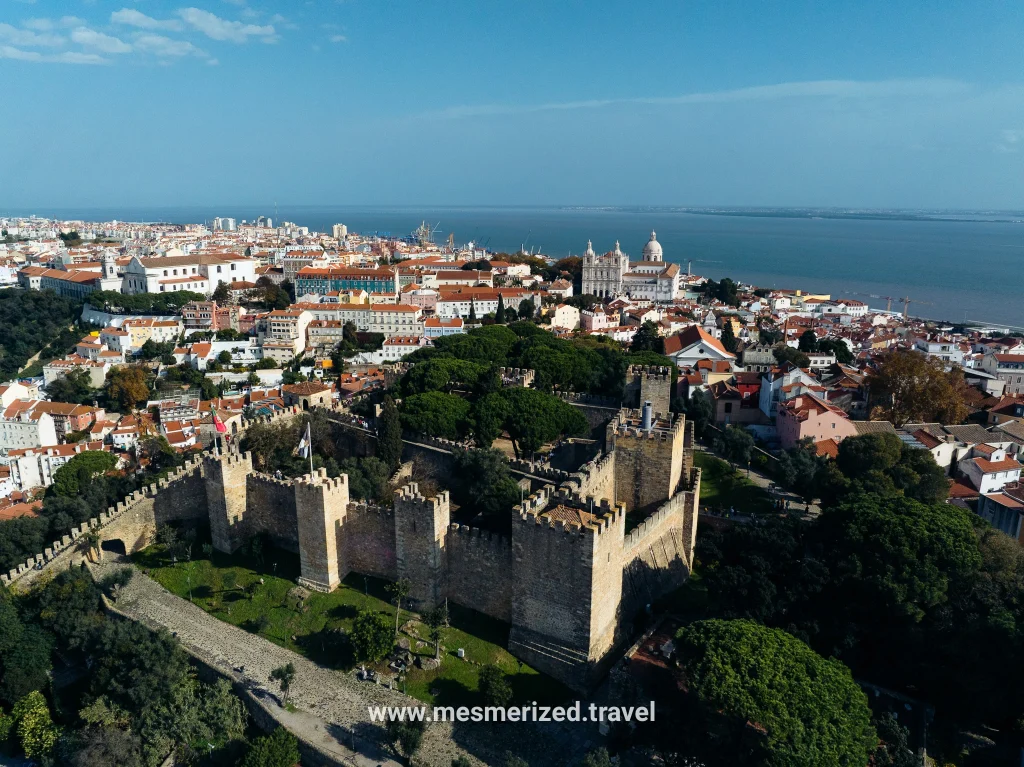
Lisbon Cathedral (Sé de Lisboa)
Sitting high above Alfama, this medieval fortress dates back to the 11th century when it was built by the Moors. After Lisbon was captured by Portugal’s first king, it became a royal residence. Today, it offers one of the best panoramic views of the city. Peacocks roam freely inside the castle walls, adding to its fairytale vibe.
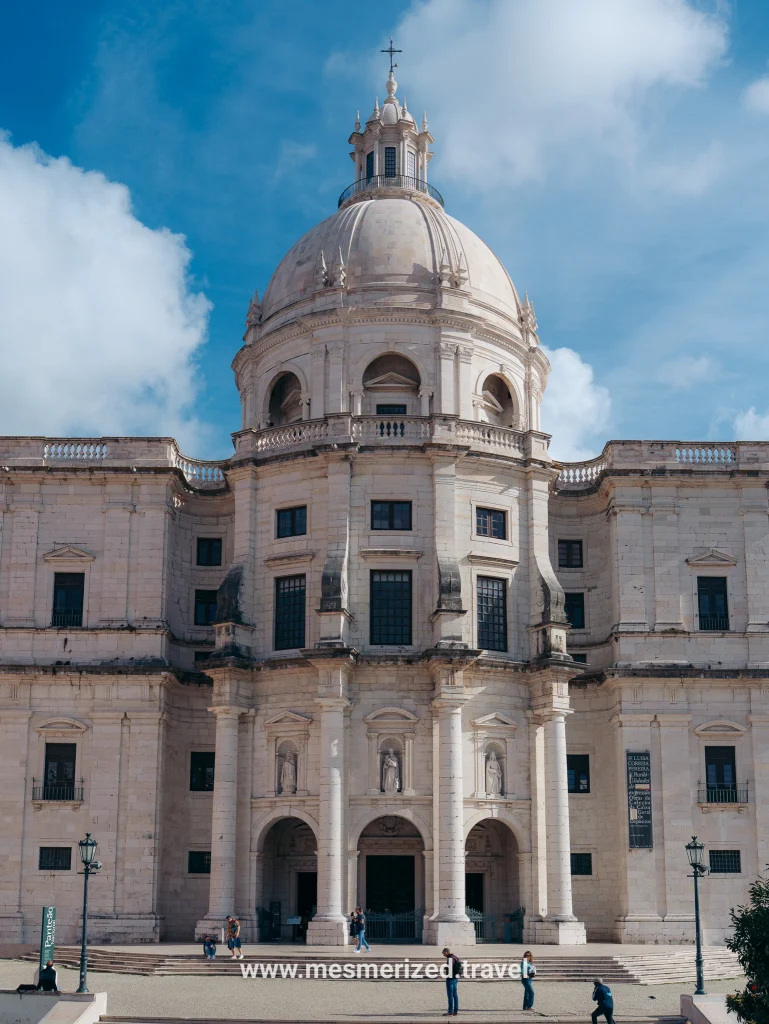
National Pantheon
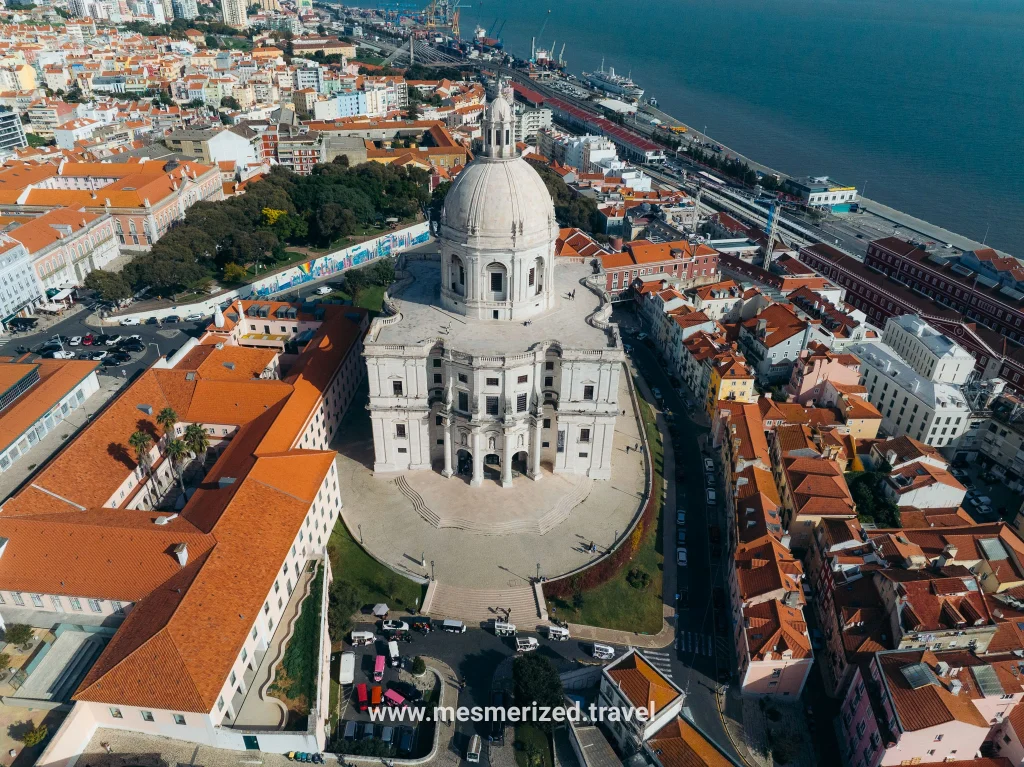
This majestic white-domed church took nearly 300 years to complete. It now serves as the final resting place for Portugal’s national heroes, including Amália Rodrigues, the Queen of Fado. Climb to the rooftop terrace for one of the best 360° views of Alfama and the Tagus River.
Belém Tower & Monument of the Discoveries
These two landmarks sit along the Tagus River in Belém, once the launch point for Portuguese explorers. These are a bit outside the center, but easy to reach.
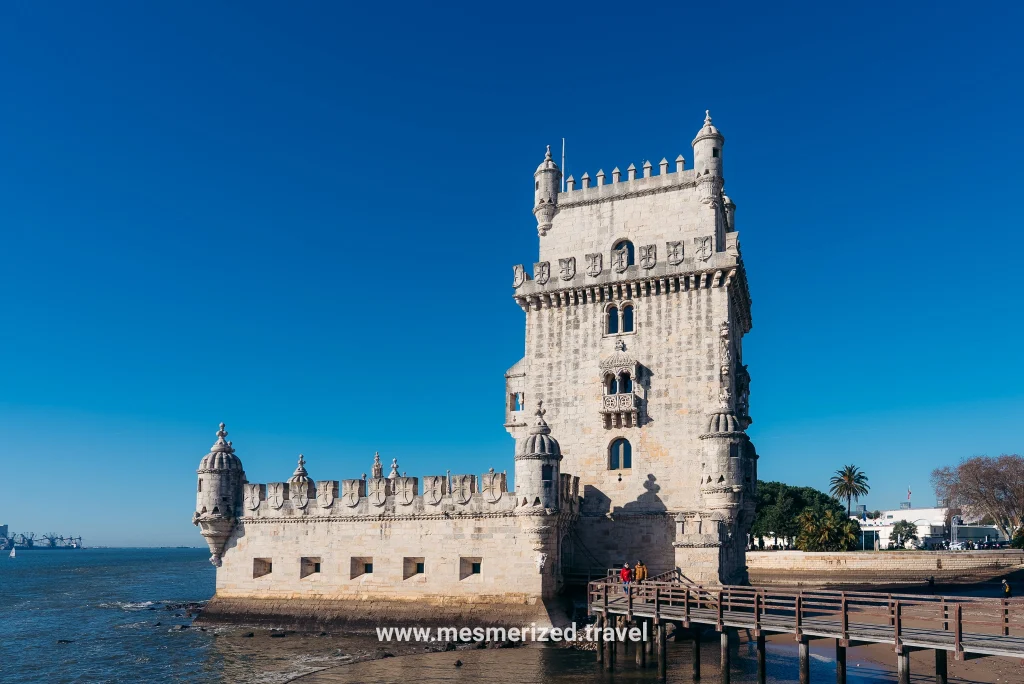
Belém Tower
Belém Tower was built in the early 1500s to protect Lisbon’s harbor, but today it’s one of the city’s most beautiful landmarks. The style is very “Lisbon”, lots of rope-like carvings, seashells, and little maritime details that celebrate Portugal’s age of exploration. Even if you don’t go inside, it’s worth seeing up close because the design is so unique.
Monument of the Discoveries
The Monument of the Discoveries was built in 1960 to honor Portugal’s great explorers like Vasco da Gama and Ferdinand Magellan. It’s shaped like the front of a ship, pointing straight toward the water, which feels very symbolic when you’re standing beneath it. It’s a place that celebrates the era when Portugal sailed to every corner of the world.

As we said, bit outside of the city, but it’s a lovely walk along the river, with the bridge views, perfect.
MAAT – Museum of Art, Architecture and Technology
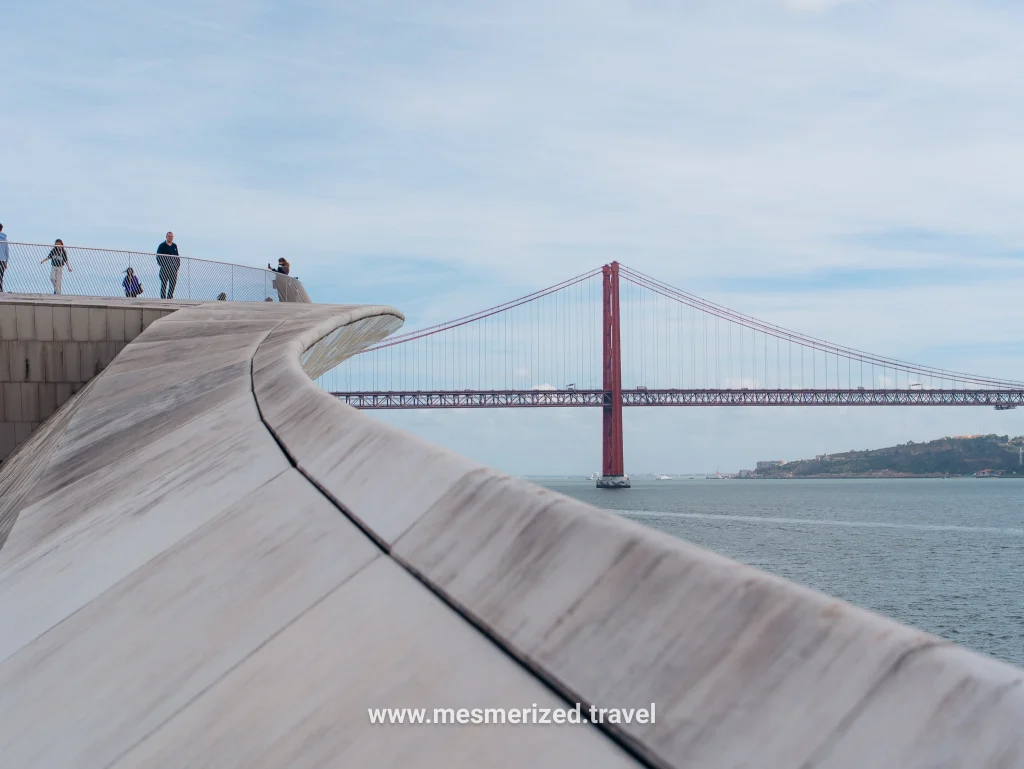
You don’t even need to go inside MAAT to enjoy it. The building itself is a piece of art, with its smooth, wave-like shape right along the river. You can walk across the rooftop for amazing views of the 25 de Abril Bridge and the waterfront. It’s modern, photogenic, and a really nice place for a slow stroll. And the view of the bridge is just wonderful. We are ashamed to admin that we still haven’t been inside, but we will return.
Jerónimos Monastery
Jerónimos Monastery was built in the early 1500s to celebrate Vasco da Gama’s voyage to India, and today it’s a UNESCO site. The cloisters are full of detail, stone arches, maritime symbols, little patterns everywhere you look. It’s one of those places where you’d probably spend a lot of time just looking around.
Inside, you’ll also find the tomb of Vasco da Gama.

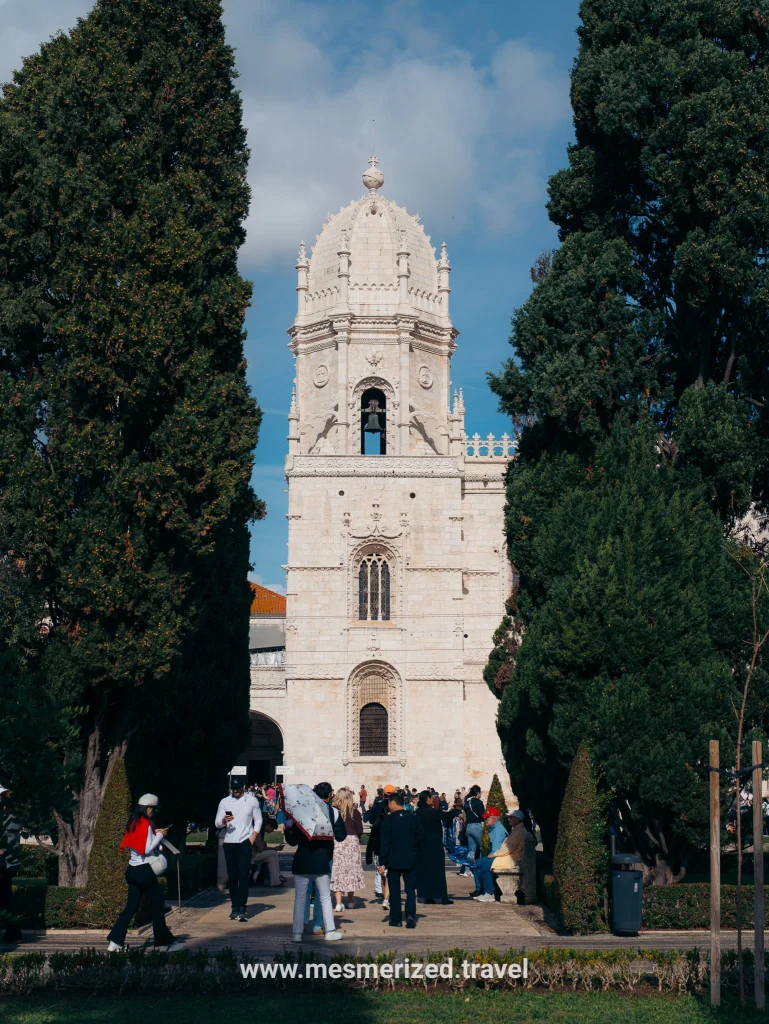
And now, a bit embarrassing… we still haven’t actually been inside. The one time we planned to go, it was so crowded that we just looked at the line, looked at each other, and went straight for pastel de nata instead. No regrets, but still… maybe next time?
It’s one of Lisbon’s most impressive sights, but also one of the busiest, so if you do want to go in, try to plan it early.
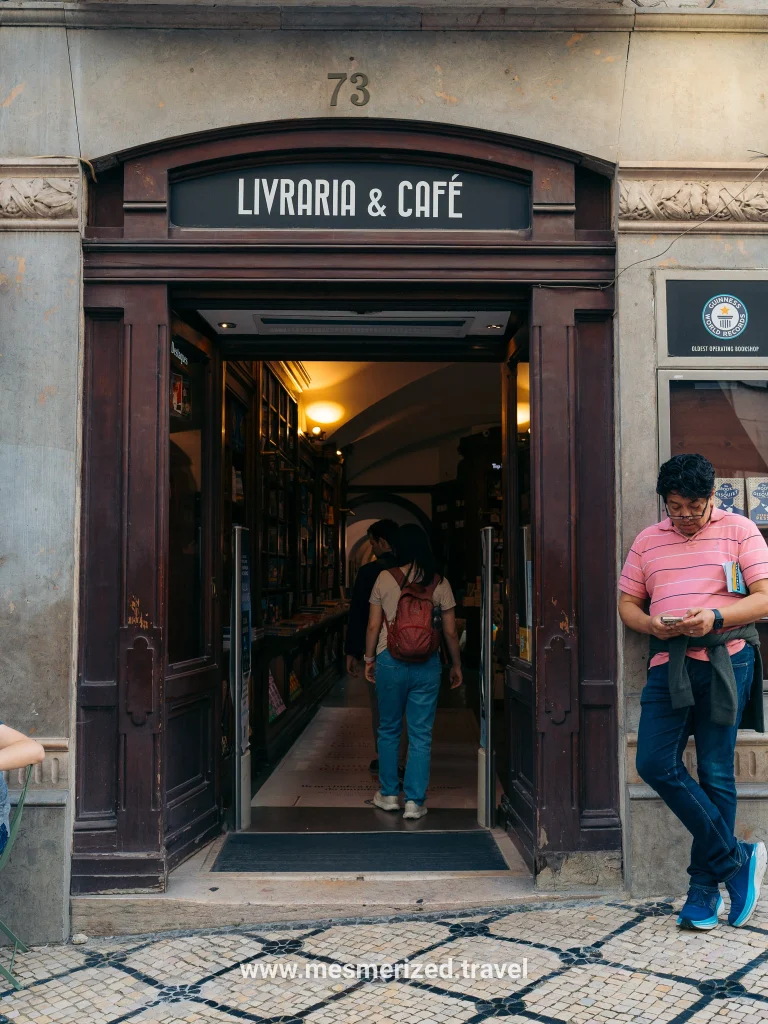
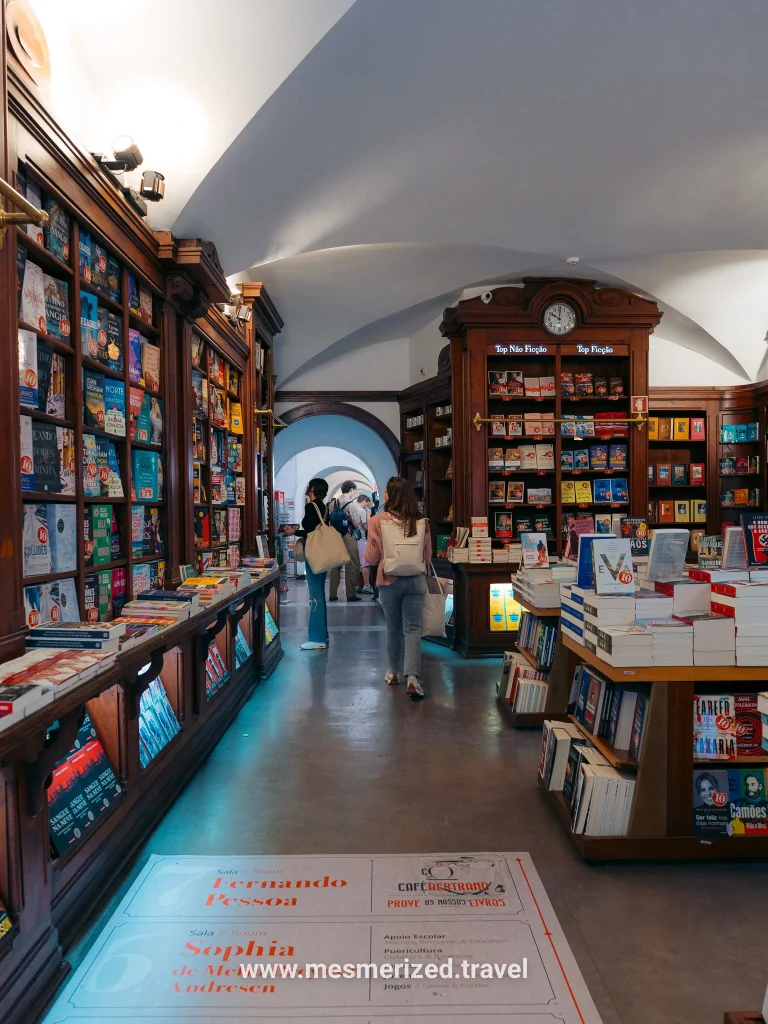
Livraria Bertrand
Recognized by Guinness as the world’s oldest operating bookstore (since 1732), this Chiado institution has hosted writers and thinkers for centuries. It looks cute, but maybe not that impressive, I don’t know. If you are passing by, and you will be a couple of times, if there are no crowds, come inside and explore. But if it’s crowded, you can skip it.
Marquês de Pombal
This grand statue honors the man who rebuilt Lisbon after the 1755 earthquake. The disaster nearly leveled the city, destroying churches, palaces, and much of downtown in a series of quakes, tsunamis, and fires. Under his leadership, Lisbon was completely redesigned with broad avenues and earthquake-resistant buildings, marking one of Europe’s earliest examples of modern urban planning. And he built Lisbon as you see it today.
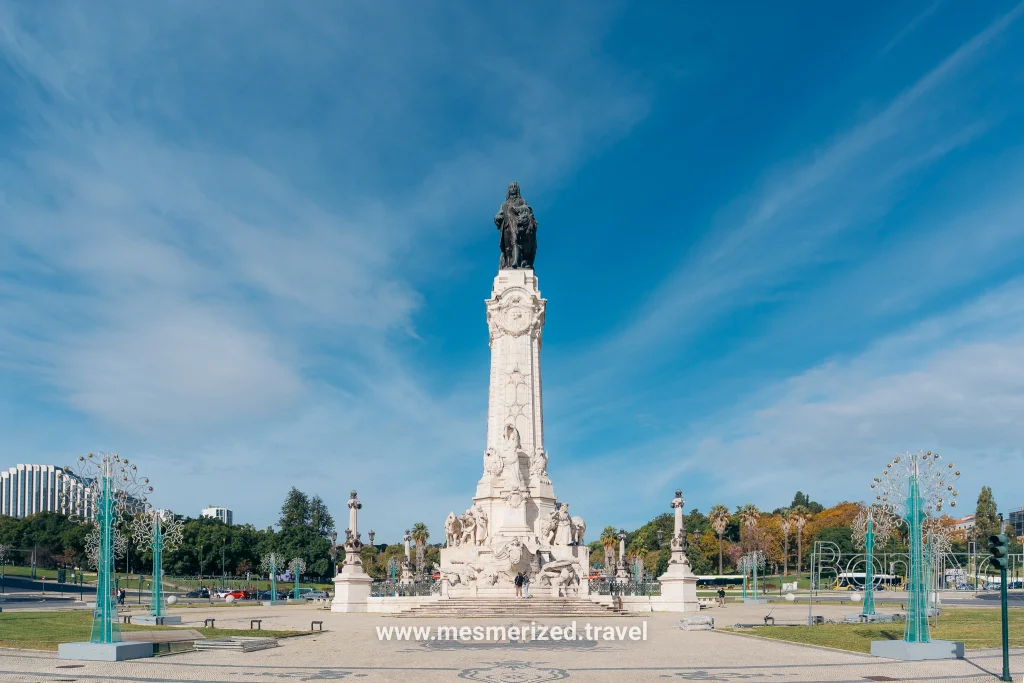
Standing tall at the top of Avenida da Liberdade, the Marquês is shown with a lion at his side, symbolizing strength and resilience. It’s a statue that you will see when entering the city center, and it looks like he is just overlooking the city.
Best Time to Visit Lisbon
We visited Lisbon in October and November and we always had a pleasant weather. You just need a light jacket for the evenings, but during the day, short sleeves, dress, perfect. Lisbon has mild weather year-round, but the best times to visit are spring (March to May) and autumn (September to November).
We would recommended visiting during autumn or winter as there are not that many crowds and it’s not that hot!
How to Get Around Lisbon
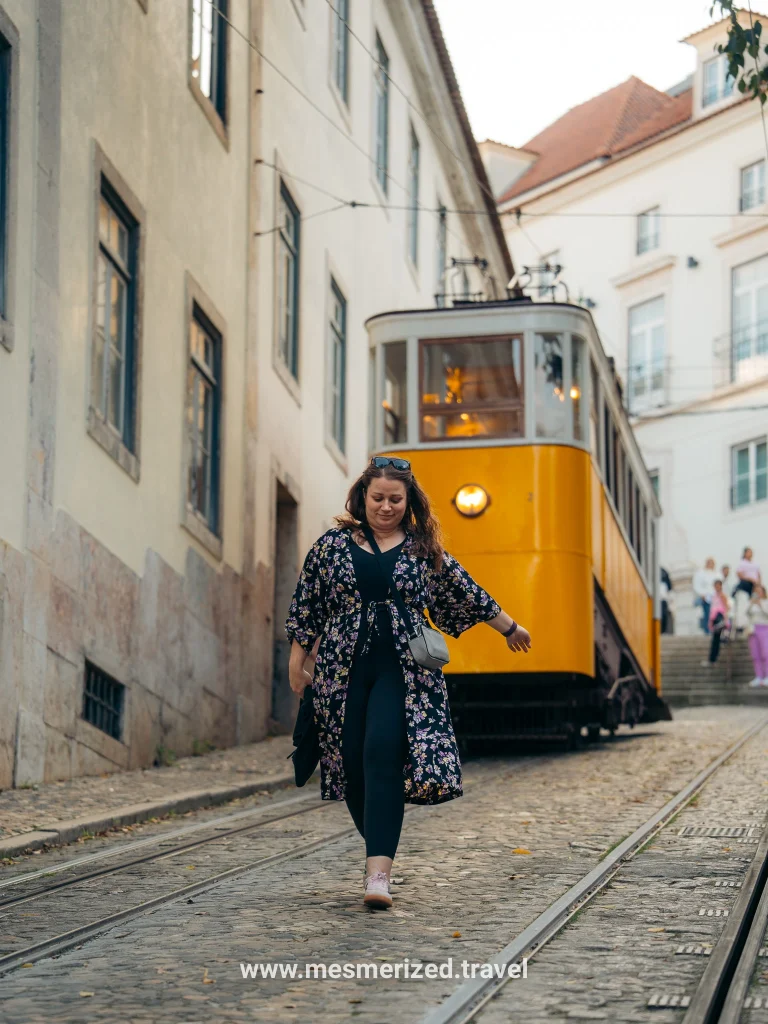
Lisbon’s public transport is easy and efficient. We drove in trams, buses, and in metro, and you can pay as you go with your card or phone.
Tram 28 is the most famous route, passing through many of Lisbon’s must-see neighborhoods. Taxis and Bolt rides are affordable alternatives.
But we think that walking is the best way to explore Lisbon. Hills can be a challenge, but at least your butt cheeks will be firm.

Things You Should Know Before Visiting Lisbon
- The hills are no joke: Lisbon is built on seven hills, so wear comfortable shoes, lot’s of walking uphill, but the views will make it worthy.
- Cash and cards: Most places accept cards, but small cafés and markets may prefer cash.
- Safety: Lisbon is generally safe, but keep an eye on your belongings in crowded spots and in Praça do Comércio
- Language: Portuguese is the official language, but everyone speaks English
- Pastéis de Nata: Once you try one, you’ll want another. The original bakery, Pastéis de Belém, is worth the line.
- Lisbon offers amazing food and we’ve prepared a Lisbon food guide for you


Lisbon is a city that balances tradition and creativity like nowhere else. Every visit feels different—a new viewpoint, a new flavor, a new reason to fall in love all over again.
Until next time, be mesmerized ❤️