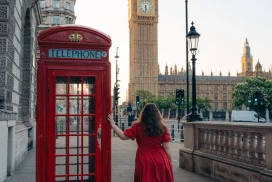
Walking
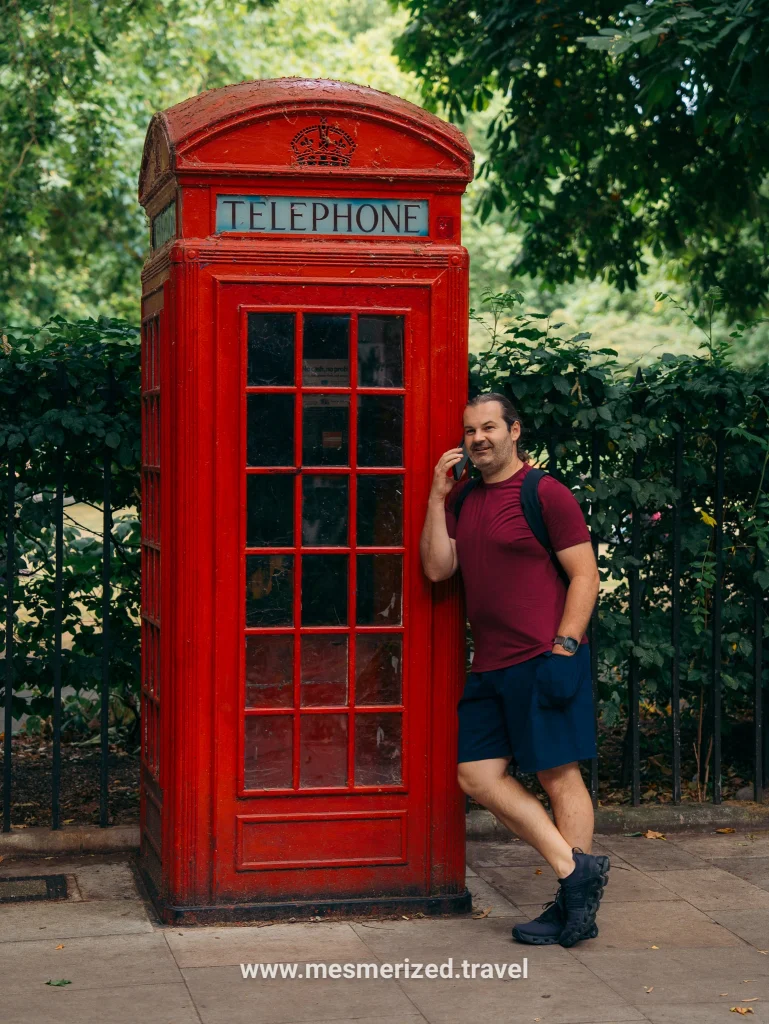
Let’s start with the obvious one. You will be walking. A lot. More than you planned, probably more than you’ve walked anywhere else, and your feet will remind you of this every evening.
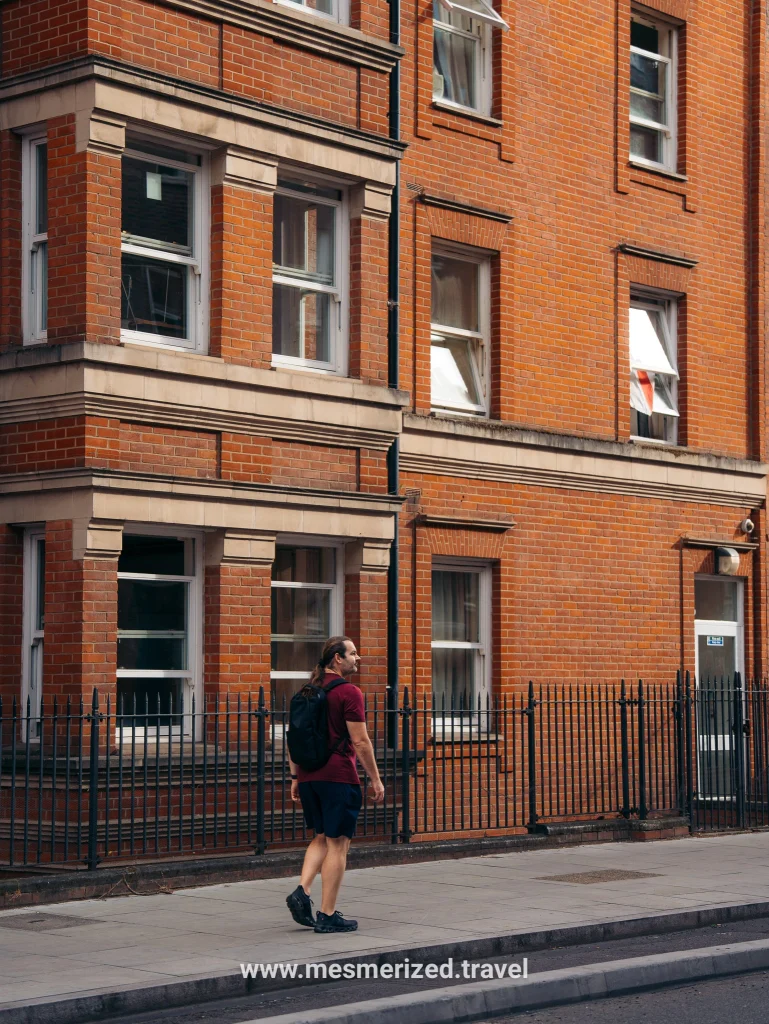
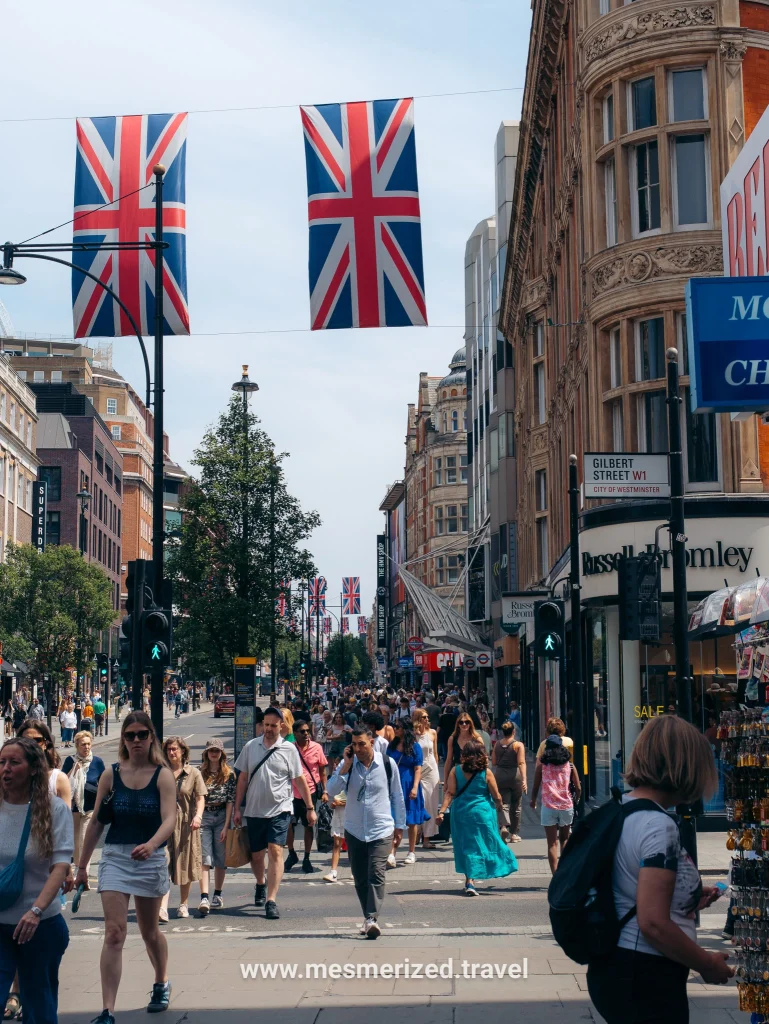
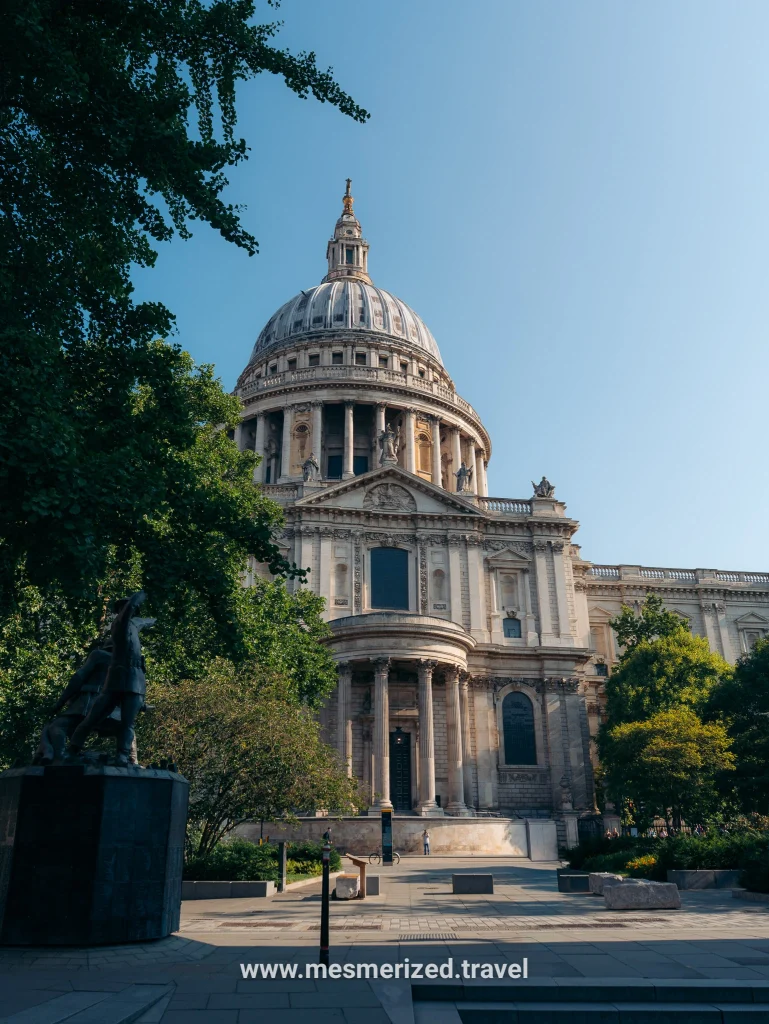
But here’s the thing, walking in London is genuinely lovely. There is always something beautiful around the next corner. A river view, a Victorian building you didn’t expect, a quiet alley that looks like it’s from another century. It’s honestly one of the best cities in the world to just wander around without a plan.
Good shoes are non-negotiable. We cannot stress this enough. Leave the cute but uncomfortable ones at home.
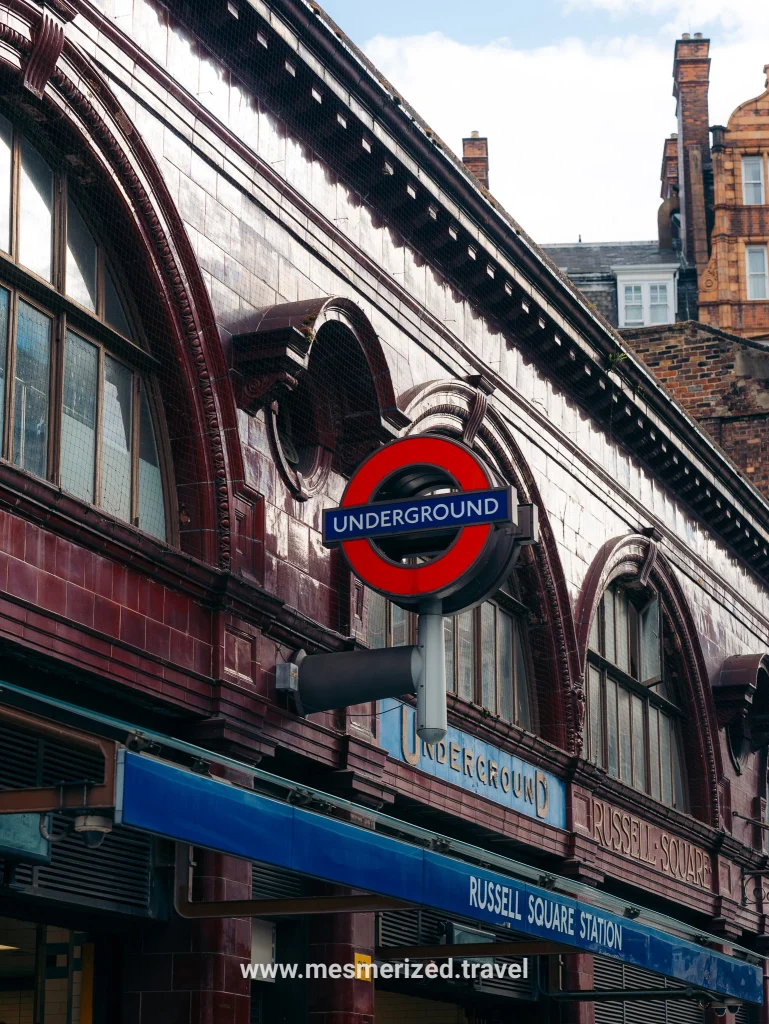
The Tube (London Underground)
The Tube is your best friend in London. It’s fast, it goes everywhere you need, and once you get your head around the colour-coded map it’s incredibly easy to use.
How to pay
Forget paper tickets. You don’t need them, and they cost almost double the price of a contactless fare, they even state that on the official website. A Zone 1 paper ticket costs £7.00. The same journey with contactless costs £3.10 at peak or £3.00 off-peak. Just use your phone, your watch, or your contactless card.
Contactless: tap your card or phone on the yellow reader when you enter and again when you exit. That’s it. No setup, no registration, no app required and always tap it when exiting, don’t forget that.
Oyster card: London’s dedicated travel card, available from any Tube station. You top it up with credit and it deducts each journey automatically. The fares are identical to contactless, so for most visitors contactless is the easier option. The Oyster card is worth getting if you don’t have a fee-free foreign card and want to avoid international transaction charges on every journey, or just want a Oyster card souvenir, I know we have two at home.

The daily cap, this is the good bit
Here’s something that will save you money without you having to do anything. Both contactless and Oyster automatically cap your spending each day. Once you’ve spent the daily cap amount, every additional journey that day is free.
For central London (Zones 1-2), the daily cap is £8.90 (~10,50€). You could take ten Tube rides and still only pay £8.90 for the day. The system tracks it and stops charging you automatically. No need to buy a day pass, no need to think about it. Perfect!
There’s also a weekly cap from Monday to Sunday. For Zones 1-2 it’s £44.70 (~53€). If you’re spending a full week in London riding the Tube every day, this kicks in automatically too.
Peak hours are 6:30 to 9:30 AM and 4:00 to 7:00 PM on weekdays, slightly more expensive than off-peak. Weekends are always off-peak, which is good news.
One important rule: always use the same card or phone for every journey. If you switch between two cards, the system can’t track your total and you lose the cap. Pick one and stick to it all day.
A few things to know
- always touch out when you exit, the Tube charges you the maximum fare if you don’t
- buses are different, touch in only, no need to touch out
- the Tube map is available on the TfL app, Google Maps, and Apple Maps, all work great in London
- signal in the underground is not that great, so download the offline map before you go
Buses
London buses are not just a tourist attraction. They are actual, functioning public transport that Londoners use every day. They are also, genuinely, one of the more fun ways to get around. And a tourist attraction.
If you ride a double-decker, and you should, go upstairs and sit in the front row. The view from up there is brilliant and it costs exactly the same as sitting on the ground floor. Do it at least once, we did it all the time, what a ride.
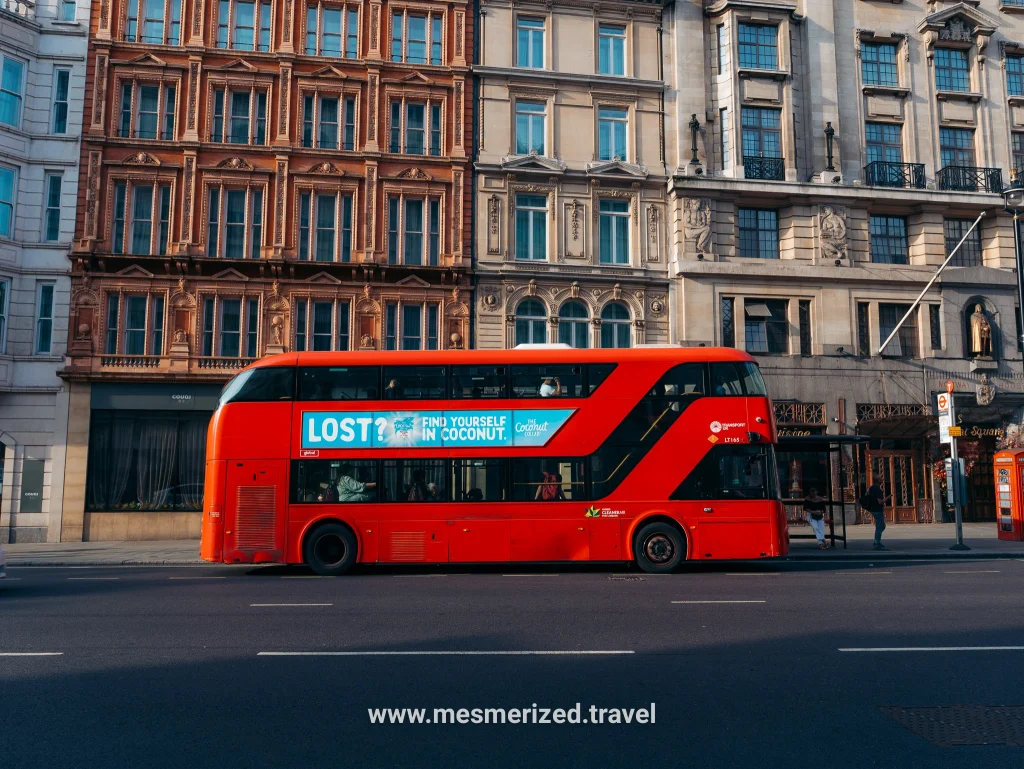
How to pay: same as the Tube, just tap your contactless card or phone on the reader when you board. There’s no touch out on buses.
Cost: a single bus journey is £1.75 (~2€). And here’s a nice bonus, the Hopper fare means you can take unlimited bus journeys within one hour of your first tap for that same £1.75. So if you need to switch buses, it doesn’t cost extra.
The daily bus cap is £5.25 (~6€). Ride as many buses as you want in a day, that’s the most you’ll pay.
Black Cabs (Taxis)
The iconic black cabs are very much a London thing, and riding in one is its own kind of experience. They’re spacious, they can turn on a sixpence (literally, London cabs have an incredibly tight turning circle, it’s actually a legal requirement), and the drivers know the city inside out. There’s a reason London cabbies have to pass something called The Knowledge, a test of memorising every street in London that takes years to complete.
They are on the pricier side compared to the Tube or bus, but as a one-off London experience it’s worth doing once. You can hail one from the street when the yellow light on top is lit, or find them at taxi ranks outside major stations.
Things to Keep in Mind
Air conditioning, or the lack of it. The Tube is famously hot. Some lines are worse than others, the Central line in particular earns its nickname of the “Baking Line” in summer. London has historically had cooler summers and AC simply wasn’t a priority when the network was built, some of the tunnels are over 150 years old. They’re slowly rolling it out across the network but it’s a slow process.
If you’re visiting in summer, bring a small bottle of water and maybe a folding fan. You’ll see locals with them and you’ll understand why. It can get genuinely uncomfortable on a hot day underground. We were there on a heat wave and it’s no joke.
Buses and newer Tube stock on some lines do have AC, but don’t count on it everywhere.
Navigation: open Google Maps or Apple Maps, type in where you want to go, tap public transport. It will tell you exactly which line, which stop, and how long it takes. It just works. London is one of the best-mapped cities in the world and we’ve never once gotten lost.
Getting around London is one of those things that sounds complicated before you arrive and turns out to be completely fine once you’re there. The system is good, the maps are clear, and if you’re ever unsure, someone will help. Londoners are much friendlier than their reputation suggests.
If you’re planning your trip, these might help:
- First Time in London? Here’s What You Actually Need to Do
- 3 Days in London: The Perfect Itinerary for First-Timers
- 5 Days in London: The Ultimate Itinerary for First-Timers
- London Photography Guide

Just remember: good shoes, contactless card, front row upstairs on the bus. That’s really all you need.
Until next time, be mesmerized 💛