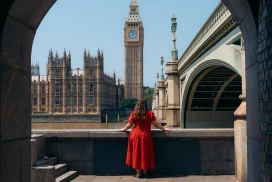
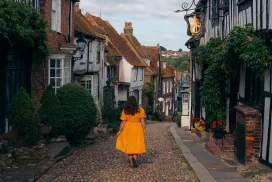
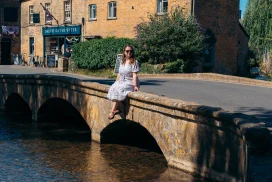
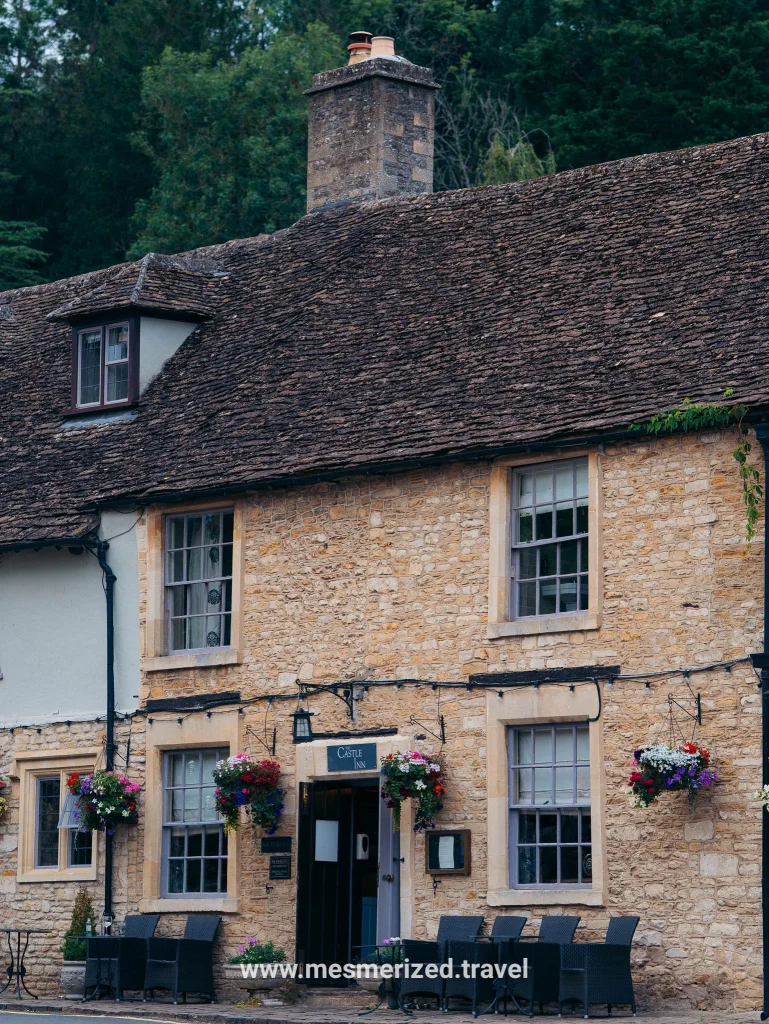
The first thing you notice when you arrive is the stone. Every single building in Castle Combe is built from the same warm honey-coloured Cotswold limestone, and the effect is that the whole village feels completely cohesive. You won’t find modern houses here.
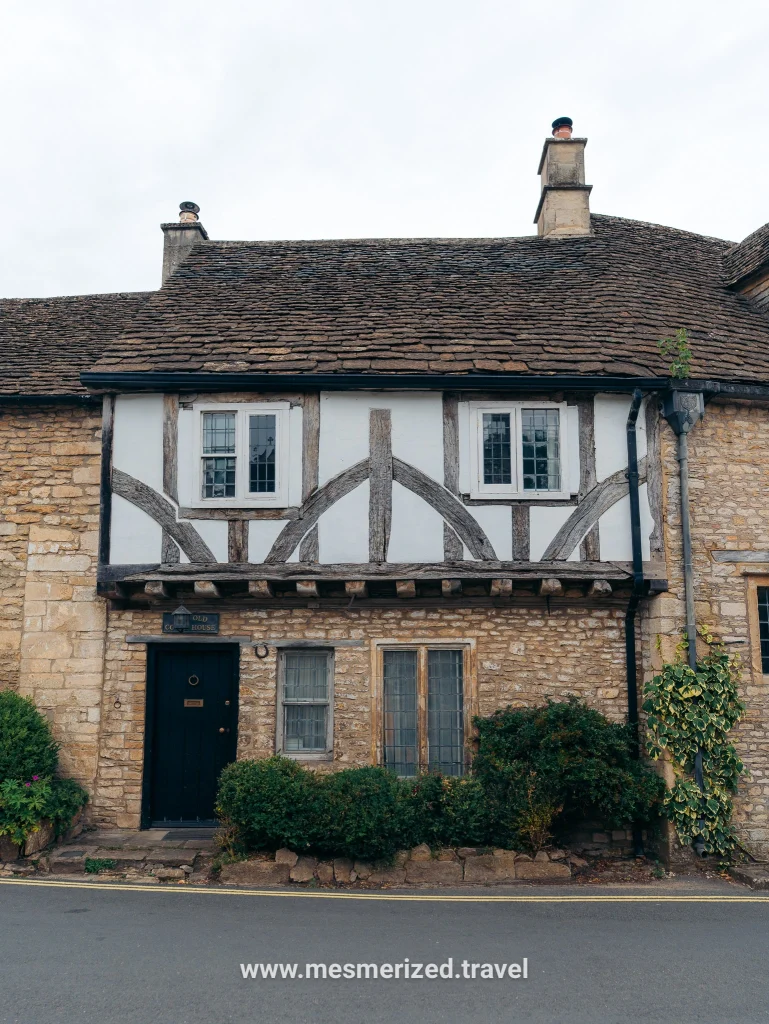
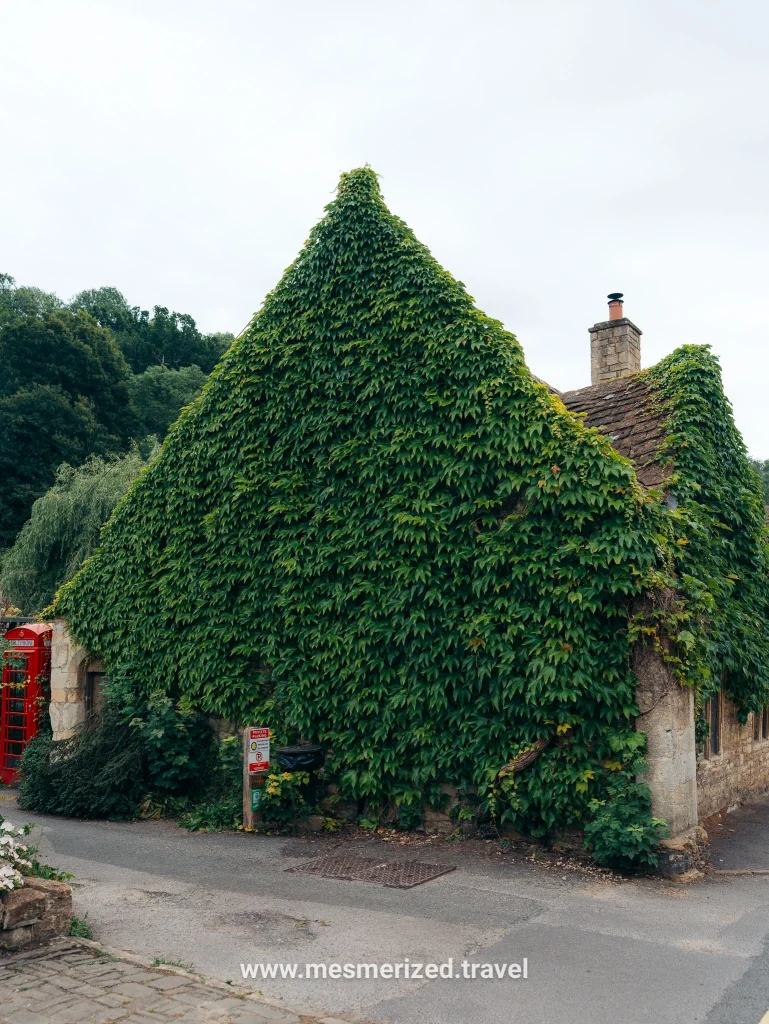
What most people don’t know is that those cottages were originally built for wool weavers. In the Middle Ages, Castle Combe was one of the most important wool producing villages in England. The weavers lived in the cottages, the river powered the mills, and a distinctive red and white cloth known simply as “Castlecombe” was sold at markets in Bristol, London and exported abroad. The village was prosperous enough that King Henry VI granted it the right to hold a weekly market in 1440. You can still see buildings called things like “Weaver’s House” if you look at the signs.
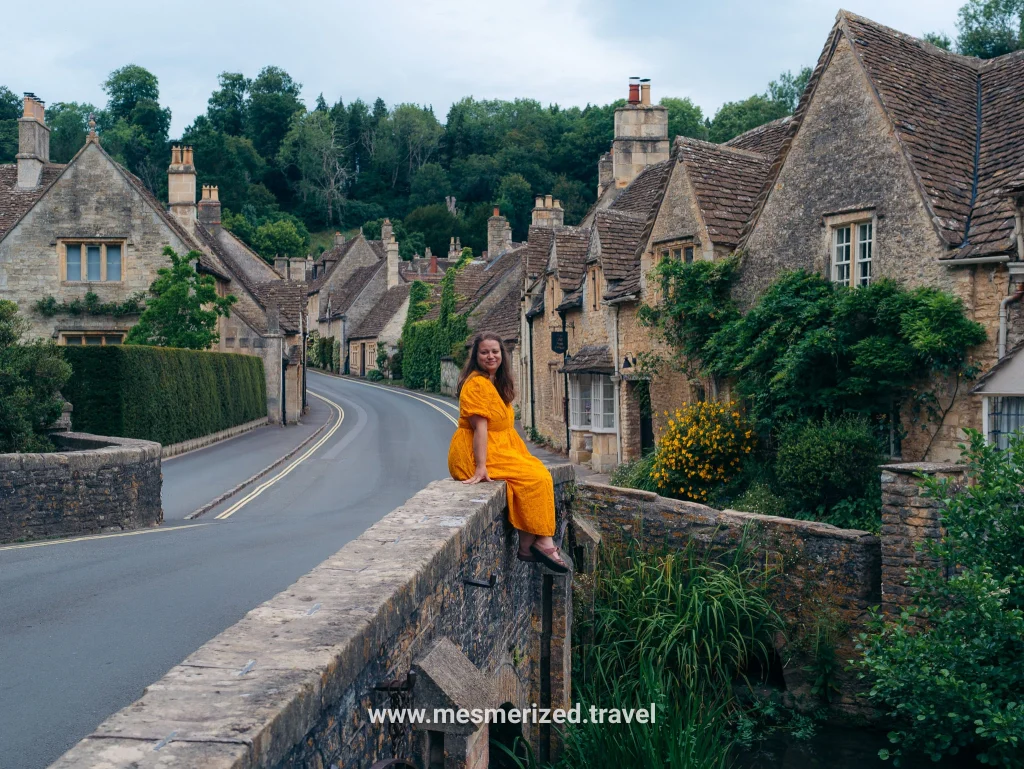
The Stone Bridge & the Bybrook River
The most photographed spot in Castle Combe is the old stone bridge crossing the Bybrook River, and it absolutely earns that status. The view from here, water flowing under the bridge with the stone cottages on both banks, is the one you’ve probably seen on every Castle Combe postcard.
In 1967 the riverbank right here was used as a set for the filming of Doctor Dolittle starring Rex Harrison.
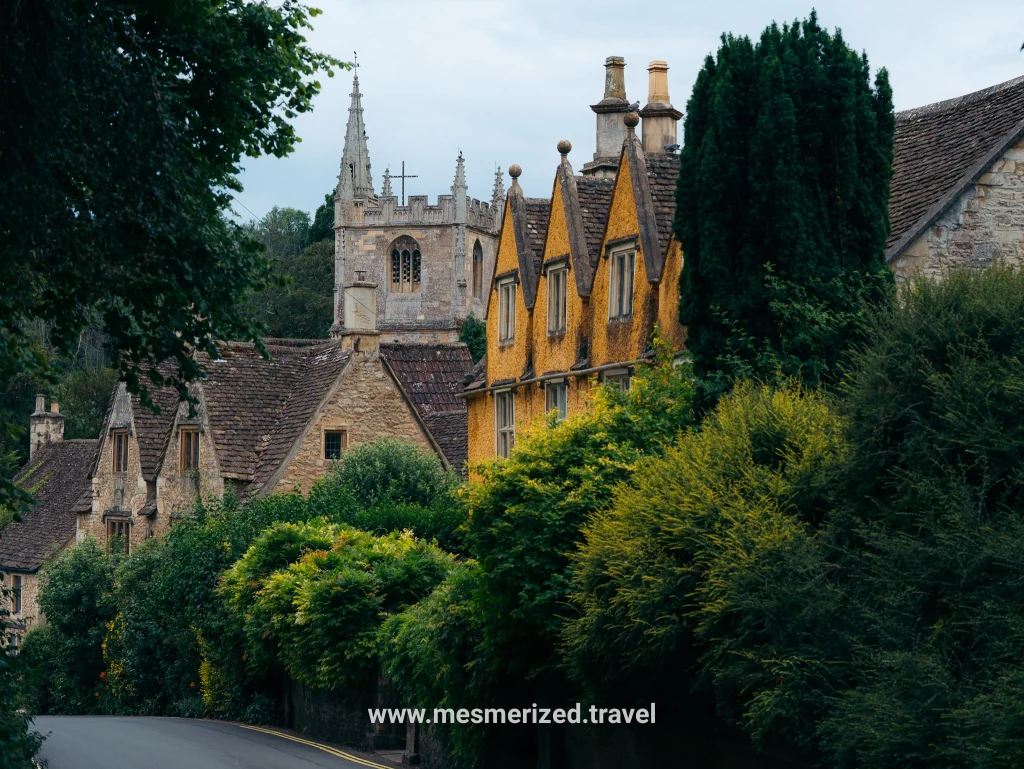
St Andrew’s Church
Walk up through the village to St Andrew’s Church, which dates from the 13th century. It’s a beautiful building and the interior is worth seeing, ancient brasses, stained glass windows. The clock on the tower dates from the late 15th century and is one of the oldest working church clocks in the UK. It has been keeping time here for over 500 years, which puts most things in perspective.
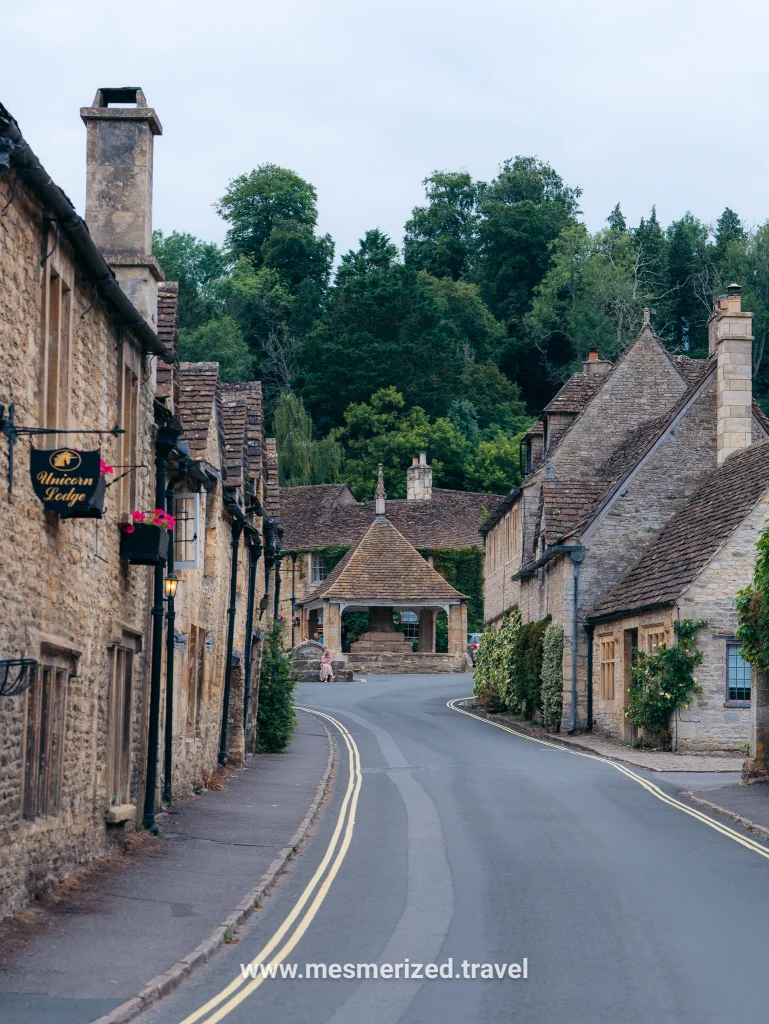
The Market Cross
In the centre of the village stands the Market Cross, a 14th century covered stone structure that was once the focal point of the village market. When we visited there was no market on, but the village hall occasionally hosts one with local jams, pies, and handmade crafts. Worth checking before you go if that’s something you’d enjoy.
Where to Park in Castle Combe
The main car park is about 800 metres from the village centre, roughly a ten minute walk. There are a couple of smaller spaces closer to the village but don’t count on them, especially in summer. The official car park is the easy option.
Parking is cheap and you can pay at the machine or through the MiPermit app. The walk from the car park into the village is actually lovely, most of it shaded by trees, so the 800 metres goes quickly.
Just keep in mind that Castle Combe gets very busy on summer weekends. Weekday mornings are significantly quieter and the village feels completely different
Where to Stay in Castle Combe
These are the hotels we saved for ourselves for when we visit Castle Combe again:

Honestly the best thing to do in Castle Combe is walk slowly and look at things. The streets are quiet, the village is small, and every corner has something worth stopping for. There’s no rush, no queue for anything, and the whole place has a specific kind of calm that’s increasingly rare. Castle Combe is protected as a conservation area, which means strict rules apply about what can be changed or built. No new signage, no modern shop fronts, nothing that would disrupt the appearance of the village. It’s why it still looks the way it does, and why it probably will in the future.
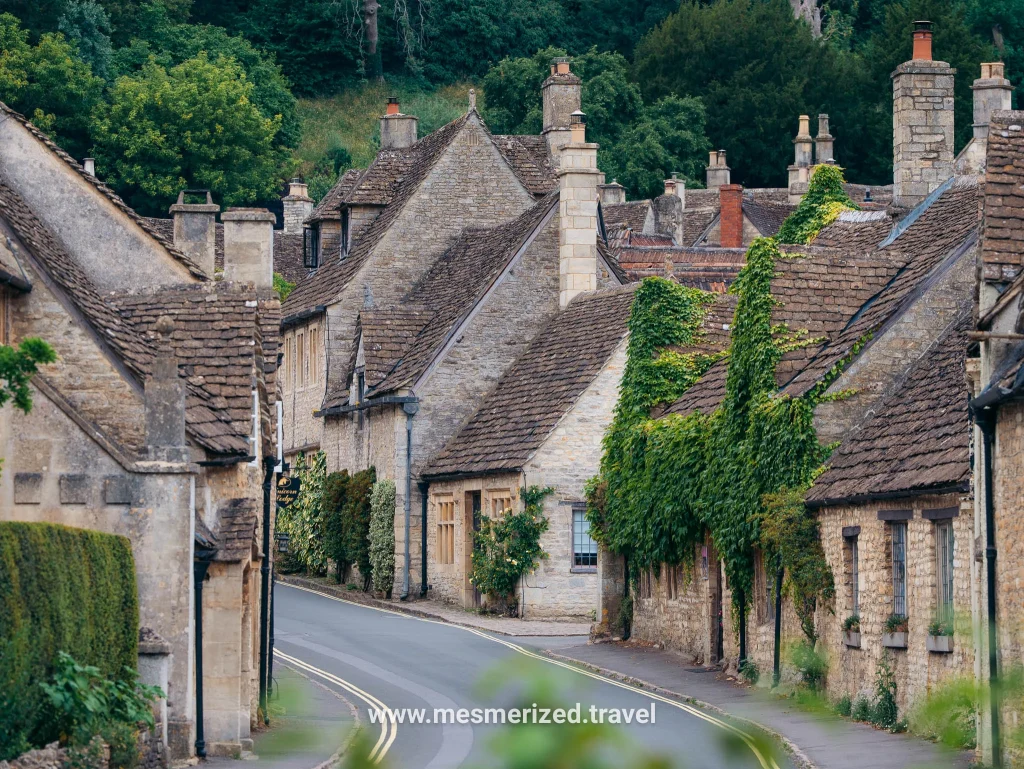
It’s as pretty as every photo suggests, quieter than you’d expect for somewhere so well known, and the kind of place you find yourself reluctant to leave. A perfect stop on a UK road trip. Until next time, be mesmerized 💛