The Changing of the Guard is one of those things that’s on every London list, and for good reason. It’s free, it’s genuinely impressive, and there’s nothing quite like watching soldiers in full red tunics and black bearskin caps marching down the Mall while a regimental band plays behind them. These things still exist in 21st century, and seeing it in person feels a bit special in a way that’s hard to explain until you’re actually there.
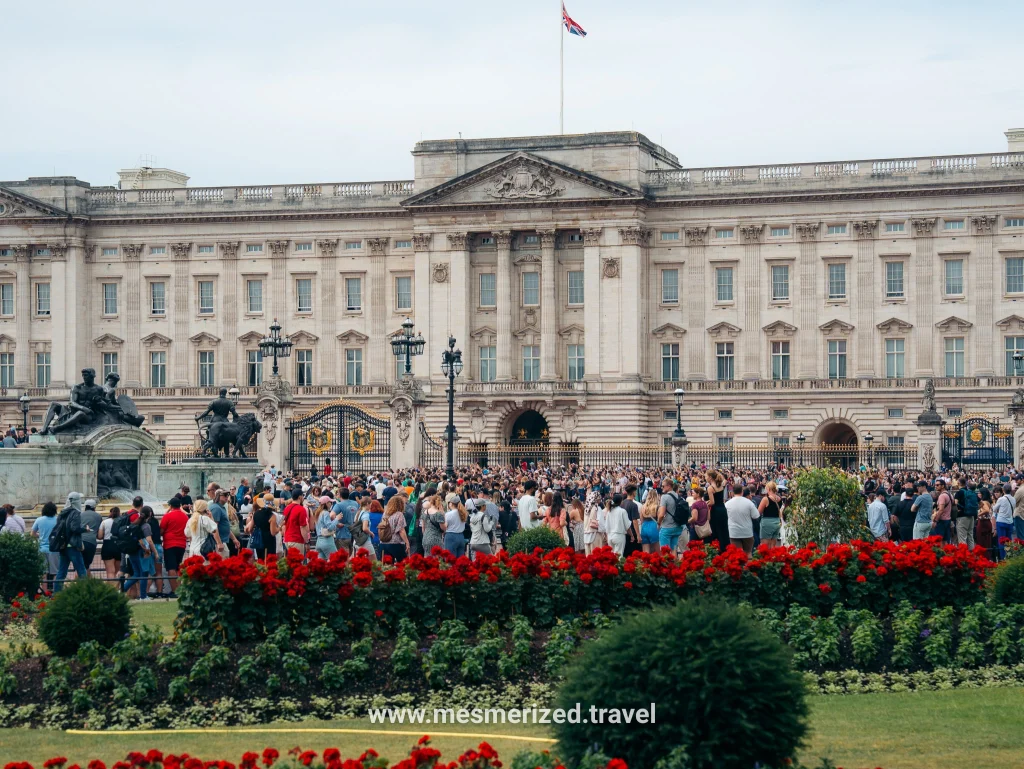
The problem is most people see almost none of it. They show up at Buckingham Palace at 11am, get stuck behind a wall of phones and shoulders, catch a glimpse of some bearskin hats moving across a courtyard they can’t see into, and leave slightly underwhelmed. That’s not the ceremony’s fault. That’s just standing in the wrong place.
We made the same mistake the first time. The second time, we didn’t.
What Is It Actually All About?
The ceremony is exactly what it sounds like, one set of soldiers takes over guard duty from another.
But the history behind it makes it more interesting than a simple shift change.
The guards are real, active British Army soldiers, not ceremonial performers. Their job is to protect the King and the royal palaces, and they’ve been doing it in some form since the reign of King Henry VII in the late 15th century.
A bit of history lesson: the ceremony originally took place at the Palace of Whitehall, moved to St James’s Palace when Whitehall burned down in 1698, and shifted to Buckingham Palace when Queen Victoria moved in there in 1837.
That arrangement, one guard at St James’s Palace and one at Buckingham Palace, is still exactly how it works today.
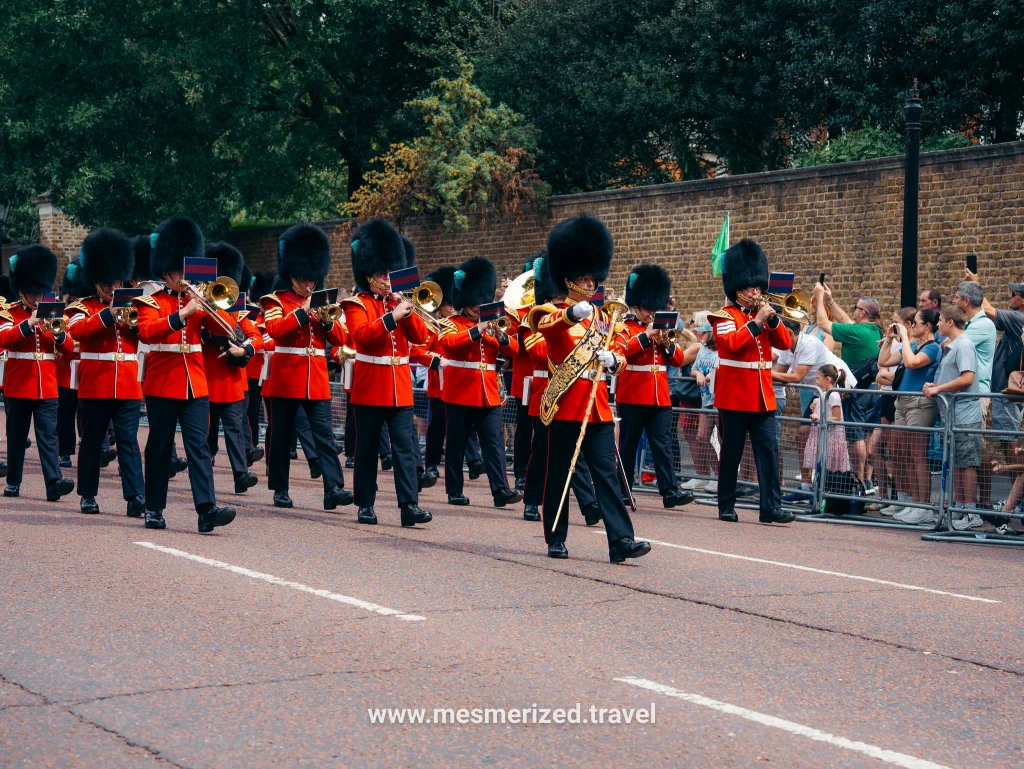
During the ceremony the New Guard formally takes over from the Old Guard, a symbolic handover of the key and the responsibility for protecting the King. Both are drawn from one of five regiments: the Grenadier Guards, Coldstream Guards, Scots Guards, Irish Guards, and Welsh Guards. You can tell which regiment is on duty by the plumes on their bearskin caps and the spacing of the buttons on their tunics. The bearskins themselves are made from Canadian black bear fur, stand 45 centimetres tall, and weigh around 700 grams. The gold chin strap across their mouths wasn’t designed to keep the hat on, it was originally meant to protect the face in battle.
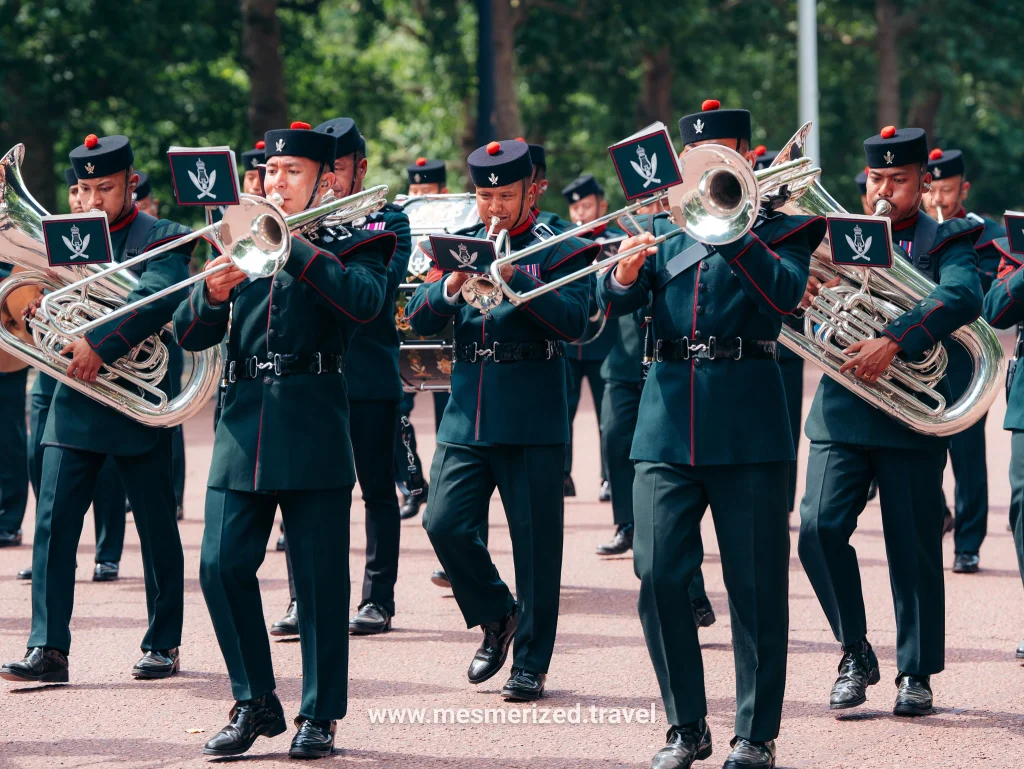
A regimental band plays throughout, and they don’t just play military marches. You might hear classical pieces, West End show tunes, or pop songs. It depends entirely on the regiment.
Its official name is Guard Mounting, by the way. Almost nobody calls it that, but now you know.
When Does It Happen?
The Changing of the Guard at Buckingham Palace takes place every Monday, Wednesday, Friday, and Sunday. The ceremony at the Palace forecourt, which is the large walled courtyard directly in front of the Palace building itself, the area you see through the main gates, starts at 11:00 AM. But the whole thing begins much earlier than most people realise.
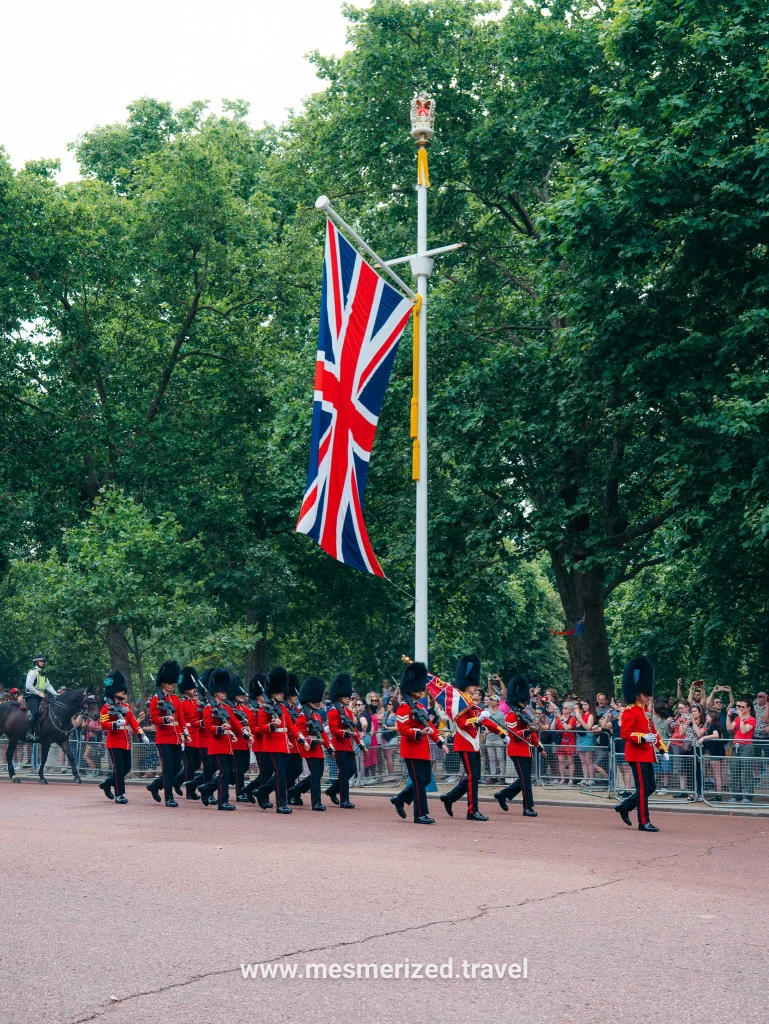
The Old Guard (the soldiers currently on duty, about to be relieved) forms up in the forecourt from 10:30 AM. The St James’s Palace detachment marches down The Mall and joins them at around 10:45 AM. By the time the crowd at the Palace gates is watching anything, the best parts have already been happening for 20 minutes.
Important: the ceremony is cancelled in very wet weather, no exceptions. Always check the official schedule the morning you plan to go at the Household Division website before heading out.
Also worth knowing: park roads between the Palace and The Mall are closed between 10:30 AM and 12:00 PM on ceremony days, so plan your walk accordingly.
The Horse Guards Parade: the other one nobody talks about
Before we get to Buckingham Palace, there’s another ceremony happening at the same time that most visitors completely miss.
The Changing of the King’s Life Guard takes place daily at Horse Guards Parade on Whitehall, at the eastern end of St James’s Park. On weekdays it happens at 11:00 AM, on Sundays at 10:00 AM, and on Saturdays there’s an inspection at 11:00 AM. This is the Household Cavalry, so instead of foot guards marching on foot you get soldiers on horseback in gold helmets and gleaming breastplates. Far smaller crowds, much closer views, and a completely different atmosphere.
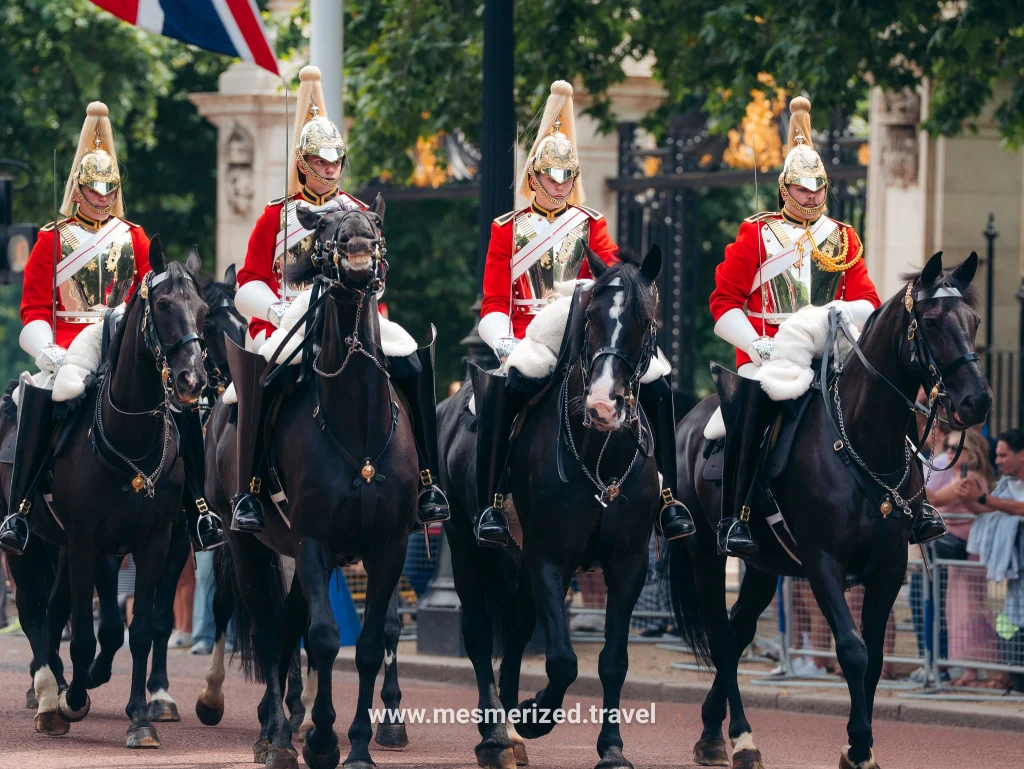
If you want to see both, the timing is tight but doable. Start at Horse Guards at 10:00 AM, watch the cavalry, then walk through St James’s Park and position yourself on The Mall for the foot guards around 10:40 AM.
The Best Spot: and it’s not in front of Buckingham Palace
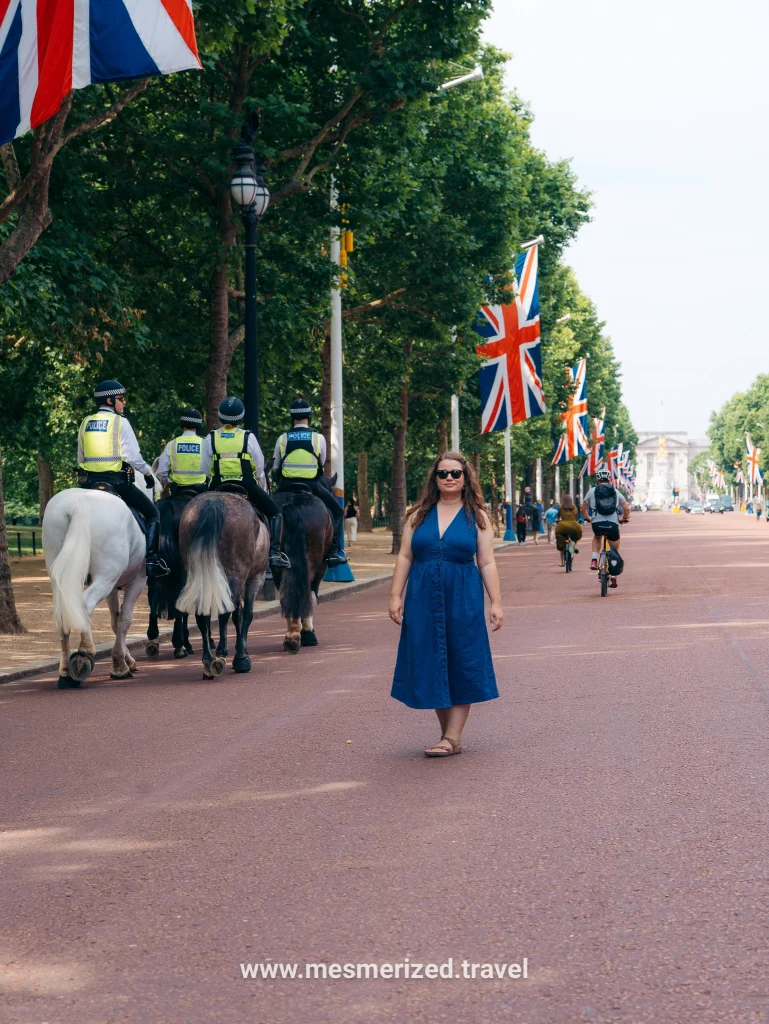
Here’s what we’d tell anyone going for the first time. Skip the crowds in front of the Palace gates. Get yourself to the corner of Marlborough Rd and The Mall and wait there.
This is where the St James’s Palace detachment steps off and begins their march down The Mall toward Buckingham Palace. The Mall is the long, straight, tree-lined road that runs from St James’s Palace all the way to Buckingham Palace. At the Marlborough Rd corner, there’s space. You can be first in line with a completely clear view, watch the guards and the band go right past you, and you can actually see their faces.
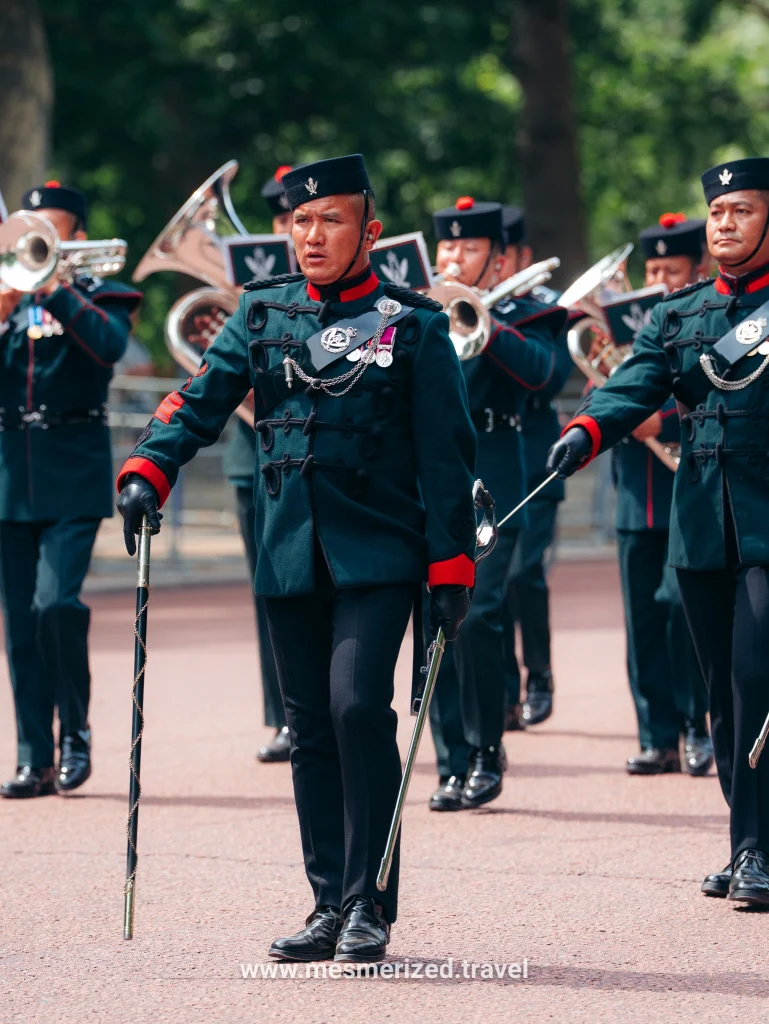
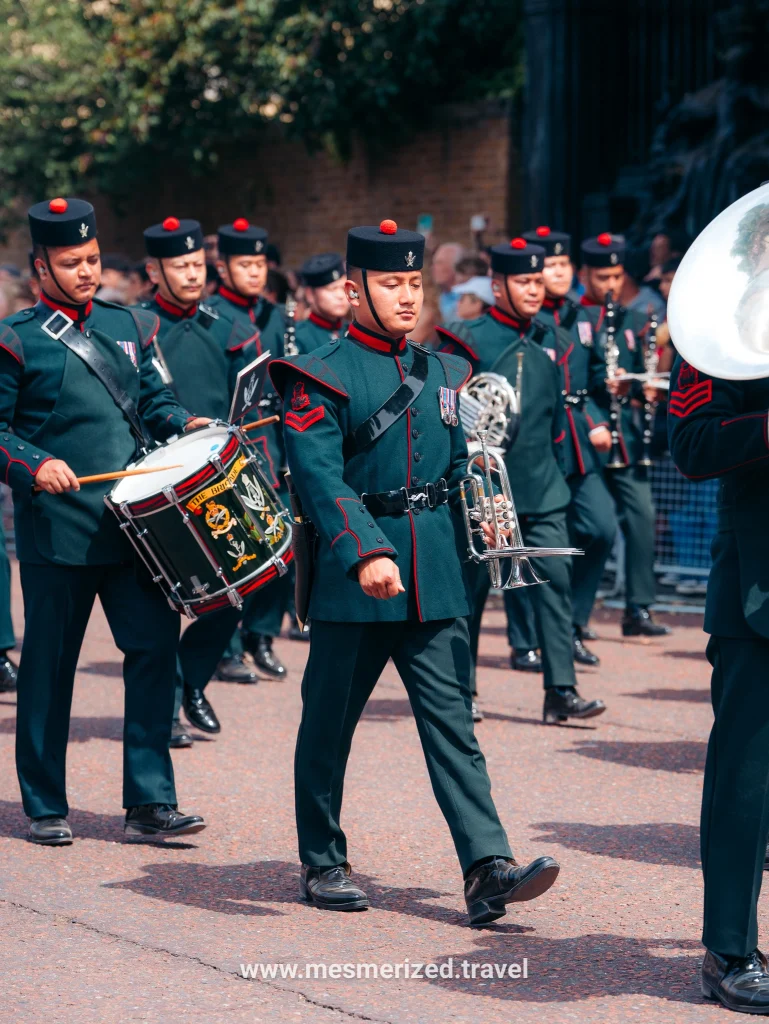
Then, if you want, you can follow them down The Mall toward the Palace. Which is exactly what we did. We may have been running at some points. Just to keep up, obviously, and for the pictures.
Most people are queued along the Palace railings or squeezed around the Victoria Memorial (the large monument with a golden statue on top, directly opposite the Palace gates). Nothing wrong with those spots if you get there very early, around 10:00 to 10:15 AM for a decent place. The Victoria Memorial steps give you an elevated view which is good for photos. But Marlborough Rd gives you the experience of the march itself, not just the ceremony at the end of it, and it’s genuinely the better version.
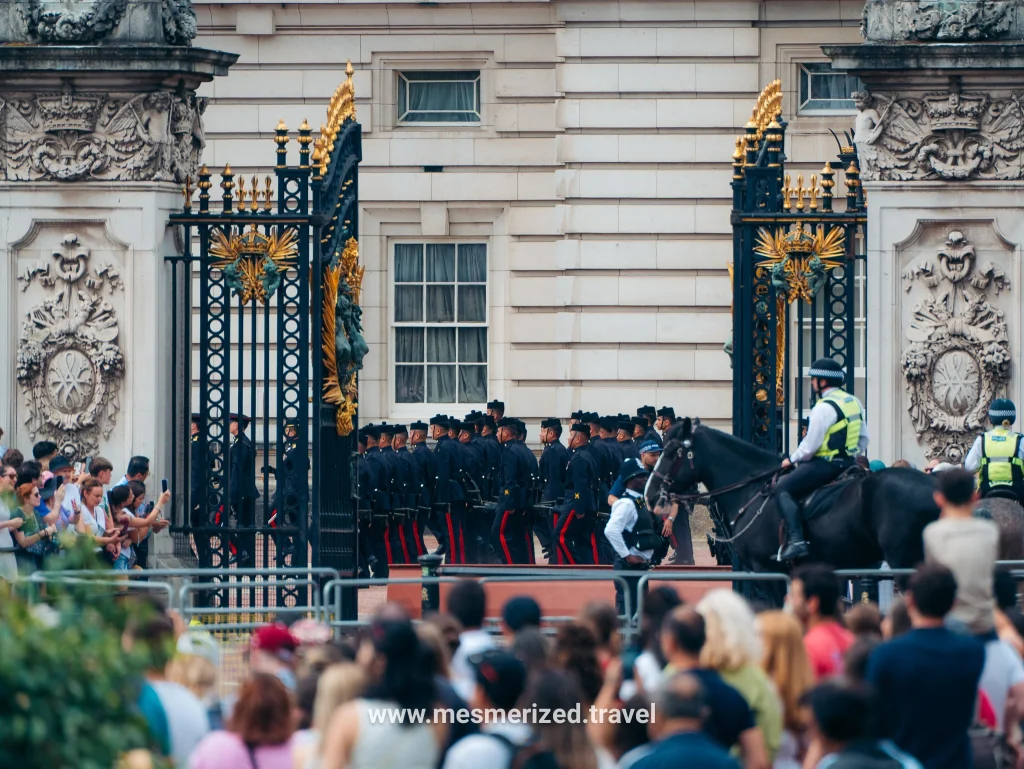
I remember the first time we were there at Buckingham Palace, we just turned around and left, it was so crowded, you couldn’t see not even the top of their caps (I am not that tall).
The Full Ceremony Timeline
To help you plan where to be and when:
- 10:25 AM: St James’s Palace detachment forms up for inspection at Friary Court, the small courtyard inside St James’s Palace
- 10:30 AM: Old Guard forms up in the Buckingham Palace forecourt
- 10:43 AM: Guards and band step off from St James’s Palace and begin marching down The Mall, this is where you need to be at Marlborough Rd corner
- 10:45 AM: St James’s Palace Guard joins the Buckingham Palace Guard in the forecourt
- 11:00 AM: The ceremony proper begins, New Guard arrives from Wellington Barracks, the formal handover takes place inside the forecourt
- 11:45 AM: Old Guard returns toward Wellington Barracks
After the Ceremony
Once the guards have passed and headed toward the Palace, everyone else goes the same way. The Mall gets crowded, Buckingham Palace gets crowded, and the whole area turns into one big bottleneck.
Do what we did: don’t follow the crowd. Turn around, walk back into St James’s Park, find a patch of grass, and sit down. The park empties out beautifully while everyone else is pressed against the Palace railings. You’ll have squirrels, possibly pelicans, the bridge over the lake, and a very peaceful half hour while London buzzes around you. Everyone pours down The Mall and you get the park almost to yourself.

And that’s it, we hope this will help you get the best spot and just enjoy this historic ceremony.
Until next time, be mesmerized ❤️🖤